01 / FIELD OVERVIEW
Reservoir cleaning and inspection services
See Ven-Tech’s approach to reservoir inspection, cleaning and project execution.
Potable water · fire protection · industrial storage
Ven-Tech Reservoir Services combine potable-grade commercial diving, robotic inspection, cleaning, maintenance support and documented water-quality controls for critical water-storage assets across Western Canada.
Critical water infrastructure
Reservoir Services must protect water quality, operational continuity and the integrity of the structure at the same time.
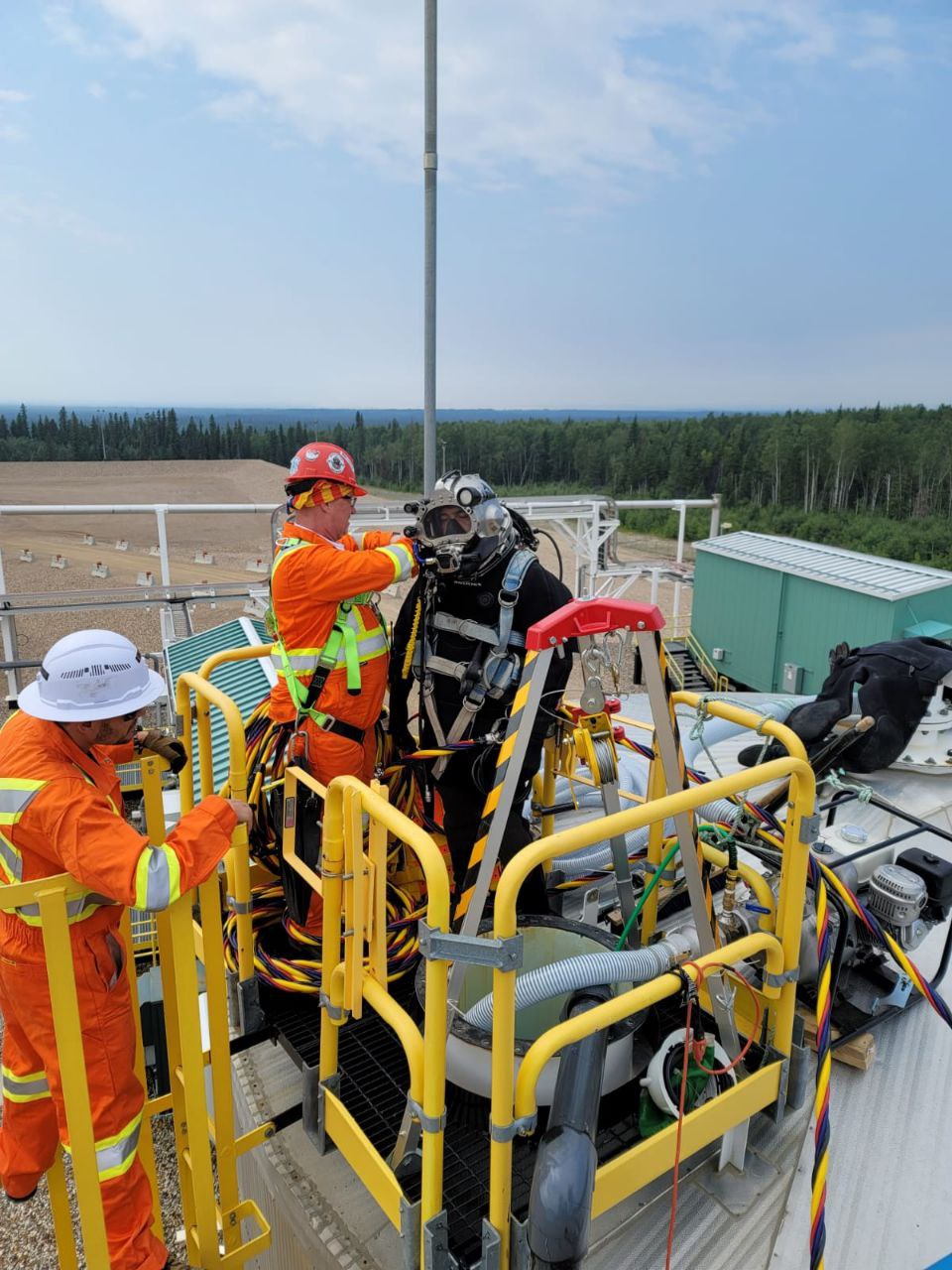
Ven-Tech plans each scope around the facility, water use, access, sanitary requirements, site hazards and the decisions the inspection must support. Where conditions allow, inspection and cleaning can be completed with the tank full, helping owners reduce shutdowns while receiving a clear record of internal condition. Diver, ROV, robotic-vacuum and magnetic-crawler methods can be combined into one practical plan.
Reservoir services capabilities
From a focused inspection to diver- or robot-supported cleaning, every method is selected around the reservoir and the required outcome.
 01↗
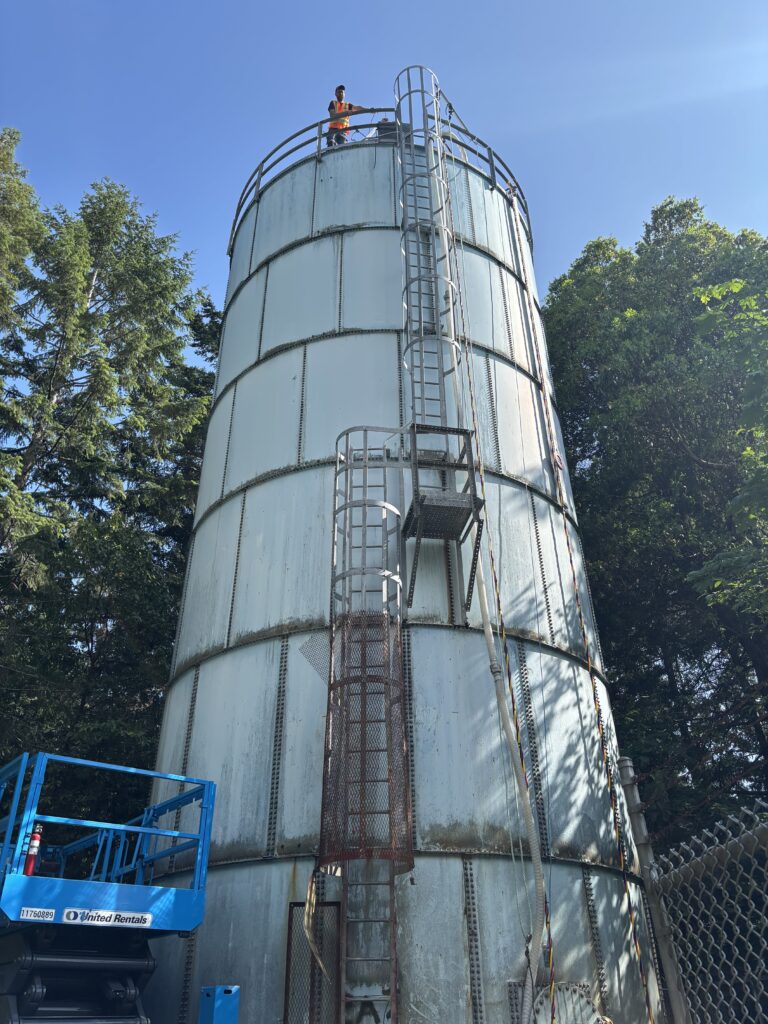
01↗Document roofs, columns, ladders, baffles, seams, coatings, floors, intakes, outlets and visible anomalies with organized HD media and condition observations.
 02↗
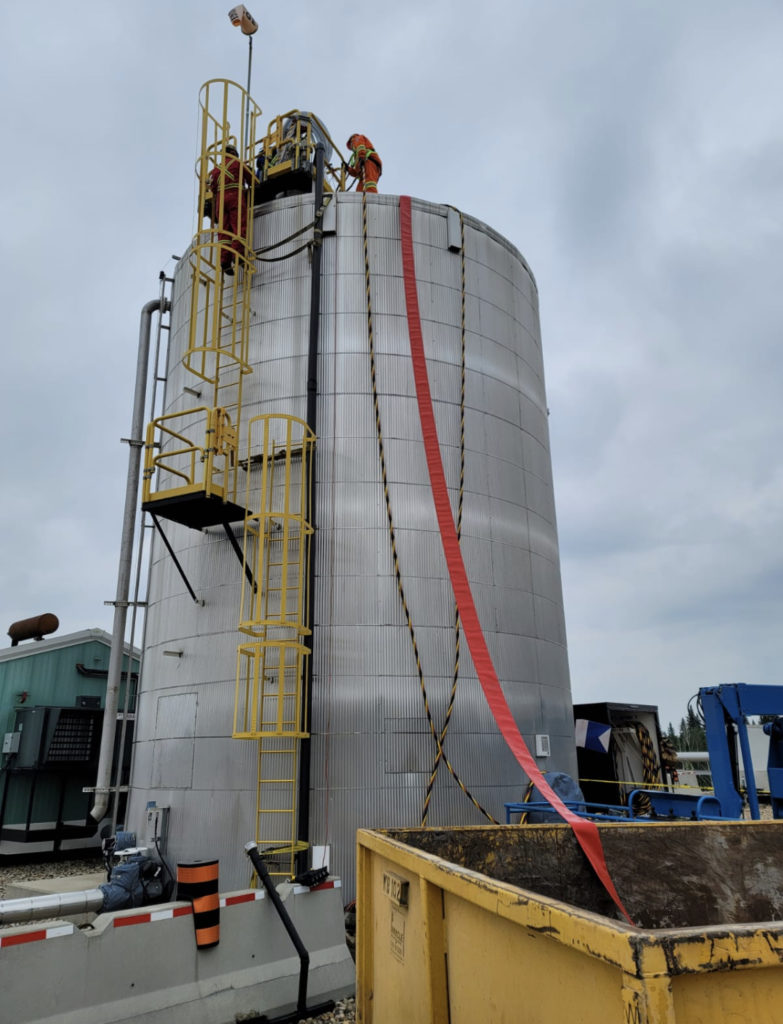
02↗Remove accumulated sediment and debris using potable-water procedures, purpose-selected pumps and cleaning methods configured around the facility and operating requirements.
 03↗
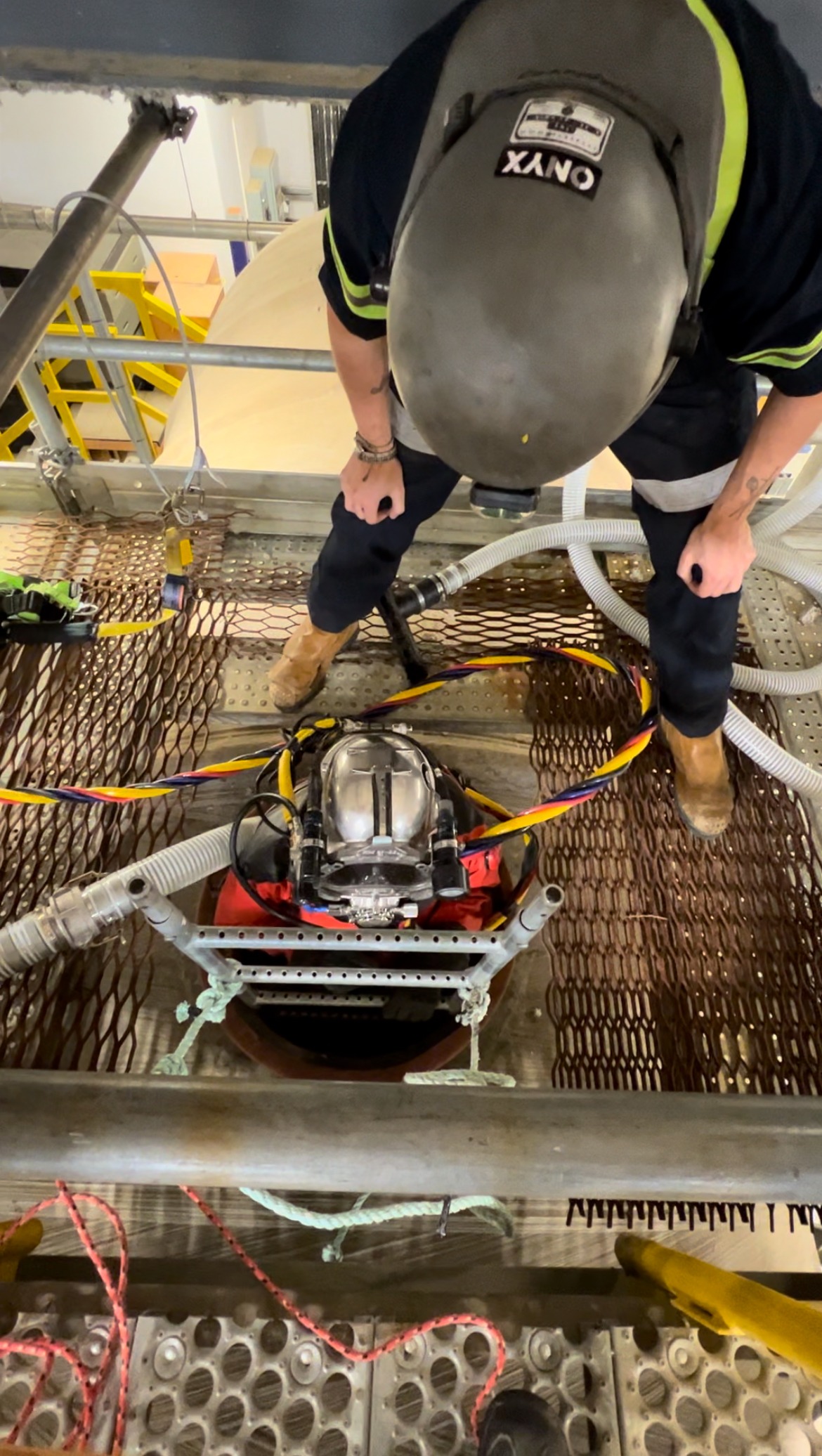
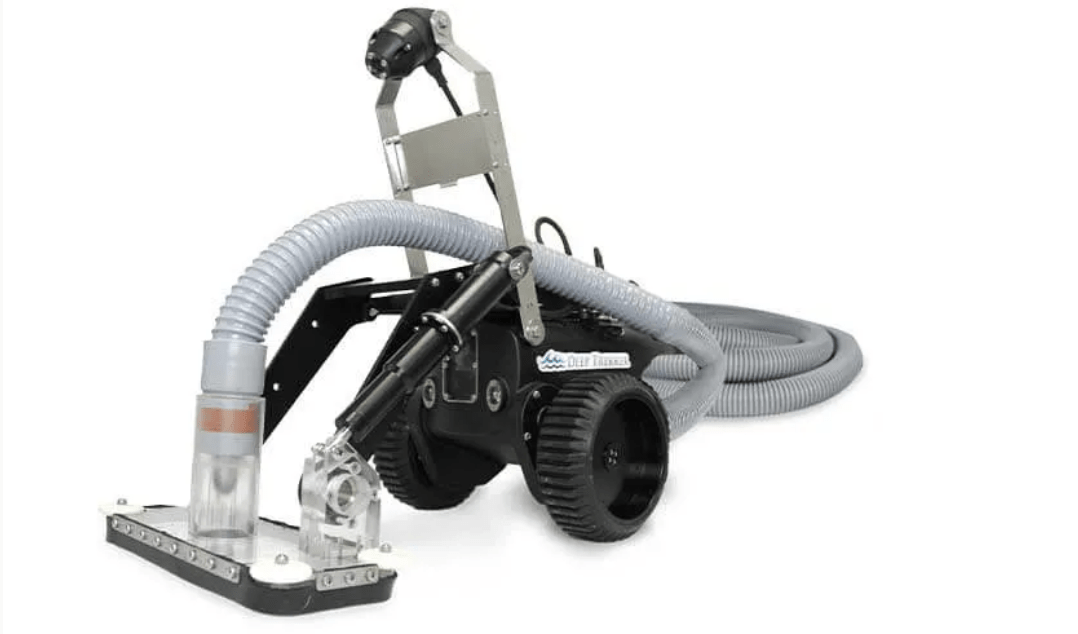
03↗Use potable-grade commercial diving for detailed inspection, cleaning, minor maintenance and targeted intervention where direct access is the appropriate method.
 04↗
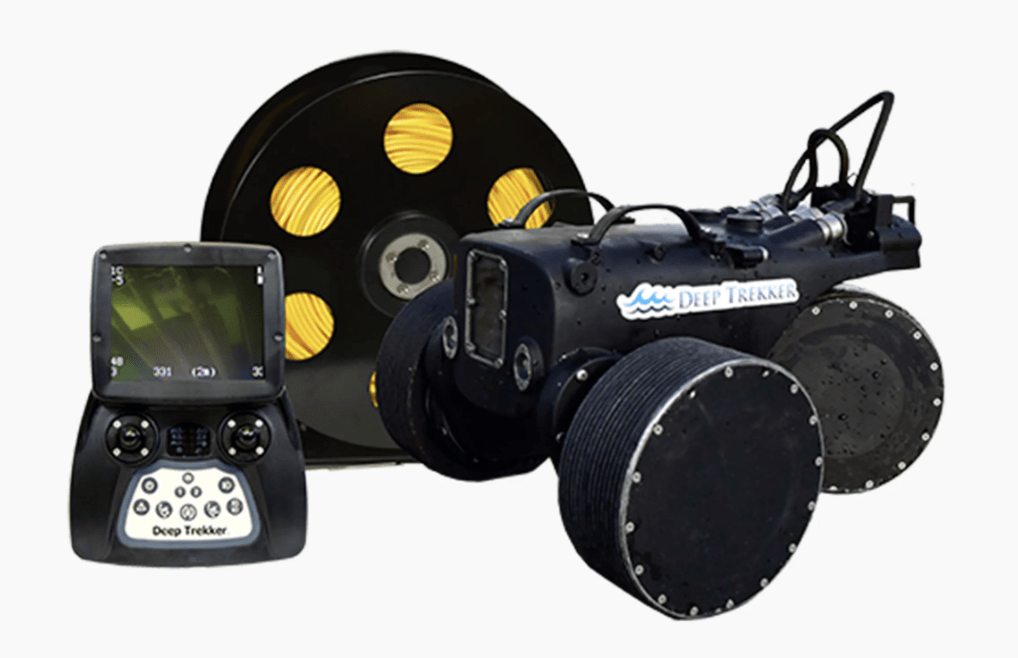
04↗Deploy ROVs and robotic cleaning systems for remote visual inspection, sediment removal and work in areas where robotic access can reduce personnel exposure.
 05↗
05↗Assess suitable steel tanks and ferrous surfaces using magnetic crawlers that support close visual review and project-specific ultrasonic thickness measurement workflows.
 06↗
06↗Support chlorine residual and turbidity checks, indexed video, photographic records, observation logs and concise reporting for operators, engineers and asset owners.
See the work
Both original Ven-Tech Reservoir Services videos are preserved here in their existing order.
See Ven-Tech’s approach to reservoir inspection, cleaning and project execution.
View potable-grade diver operations supporting water-storage asset condition and maintenance.
Standards-led execution
These are standards frameworks—not generic badges. Ven-Tech builds the work plan, sanitary controls, inspection coverage and reporting around the applicable asset and project requirements.
AWWA C652-19 addresses disinfection of water-storage facilities, including procedures relevant to underwater inspection and cleaning. Ven-Tech applies documented sanitary planning to protect water quality and preserve traceability.
NFPA 25 establishes inspection, testing and maintenance requirements for water-based fire-protection systems, including water-storage tanks. Ven-Tech supports internal condition work without treating every tank or interval as identical.
Continuity where conditions allow
Many Reservoir Services projects can be engineered to reduce or avoid draining and prolonged shutdowns. The final approach depends on water use, isolation, sanitary controls, access, the work itself and the owner’s operating requirements.
Health, safety & environment
Reservoir work combines diving, confined-space interfaces, water-quality protection, energy isolation and facility operations. Ven-Tech connects these requirements through written planning, defined field controls and project records.
Scope review, hazard assessment, risk register, defined roles, emergency arrangements and stop-work criteria.
Equipment segregation, cleaning, disinfection, contamination controls and documented sanitary checks.
Commercial-diving procedures, communications, access management, isolation and confined-space interfaces where applicable.
Project-specific chlorine residual, turbidity and other sampling or monitoring requirements coordinated with the owner.
Coverage plans, live verification, indexed media, observation logs, equipment checks and documented limitations.
Field records, HSE documentation, water-quality results and deliverables organized for client and engineering review.
Contractor assurance
Ven-Tech’s Reservoir Services are supported by third-party contractor-management programs, a COR®-certified occupational health and safety management system, specialized inspection personnel and documented insurance coverage.
Documented site-audit outcomes
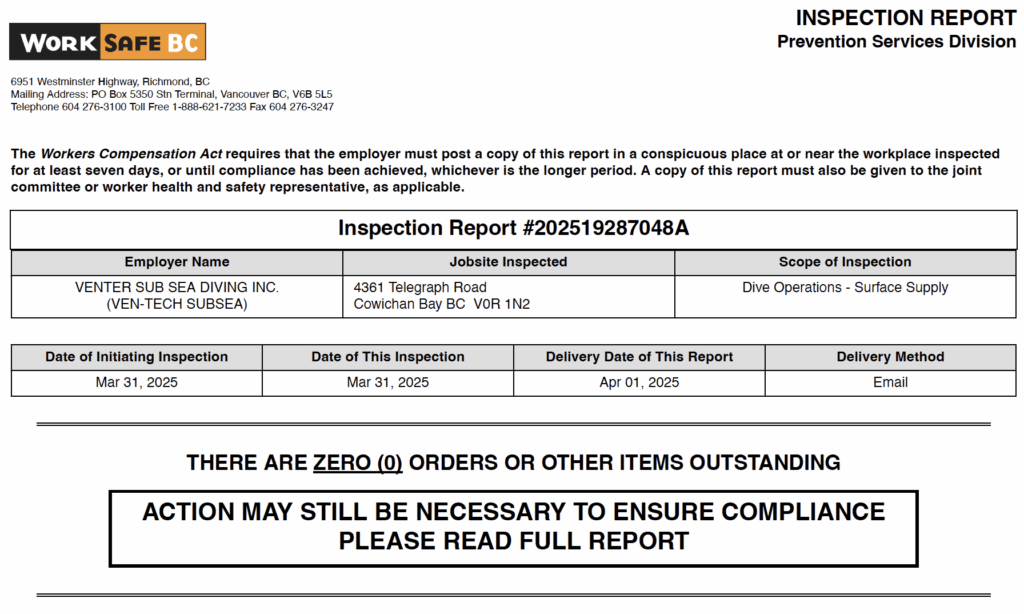
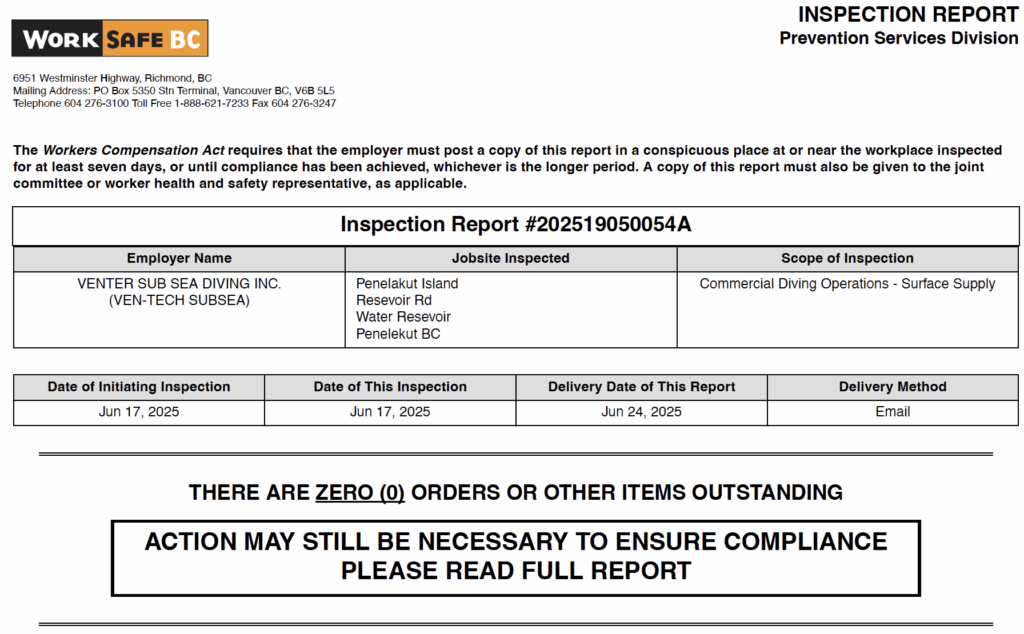
The existing Reservoir Services page documents two WorkSafeBC site-audit outcomes for potable-water reservoir work.
Reservoir services process
A four-stage workflow connects sanitary protection, HSE planning, field quality and useful reporting.
Confirm reservoir type, dimensions, access, water use, operating condition, known issues and required outcome.
Select diver or robotic methods and establish sanitary, safety, isolation, monitoring and contingency controls.
Complete the planned inspection, cleaning or maintenance while checking coverage and field conditions.
Quality-check media and records, document observations and issue the agreed project package.
Organizations we support
Reservoir Services for public and private organizations managing drinking water, process water and fire-protection storage.
Reservoir services FAQ
Send the asset information and operating requirements. Ven-Tech will help determine the appropriate diver, ROV or combined approach.
Many Reservoir Services scopes can be planned while a tank remains full and operational, reducing shutdown requirements. Suitability depends on water quality objectives, access, isolation, the planned work, the owner’s procedures and the applicable standard or authority requirements.
AWWA C652-19 addresses disinfection of water-storage facilities. For underwater inspection or cleaning, the project plan should define sanitary procedures, equipment preparation, disinfection controls, sampling and documentation appropriate to the scope.
NFPA 25 provides inspection, testing and maintenance requirements for water-based fire protection systems, including water-storage tanks. The applicable edition, tank construction, corrosion protection and owner requirements determine the inspection activities and frequency.
Yes. Ven-Tech can evaluate potable-grade commercial diving, ROVs, robotic vacuums and magnetic crawlers. The recommended approach depends on access, geometry, water conditions, task complexity, required measurements and the owner’s operating constraints.
A project package can include indexed HD video and photographs, an asset-component checklist, observation logs, identified limitations, sediment or debris observations, water-quality records, recommended follow-up actions and supporting files agreed in the scope.
Potable-water equipment and procedures are segregated, cleaned and disinfected using the project’s documented sanitary controls. The method, products, concentrations, contact times, sampling and recordkeeping are confirmed for the facility and applicable requirements.
Send the location, reservoir type and dimensions, access size, water use, operating status, drawings, previous reports, known issues, required work and preferred schedule. Photos of the hatch and surrounding work area are also valuable.
Start with the reservoir
Send the facility location, tank dimensions, hatch details, water use, operating status and required work. Ven-Tech will provide a practical first review for your Reservoir Services project.