The designer establishes geometry, removal limits, reinforcement, material properties, placement method, loads, tolerances, exposure, durability and acceptance criteria.
UNDERWATER CONCRETE SERVICES · CANADA
Underwater concrete services.
Controlled from substrate to closeout.
Underwater Concrete Services for dams, reservoirs, intakes, marine structures, foundations and submerged infrastructure—engineered around access, containment, placement and verifiable quality.
PREPARESound receiving surface
PLACEControlled underwater method
PROVETraceable QA record
Concrete below the waterline
Not just a pour.
A complete placement system.
Underwater Concrete Services succeed when the repair design, receiving surface, reinforcement, forms, material, placement route and quality evidence operate as one system.
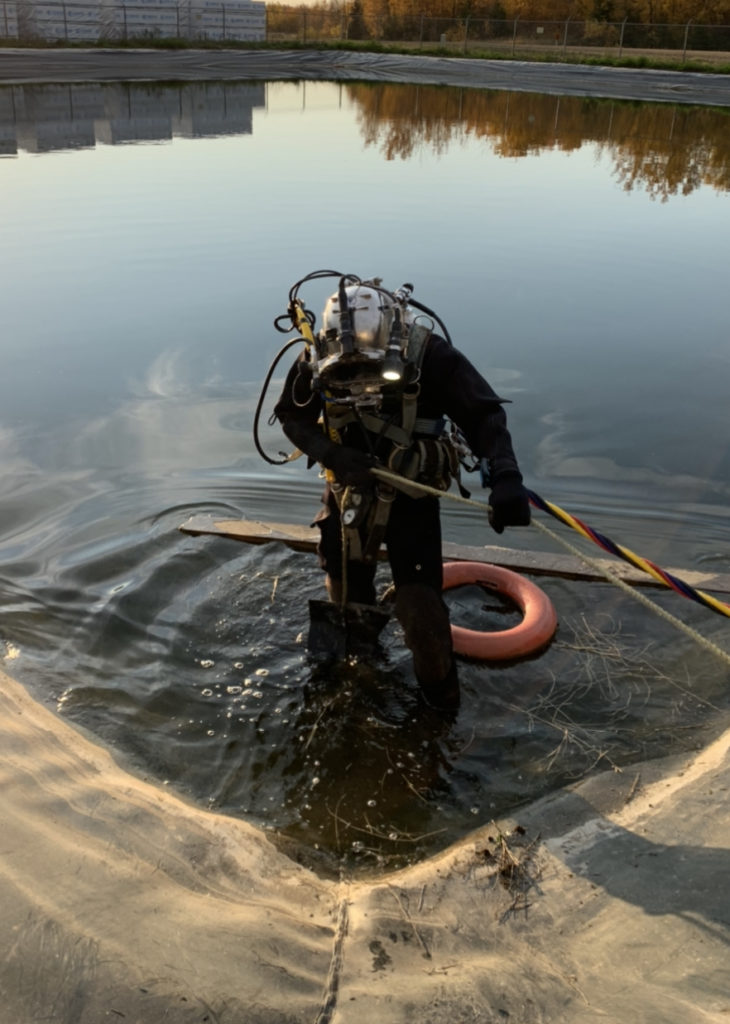
Ven-Tech works with owners, engineers and contractors to translate the design into a practical underwater method. Before work, the team reviews asset history, geometry, exposure, depth, visibility, flow, access, operating constraints and environmental requirements. Diver, ROV, sonar, measurement or NDT evidence can be used to confirm actual conditions where drawings and surface observations are incomplete.
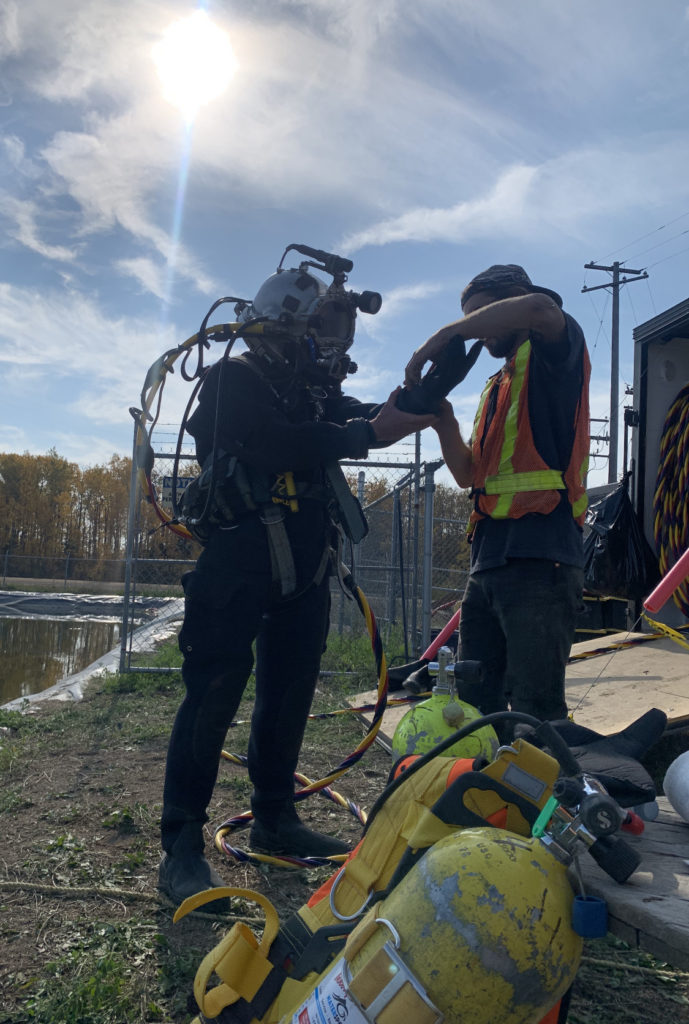
Constructability planning then connects commercial-diving access, isolation, removal, reinforcement, anchors, forms, seals, ports, vents, material delivery, lifting, placement, cure or protection, inspection and closeout. This disciplined sequence helps protect the design intent and gives the owner a record that explains what was installed, how it was verified and what limitations remain.
Project-specific engineeringCommercial-diver executionControlled placementDocumented acceptance
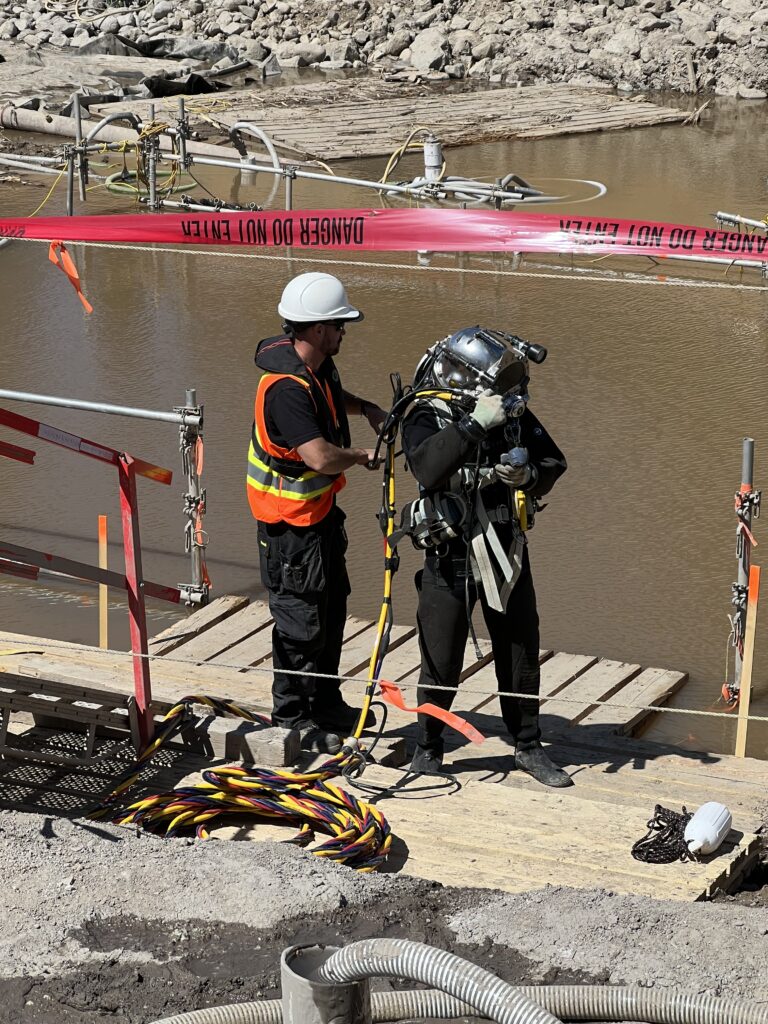
Flow, pumps, gates, valves, intakes, pressure, electrical sources, moving equipment and stored energy are isolated or controlled through the owner’s approved system.
Forms, seals, vents, ports, bracing and temporary works are checked against pressure, buoyancy, leakage, access and the planned placement sequence.
Hold points, batch and material records, measurements, testing, imagery, as-built information and closeout criteria are agreed before mobilization.
Underwater Concrete Services capability
Prepare the substrate.
Control the repair.
From one localized repair to a coordinated infrastructure program, the field system is configured around the approved design, water environment and owner decision.
 01↗
01↗Condition survey & repair definition
Diver, ROV, sonar, measurement and NDT evidence can document cracks, spalls, exposed reinforcement, undermining, abrasion, section loss, voids and construction interfaces before the repair method is finalized.
 02↗
02↗Substrate preparation
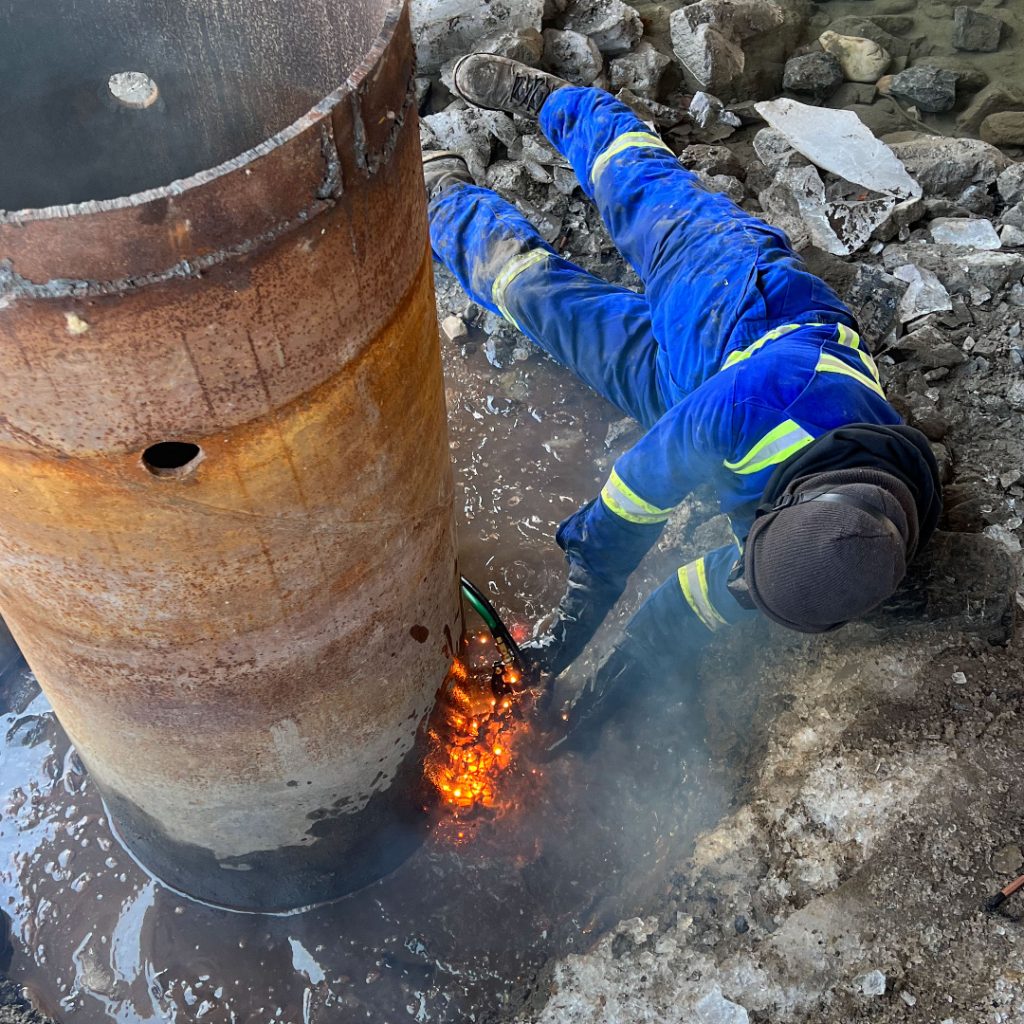
Loose, contaminated or unsound material is removed to the defined boundary. Cleaning, hydro-demolition, mechanical tooling, abrasive methods and reinforcement preparation are selected around access, environmental controls and the approved repair design.
 03↗
03↗Reinforcement, dowels & anchors
Project-specific dowels, reinforcing steel, anchors, embeds and mechanical connections can be installed and verified before form closure, with drilling, cleaning, embedment and proof requirements controlled by the drawings and specifications.
 04↗
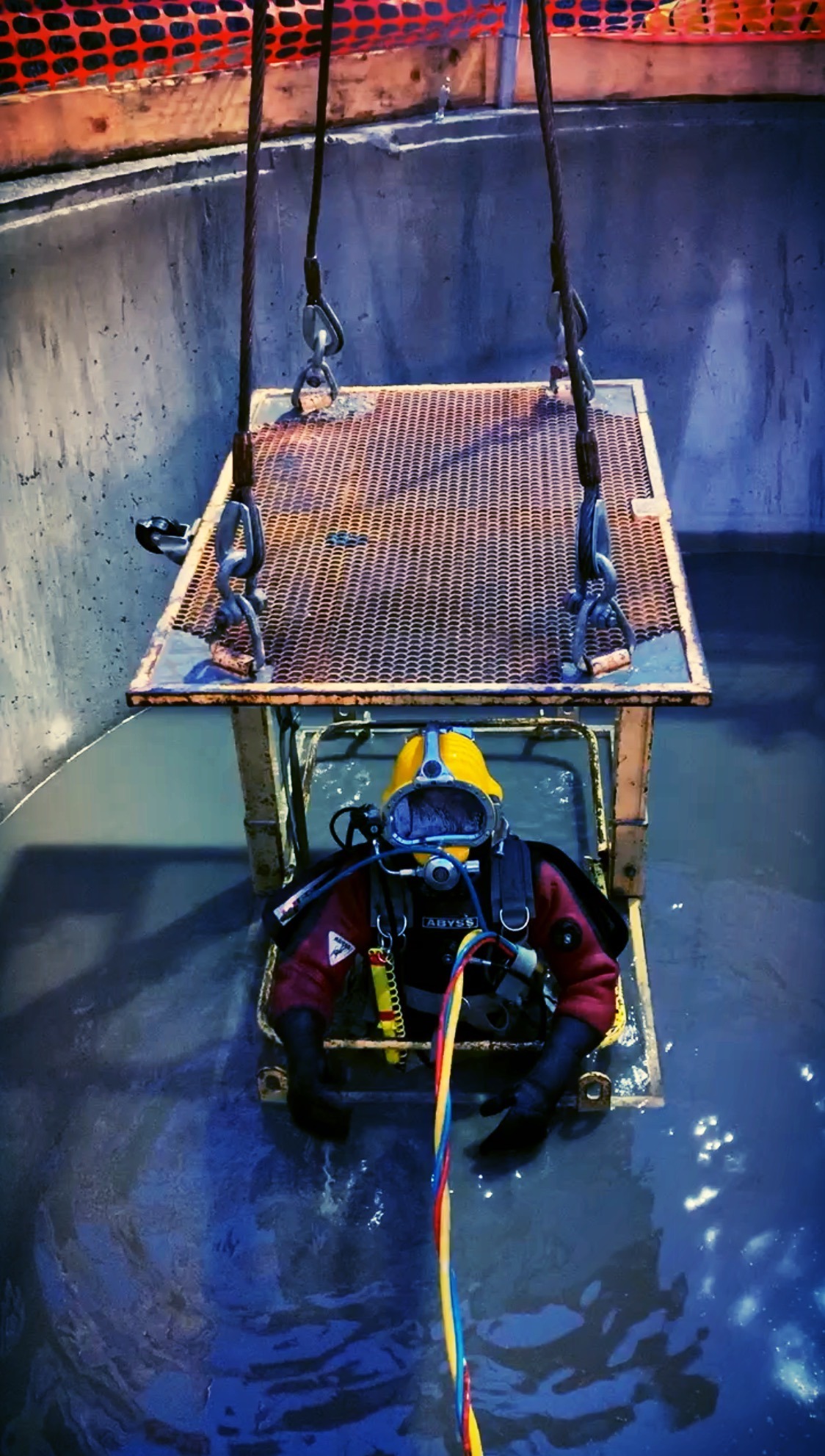
04↗Underwater formwork
Rigid forms, flexible forms, fabric forms, jackets, shutters and seals are configured for geometry, head pressure, leakage control, placement access, venting, inspection and safe removal after the specified strength or acceptance condition is reached.
 05↗
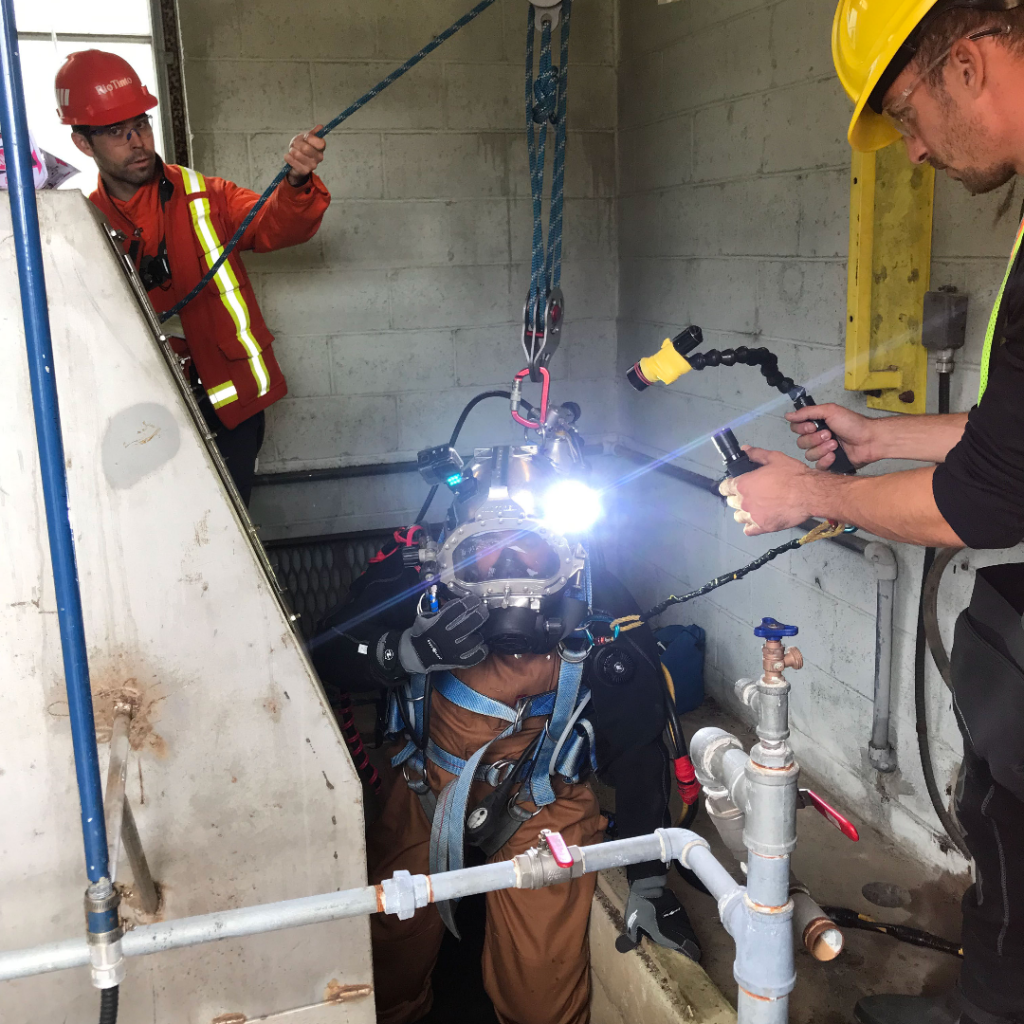
05↗Concrete, grout & repair placement
Tremie, pump-and-hose, form-and-pump, preplaced-aggregate grout, bagwork and proprietary repair materials are evaluated for the actual depth, flow, washout risk, reinforcement congestion, access and required finished condition.
 06↗
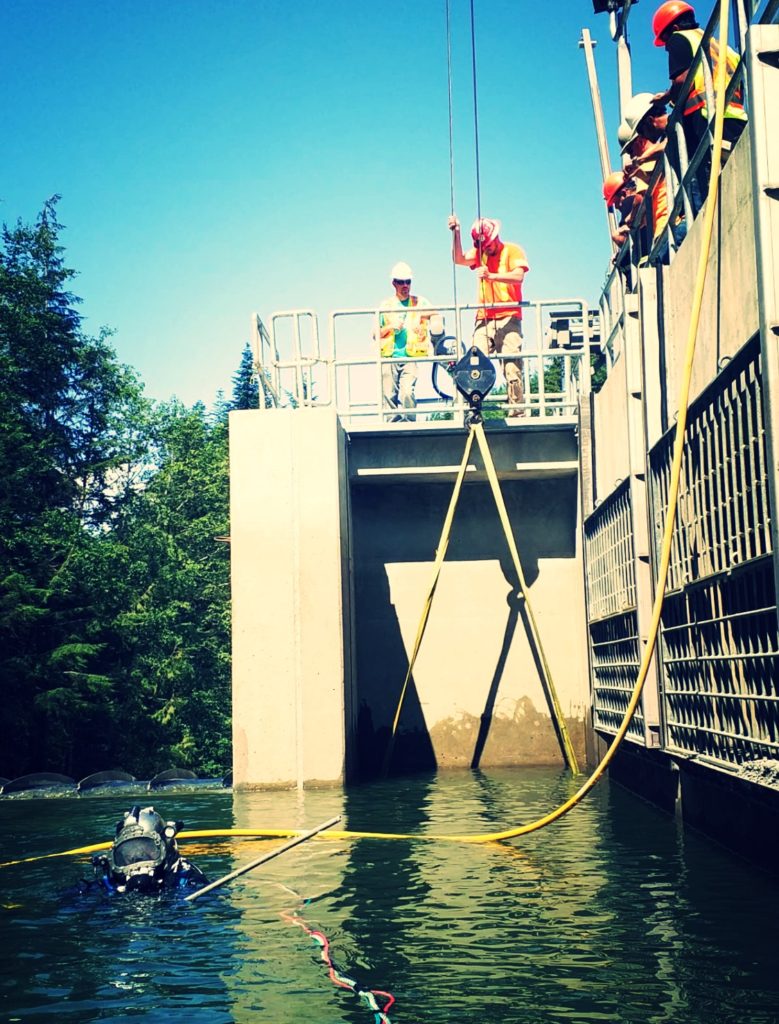
06↗Scour, foundations & encasement
Underwater Concrete Services can support aprons, toe protection, pile and pipe encasement, foundation repairs, void filling, localized mass concrete and scour countermeasures under the owner’s engineered design and environmental plan.
Constructability before mobilization
The water changes
the placement plan.
A mix that performs on land can fail underwater if it is discharged, confined or interrupted incorrectly.
Ven-Tech reviews the placement route from the delivery point to the repair. Hose length, tremie position, pumping characteristics, access, water temperature, flow, reinforcement congestion, form pressure, venting, return material, communications and contingency capacity all influence the field sequence.
- 01Place from the approved location and maintain the required embedment or bottom-up fill.
- 02Prevent uncontrolled washout, segregation, cold joints, trapped water and air.
- 03Monitor ports, vents, leakage, supply continuity and defined hold points.
- 04Stop, isolate or repair only through the agreed contingency process.
7-step delivery model
Define. Prepare.
Place. Accept.
A repeatable sequence keeps the design authority, dive team, concrete supplier, surface support, quality team and owner aligned.
Confirm the owner decision
Establish the asset, defect, structural objective, design authority, operational constraints, schedule, environmental requirements and the evidence required for acceptance.
Verify existing conditions
Review drawings and history, then confirm geometry, substrate, reinforcement, voids, access, water depth, visibility, flow and obstructions with the appropriate inspection tools.
Engineer the repair and forms
Coordinate removal limits, reinforcement, anchors, formwork, material, placement, venting, temporary works, cure or protection, hold points and contingencies.
Plan diving, isolation and environment
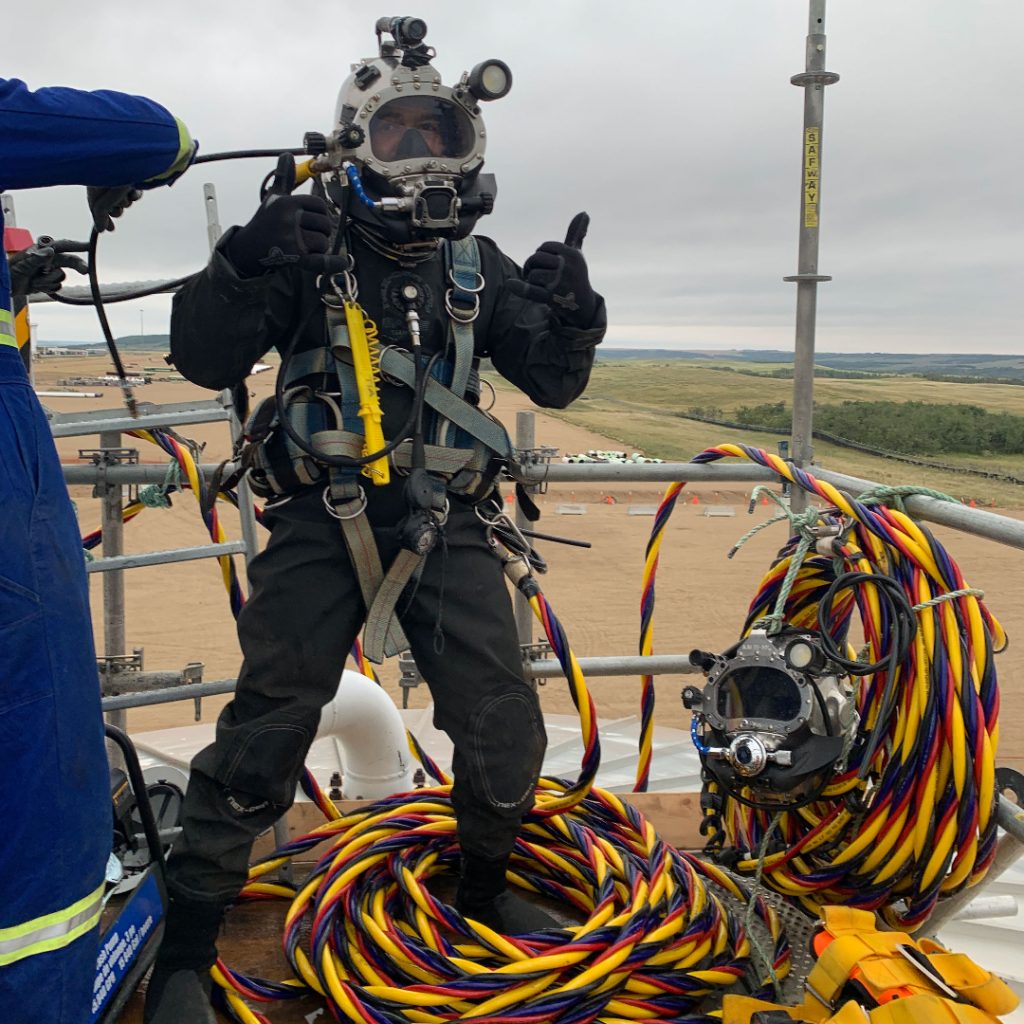
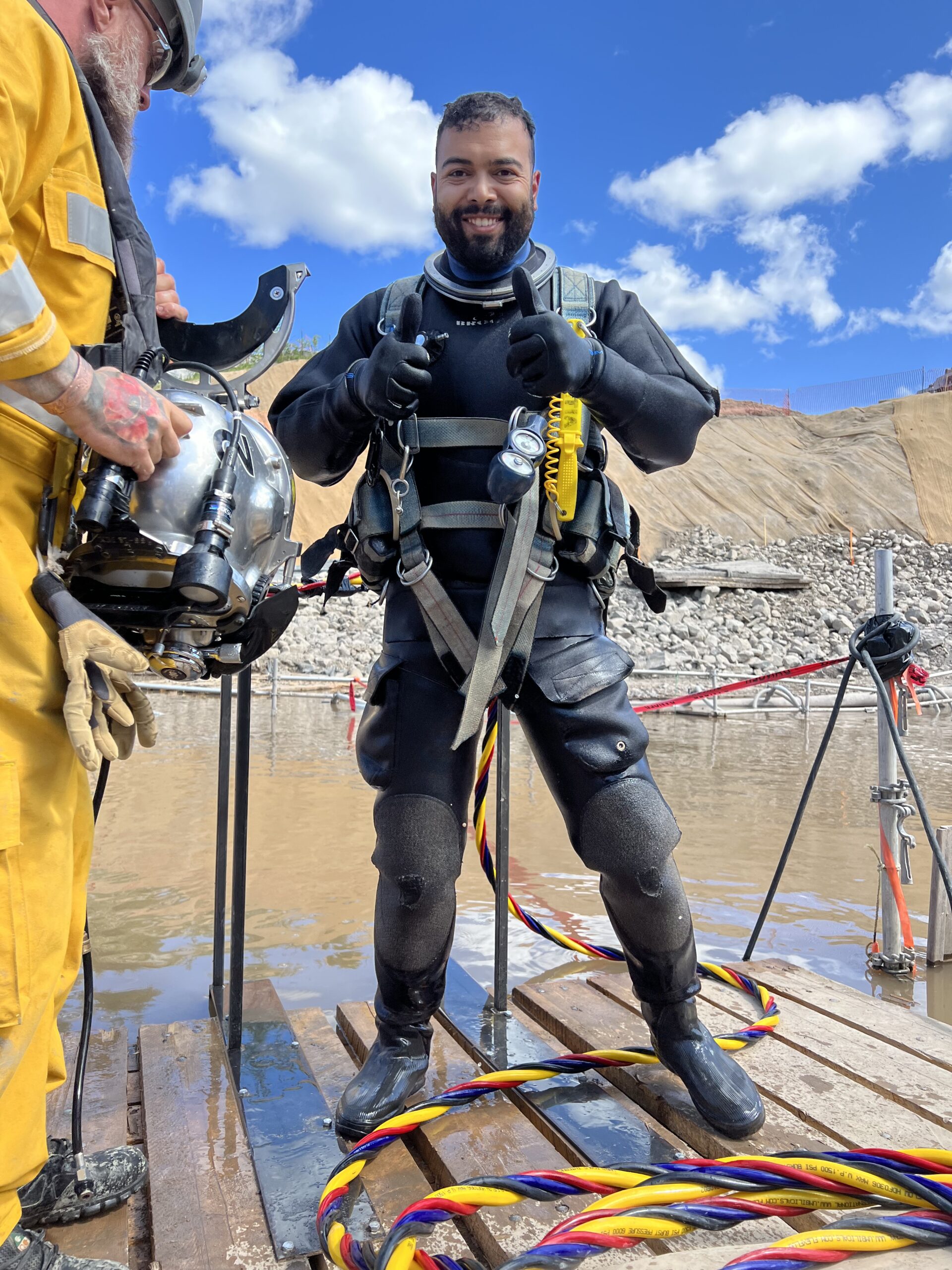
Develop the project dive plan, lockout, lifting, communications, rescue, access, turbidity, washout, spill and fish-habitat controls applicable to the site.
Build a sound receiving surface
Remove unsound material, clean the substrate and steel, install anchors and reinforcement, confirm dimensions, close forms and release the pre-placement hold point.
Maintain a continuous controlled fill
Place the approved concrete, grout or repair material using the specified method while monitoring supply, time, head, ports, vents, leakage, returns and interruptions.
Inspect, test and close out
Complete the specified cure or protection period, remove forms when authorized, inspect the finished work, resolve deficiencies and issue the indexed quality record.
Placement and repair systems
Match the method
to the failure mode.
No single product or placement method fits every submerged structure. Selection remains engineering- and project-specific.
Form-and-pump placement
A sealed form and controlled pump line can place repair concrete or grout from the bottom upward, displacing water through planned vents while limiting segregation and washout.
Tremie placement
A tremie pipe remains embedded in the fresh mass so the material is placed continuously beneath the surface rather than discharged through the water column.
Preplaced aggregate concrete
Clean graded aggregate is positioned first, then grout is injected to fill the interconnected voids. Design, trials, groutability and quality controls remain project-specific.
Proprietary underwater repair materials
Anti-washout concretes, cementitious grouts, repair mortars, epoxies and other systems are selected only after compatibility, substrate, temperature, water chemistry, installation and manufacturer requirements are reviewed.
Fabric forms, jackets & bagwork
Fabric systems can provide localized containment or geometry where appropriate. They are not a substitute for engineering and must be configured for loading, durability, bond and the required finish.
Void filling and structural grouting
Pumpable grout can fill accessible voids beneath slabs, foundations, aprons, walls or embedded components when venting, confinement, pathways, pressure and verification are adequately defined.
Scour protection and mass placement
Engineered concrete units, aprons, mats, grout bags or mass placements may stabilize vulnerable toes and foundations, coordinated with hydraulic, geotechnical and environmental requirements.
Crack, joint and spall repair
Cleaning, routing, sealing, injection, patching, joint renewal and local rebuilds are selected according to cause, movement, leakage, reinforcement condition and whether the repair is structural or protective.
Quality control and acceptance
See the repair.
Read the record.
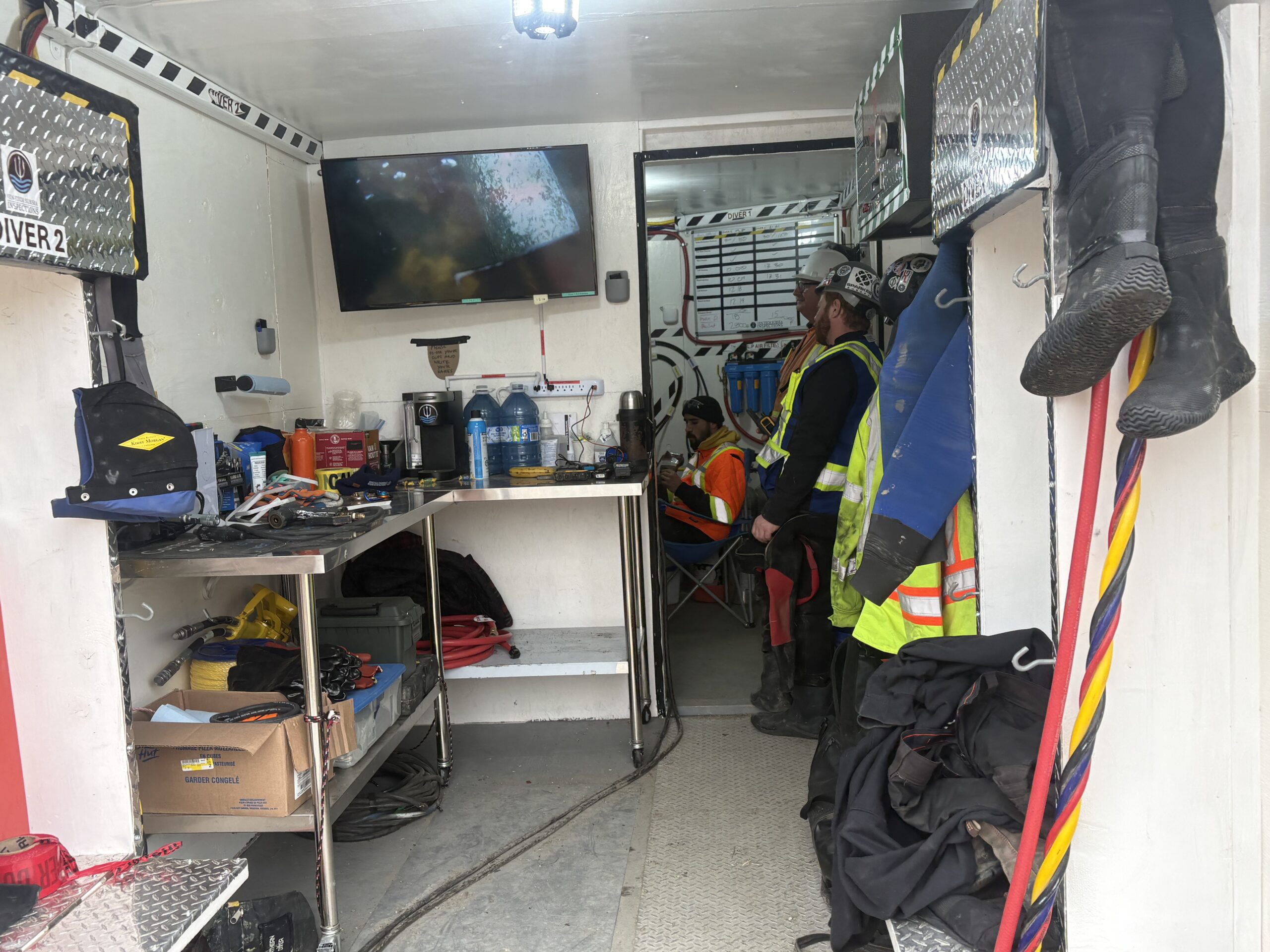
Underwater Concrete Services should produce more than an unstructured video archive. The quality plan connects each repair area to the design, pre-placement condition, material, placement record, inspection and final disposition.
Depending on the specification, independent or qualified testing parties may document samples, specimens, temperature, strength or other material properties. Ven-Tech’s field evidence complements—not replaces—the engineer’s acceptance role, supplier records or accredited testing required by the contract.
Before, during and after imageryDimensions and hold-point releasesMaterial and placement recordsDeficiencies, repairs and as-builts
Underwater Concrete Services deliverables
Built for the field.
Organized for the owner.
The final record connects the engineered intent, executed work, material information, verification and remaining decisions.
Approved work package
Drawings, specifications, repair boundaries, method, forms, placement sequence, responsibilities, interfaces, hold points and contingency requirements.
Dive and HSE records
Project-specific dive plan, hazard assessment, permits, isolation, communications, rescue, lifting and environmental controls.
Material documentation
Relevant product data, mix or grout information, batch tickets, certifications, storage conditions, shelf life and manufacturer instructions.
Pre-placement verification
Substrate, removal limits, reinforcement, anchors, dimensions, form closure, ports, vents, seals and readiness documented before release.
Placement log
Date, time, conditions, delivery sequence, volumes, pressures where relevant, interruptions, returns, leakage, observations and approved field adjustments.
Testing and inspection
Specified samples, specimens, temperature, strength or other tests from qualified parties, plus visual inspection, sounding, measurements or NDT where included.
Indexed photo and video
Before, during and after records organized by asset, location, drawing reference, repair area or hold point for efficient technical review.
Closeout and as-built report
Completed locations, quantities, approved deviations, deficiencies, corrective work, limitations, test results and recommended monitoring connected in one record.
Where we work
Critical concrete.
Working infrastructure.
Ven-Tech supports municipal, hydroelectric, transportation, marine, industrial and resource owners managing submerged concrete in demanding environments.
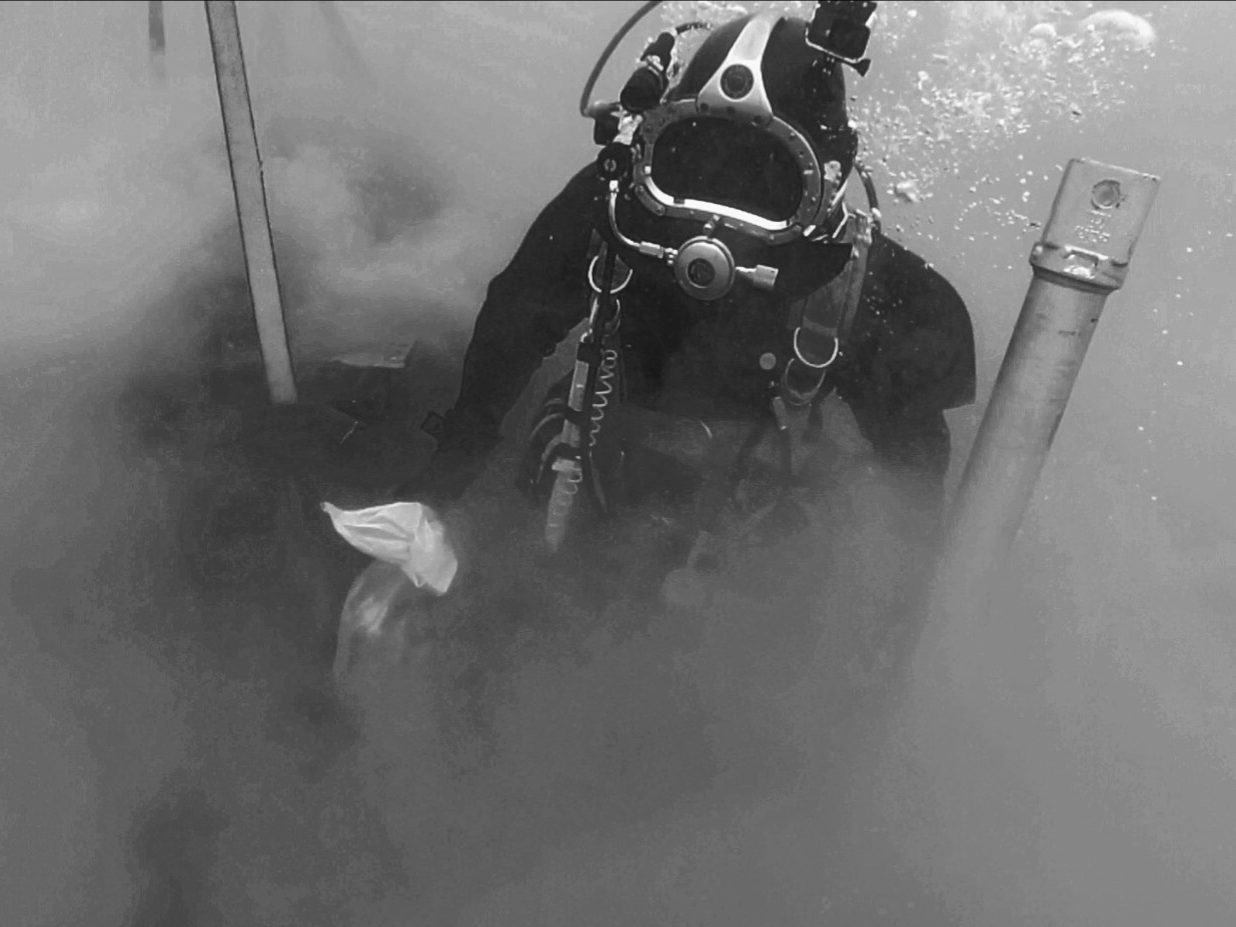
01Dams, spillways and hydro facilities↗
02Municipal reservoirs and wet wells↗
03Water intakes, outfalls and screens↗
04Bridge piers, abutments and foundations↗
05Wharves, docks, piles and caissons↗
06Industrial basins and process-water assets↗
07Pipelines, culverts and concrete encasements↗
08Marine terminals and coastal infrastructure↗
About Ven-Tech Subsea
People, systems
and field capability.
The approved company video introduces Ven-Tech’s commercial-diving, inspection, robotics, construction and project-support capability. Project-specific underwater concrete methods are developed after the asset, design and constraints are reviewed.
Discuss a concrete scope →HSE, environment and technical basis
Control the work.
Protect the water.
Commercial diving, isolation, lifting, temporary works, concrete placement and environmental interfaces are planned as one project system. Ven-Tech coordinates with the owner, designer, suppliers, qualified environmental professionals and testing parties responsible to the work.
BCCSA COR® CertifiedISNetworld Member ContractorISNetworld ESG BadgeAvetta ApprovedCognibox CertifiedAlcumus SafeContractorWorkSafeBC Part 24Lockout and energy controlProject-specific QA/QCEnvironmental protection plan
Underwater Concrete Services FAQ
Technical questions.
Clear answers.
These answers explain the planning, placement, quality and environmental controls that shape a responsible underwater concrete scope.
What do Underwater Concrete Services include?+
Underwater Concrete Services can include condition surveys, substrate preparation, removal of unsound concrete, reinforcement and anchors, formwork, concrete or grout placement, crack and spall repair, void filling, encasement, scour protection, inspection, testing and closeout documentation. Every scope is configured around the owner’s design and actual site conditions.
How is concrete placed underwater without washing out?+
The selected method limits free discharge through the water. Depending on the design, crews may use a tremie, bottom-up pump placement in sealed forms, preplaced aggregate grout or a qualified proprietary repair system. Continuous placement, controlled head, suitable consistency, ports, vents and inspection help manage segregation, leakage and washout.
Who designs an underwater concrete repair?+
A qualified professional responsible to the project should define the structural objective, removal limits, reinforcement, anchors, formwork, material properties, placement method, loads, tolerances, durability and acceptance criteria. Ven-Tech turns that design into a field method and provides constructability feedback, underwater access and execution records.
Can Underwater Concrete Services be completed while a facility operates?+
Sometimes, but only when the owner and project team can establish safe isolation or controlled operating boundaries. Flow, pumps, gates, valves, intakes, pressure, electrical sources, moving equipment, contamination and adjacent work must be addressed before divers or equipment enter the work area.
How is underwater formwork inspected before placement?+
The pre-placement hold point can verify dimensions, bracing, seals, ports, vents, reinforcement, anchors, cover, cleanliness, access, placement routing and readiness. The form system must suit buoyancy, hydrostatic and placement pressure, leakage risk and the approved removal sequence.
What quality records are available?+
The agreed package may include material data, batch tickets, placement logs, volumes, temperatures, timing, samples or test specimens from qualified parties, hold-point releases, indexed photos and video, measurements, inspection or NDT findings, deficiencies, corrective work and as-built information.
How are environmental risks managed during concrete work near water?+
Controls are selected with the owner and qualified environmental professionals. They may address isolation, turbidity, erosion and sediment, uncured concrete, grout and alkaline water, equipment leaks, refuelling, washout, waste, spill response, fish passage and timing windows. Regulatory review and authorization remain project-specific.
What information is needed for an Underwater Concrete Services quote?+
Provide the asset and location, drawings, inspection findings, design status, defect and repair objective, depth, visibility, flow, access, operating constraints, isolation, environmental requirements, material specification, quantities, schedule, owner standards, acceptance criteria and required deliverables. Ven-Tech can then identify investigation gaps and the next responsible step.
Bring us the design and the constraints
Repair below the surface.
Prove what was placed.
Send the drawings, inspection findings, repair objective, water conditions, isolation, access, environmental requirements, schedule and acceptance criteria. Ven-Tech will review the Underwater Concrete Services scope and define the next responsible step.