Emergency agencies retain incident command where applicable. The salvage plan establishes work boundaries, communications, diving controls, recovery arrangements and stop-work authority.
MARINE SALVAGE · SEARCH · STABILIZE · RECOVER
Marine salvage.
Controlled recovery.
Marine Salvage for vessels, equipment, cargo, debris and submerged assets—combining commercial divers, ROVs, sonar, survey, rigging and disciplined field execution across Canada.
SEARCHSonar & positioning
ASSESSDiver & ROV evidence
RECOVERRigging & lift control
Plan the recovery, not only the lift
Control the unknowns.
Protect the outcome.
Every Marine Salvage operation begins with incomplete information. The first job is to turn uncertainty into a controlled recovery picture.
Ven-Tech reviews the target, location, people at risk, pollutants, ownership, regulatory interfaces, depth, access, weather, tide, current, structural condition, bottom contact and required outcome. Sonar, survey, ROVs and commercial divers can then establish the evidence needed to choose a responsible method.
Marine Salvage may involve a direct equipment retrieval, staged vessel stabilization, cargo recovery, underwater dismantling or removal of a navigation obstruction. The solution is built around the asset and environment, with responsibilities, hold points, equipment capacities and contingency actions made clear before execution.
Target-specific assessmentIntegrated marine technologyTraceable closeout
Fuel, oils, batteries, cargo, unstable debris and sensitive habitat are identified early so containment, monitoring and specialist environmental support can be coordinated.
Buoyancy, flooding, structure, bottom contact, tide, current, weather, access and load path are evaluated before personnel attach rigging or a lift begins.
Baseline condition, survey data, lift points, field changes, recovered items and final site condition are recorded for the owner and project stakeholders.
Integrated recovery capability
Marine Salvage.
From location to clearance.
Marine Salvage teams, tools and surface support are configured around the target, load path, site constraints and evidence required by the owner and authorities.
 01↗
01↗Vessel recovery & stabilization
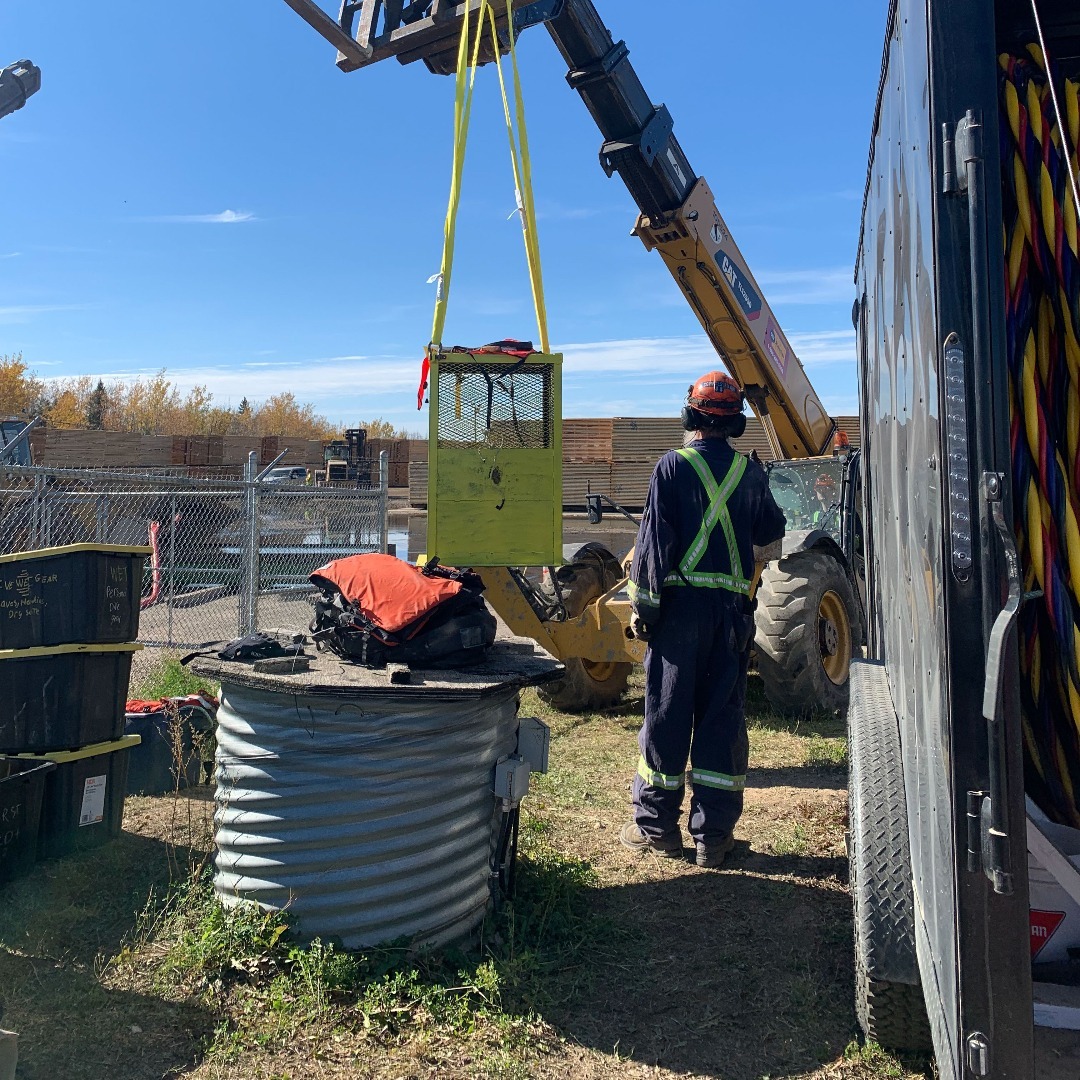
Marine Salvage planning for grounded, sunken or partially submerged vessels, including initial condition review, stabilization, access, rigging interfaces and controlled recovery sequencing.
 02↗
02↗Equipment & cargo retrieval
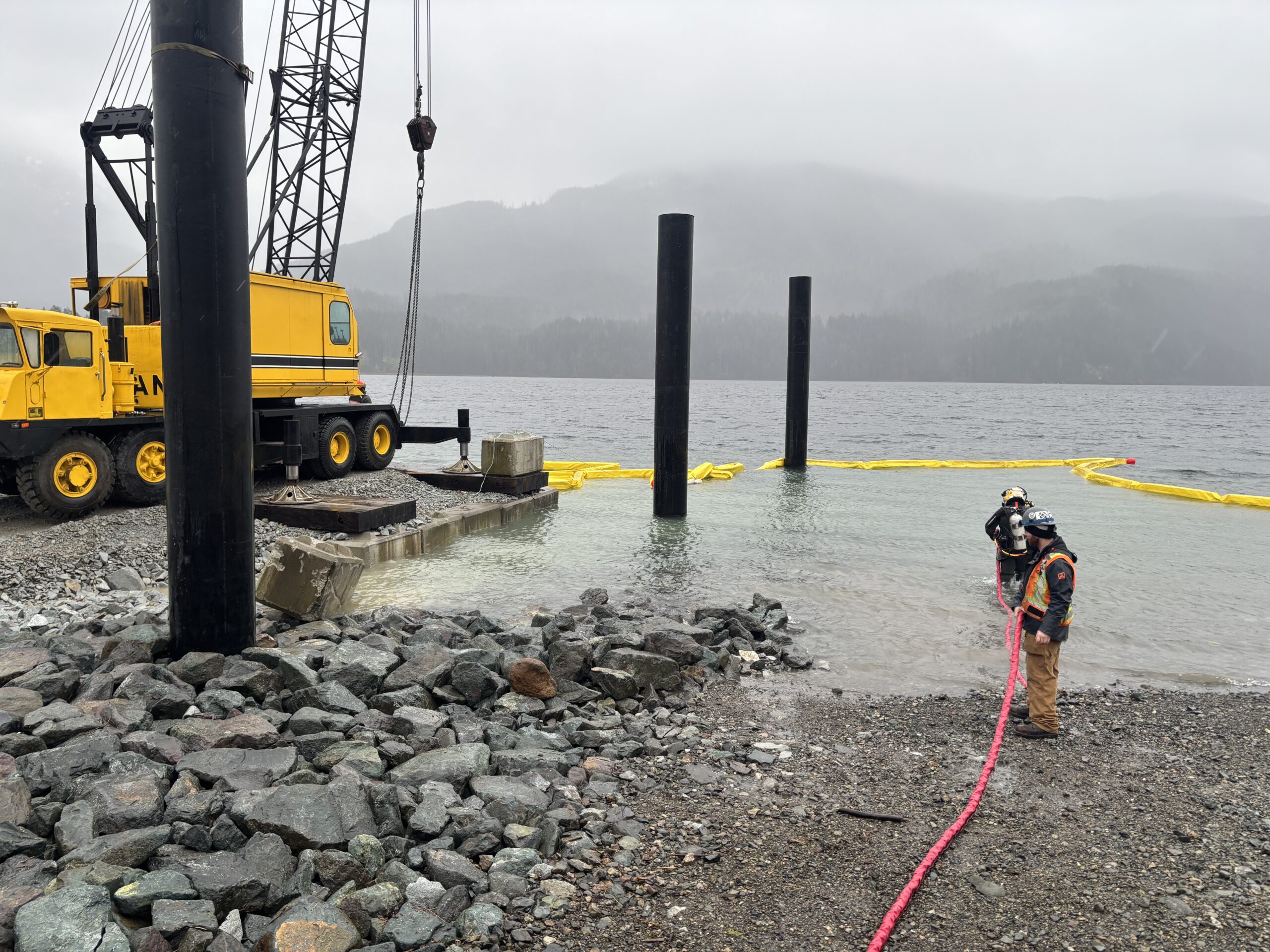
Recovery of machinery, tools, vehicles, cargo and project equipment using diver, ROV, lifting, rigging and surface-support methods selected for the load and site.
 03↗
03↗Search, locate & map
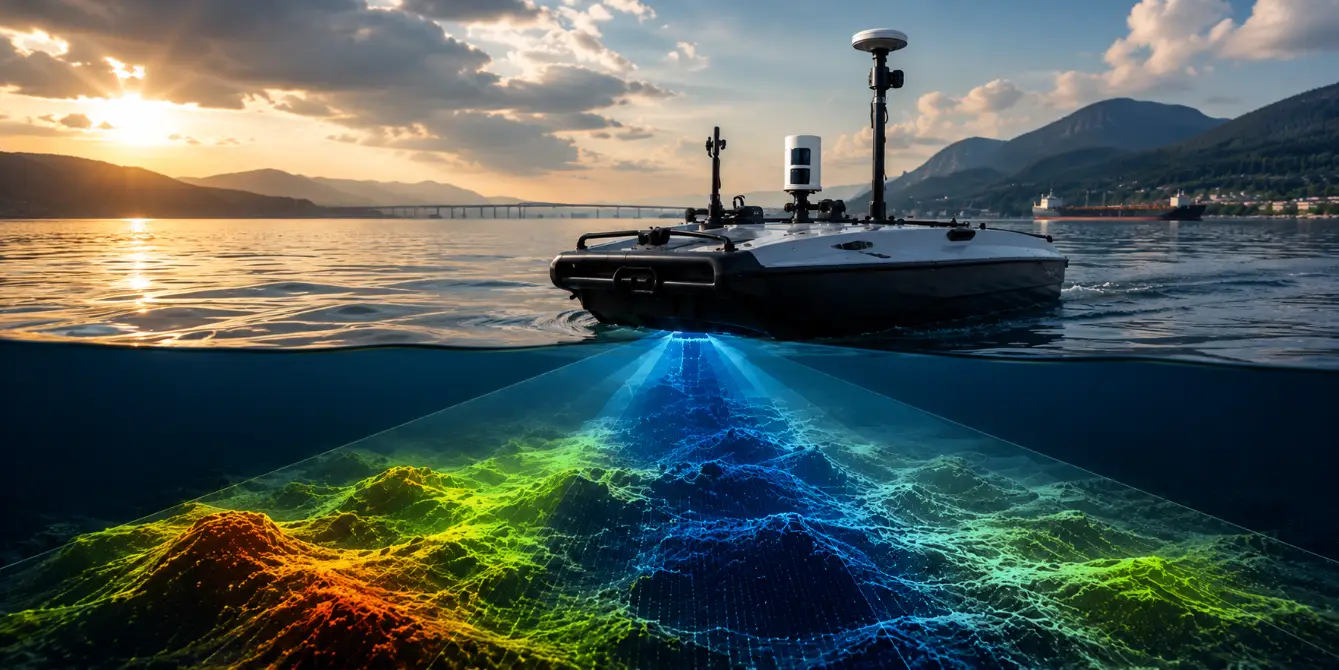
Search scopes can combine side-scan or imaging sonar, bathymetry, GNSS positioning, ROV reconnaissance and diver confirmation to define the target and recovery environment.
 04↗
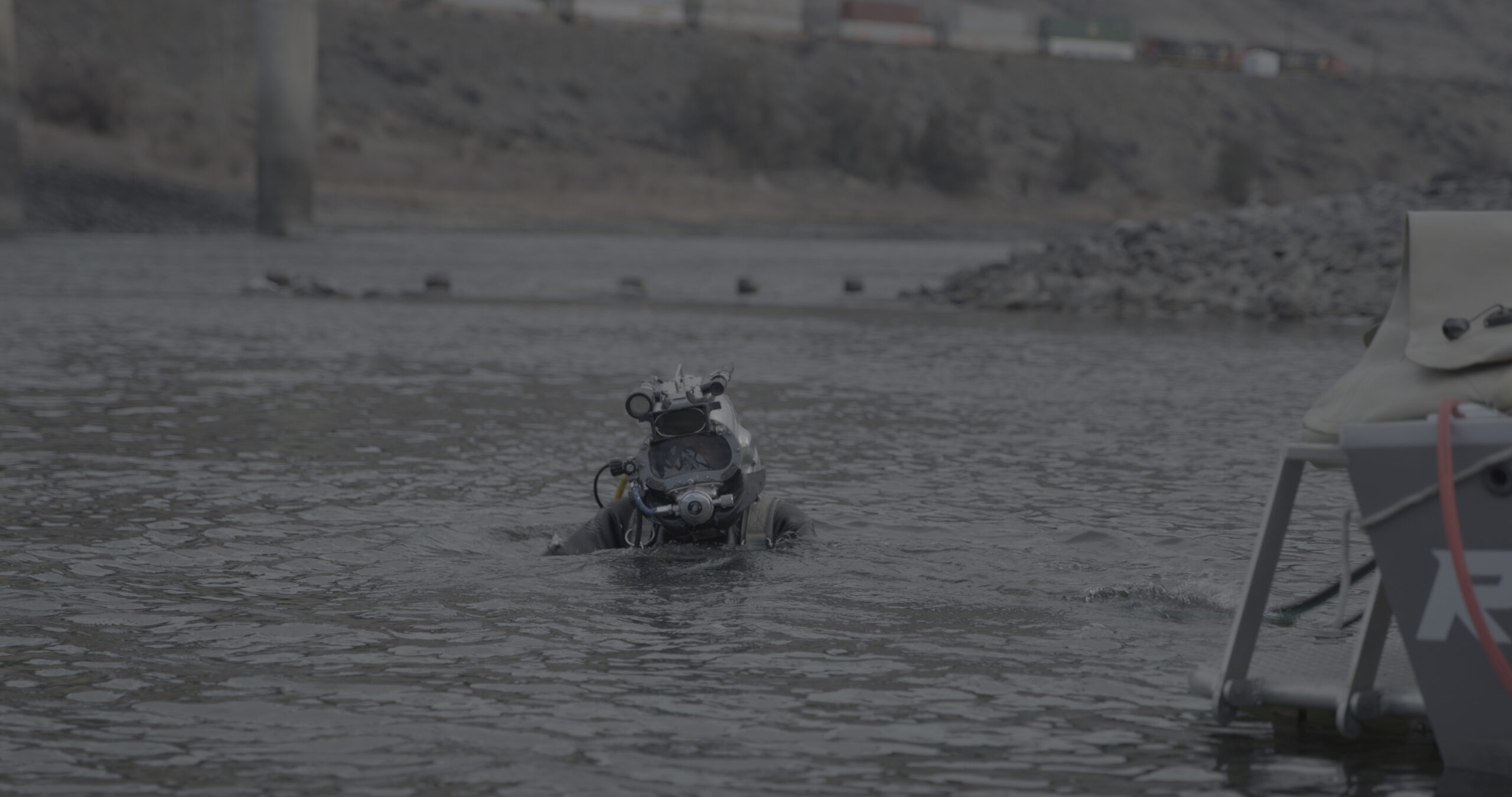
04↗Diver intervention & rigging
Commercial divers can inspect the target, clear obstructions, establish lifting points, install rigging, prepare components and verify conditions where hands-on access is required.
 05↗
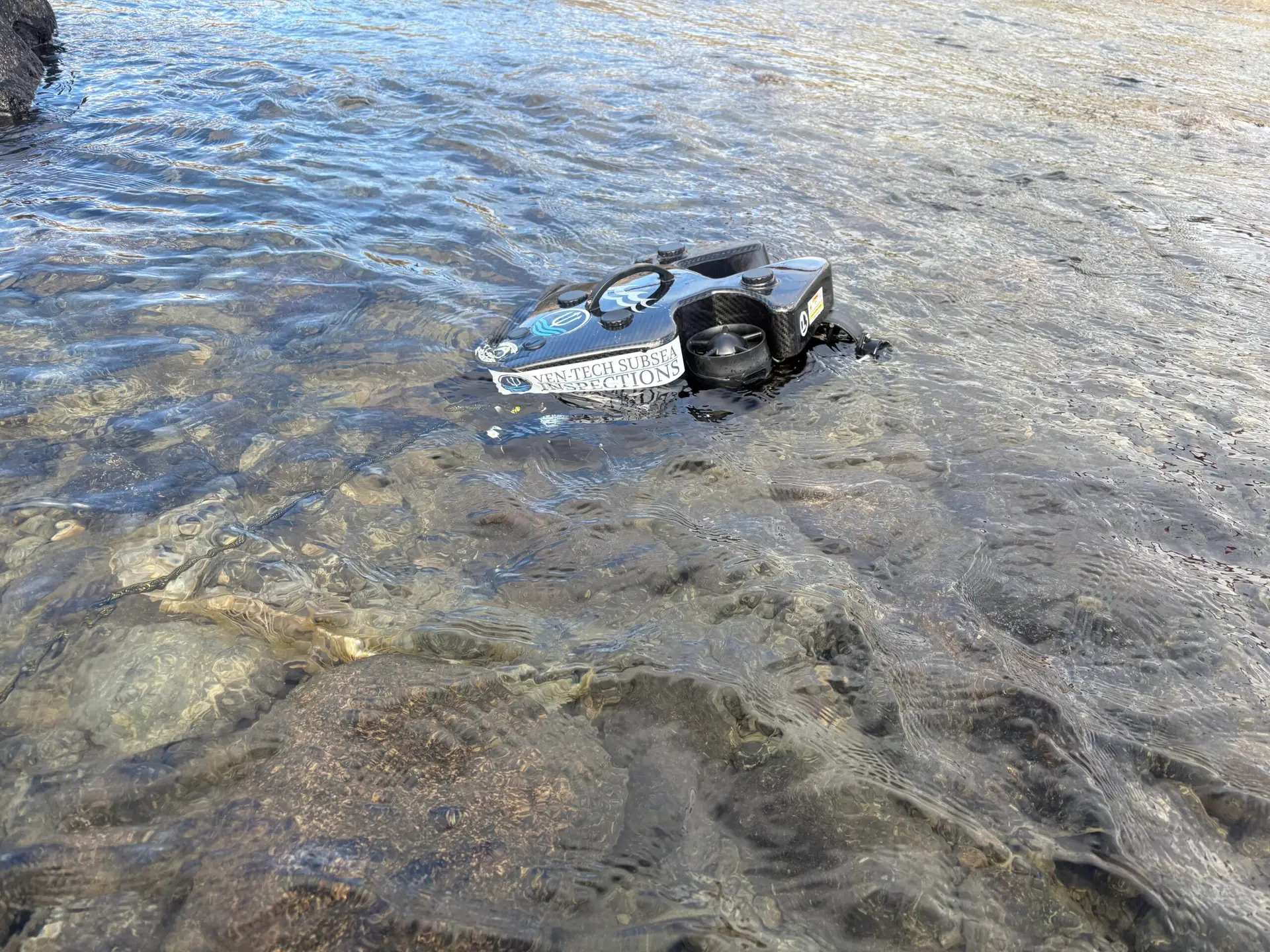
05↗ROV assessment & monitoring
ROV support provides remote visual assessment, sonar, route reconnaissance and monitoring around targets where visibility, depth, access or exposure favour robotics.
 06↗
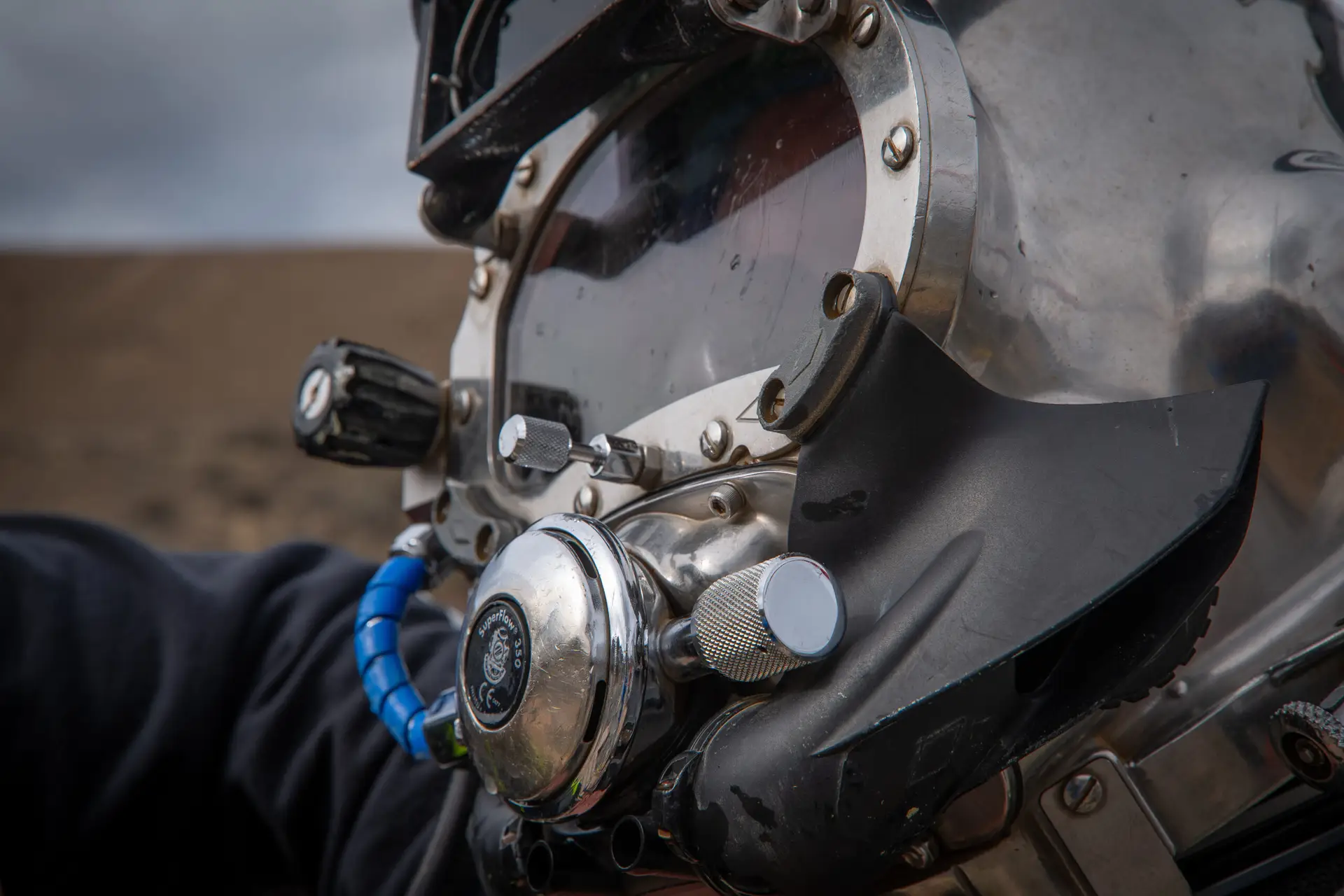
06↗Debris, wreckage & obstruction removal
Marine Salvage removal planning for underwater debris, damaged components and navigation obstructions, with segregation, lifting, containment and disposal responsibilities confirmed before work.
Control before force
Know the target.
Then move it.
A recovery system is only as strong as the assumptions behind its load path.
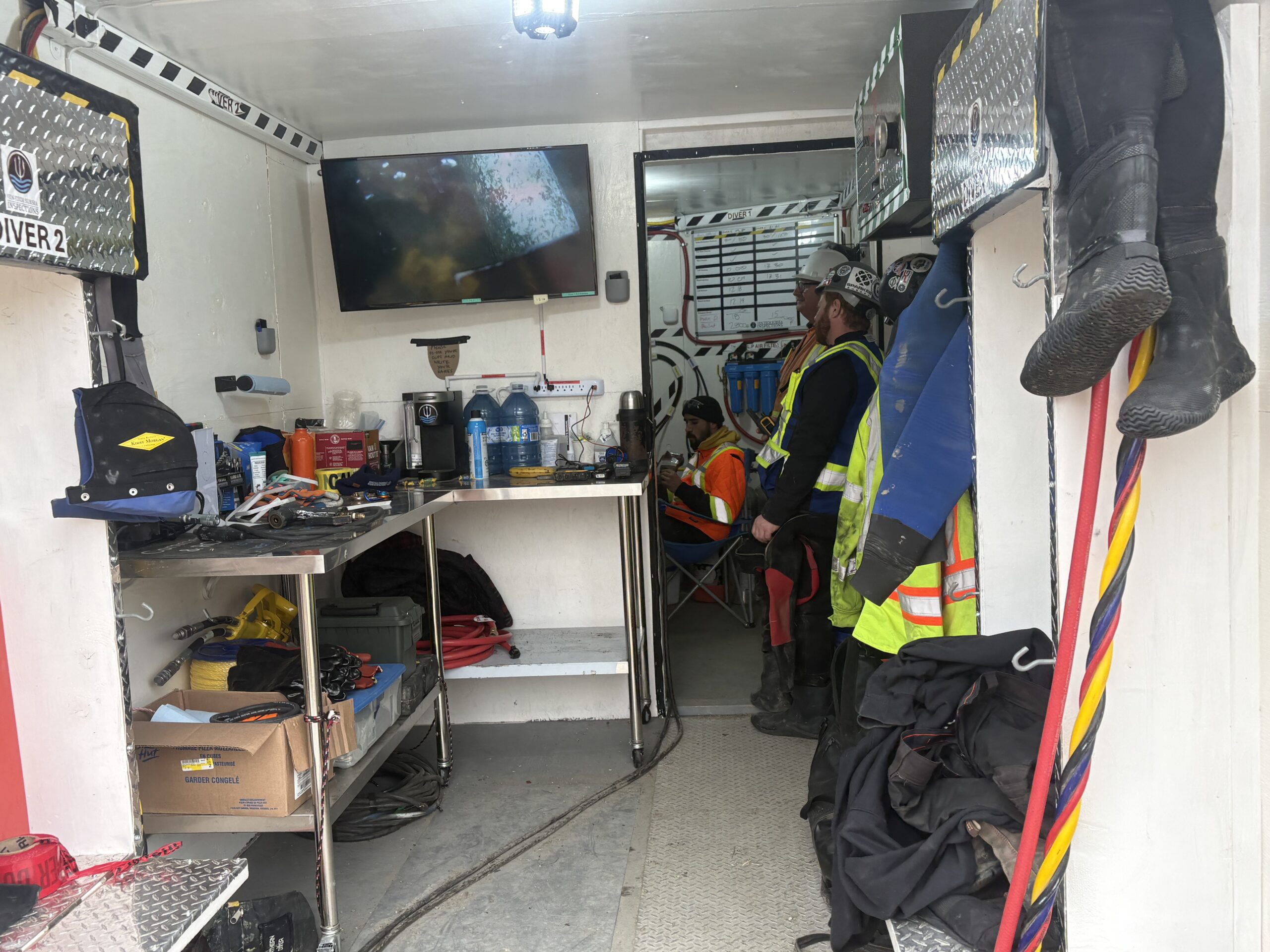
Before rigging or lifting, the Marine Salvage team confirms what can be observed and identifies what remains unknown. Target movement, flooding, trapped contents, structural weakness, sling angles, suction, tide, current, surface-vessel position and crane or winch limits can all change the recovery response.
- 01Baseline video, sonar and orientation record
- 02Verified attachment and lift-point condition
- 03Staged tensioning with defined hold points
- 04Live communications and changing-condition review
6-step Marine Salvage workflow
Assess. Engineer.
Recover. Verify.
A structured six-stage process keeps incident information, survey evidence, recovery engineering, field controls and final records aligned.
Build the first picture
Confirm location, ownership, people at risk, target condition, depth, access, pollutants, cargo, weather, tide, current and immediate navigation concerns.
Locate and assess
Use available drawings, witness information, sonar, ROV, divers and positioning to establish orientation, damage, bottom contact, obstructions and safe approach routes.
Define the recovery concept
Estimate displacement and load, identify lift or tow points, select rigging and buoyancy, confirm equipment capacities, and set stability and hold-point criteria.
Build the field plan
Coordinate authorities, owner, marine contractor, environmental support, diving, lifting, exclusion zones, communications, emergency actions and weather limits.
Recover in controlled stages
Stabilize, prepare, connect, tension, monitor and recover while verifying the load path, target response, rigging condition and changing environmental conditions.
Clear and document
Secure recovered assets, verify the site, manage waste or disposal interfaces, index media, summarize field changes and issue the agreed project record.
Recovery methods
One objective.
The right combination of tools.
Marine Salvage rarely depends on one platform. The strongest recovery concept often combines remote survey, hands-on intervention and properly selected lifting support.
Commercial divers
Hands-on inspection, attachment, cutting, clearing, rigging, sealing, patching and recovery work where safe diver access is practical.
ROV systems
Remote visual and sonar reconnaissance, monitoring and documentation where depth, access, water quality or exposure make robotics advantageous.
Sonar & positioning
Target search, route planning, obstruction mapping, bathymetry and coordinates to improve recovery planning and reduce unproductive bottom time.
Rigging & lifting
Project-specific slings, shackles, spreaders, cranes, winches, lift bags and surface assets selected and verified for the recovery concept.
Cutting & separation
Controlled underwater cutting or dismantling when a target cannot be recovered as one unit, subject to material, stability and environmental review.
Pumping & dewatering
Flooding control, buoyancy management, temporary sealing and dewatering where the target condition and engineered recovery sequence permit.
Environmental and authority interfaces
Recover the asset.
Respect the waterway.
Marine Salvage can involve wreck ownership, navigation, pollutants, sensitive habitat, waste, recovered property and multiple authorities. Ven-Tech confirms project interfaces with the owner and responsible agencies before field activities proceed.
In Canadian waters, wreck and hazardous-vessel responsibilities may involve Transport Canada, the Receiver of Wreck, the Canadian Coast Guard, port or harbour authorities, local governments, Indigenous communities, landowners and environmental specialists. The exact path depends on the vessel, location and condition.
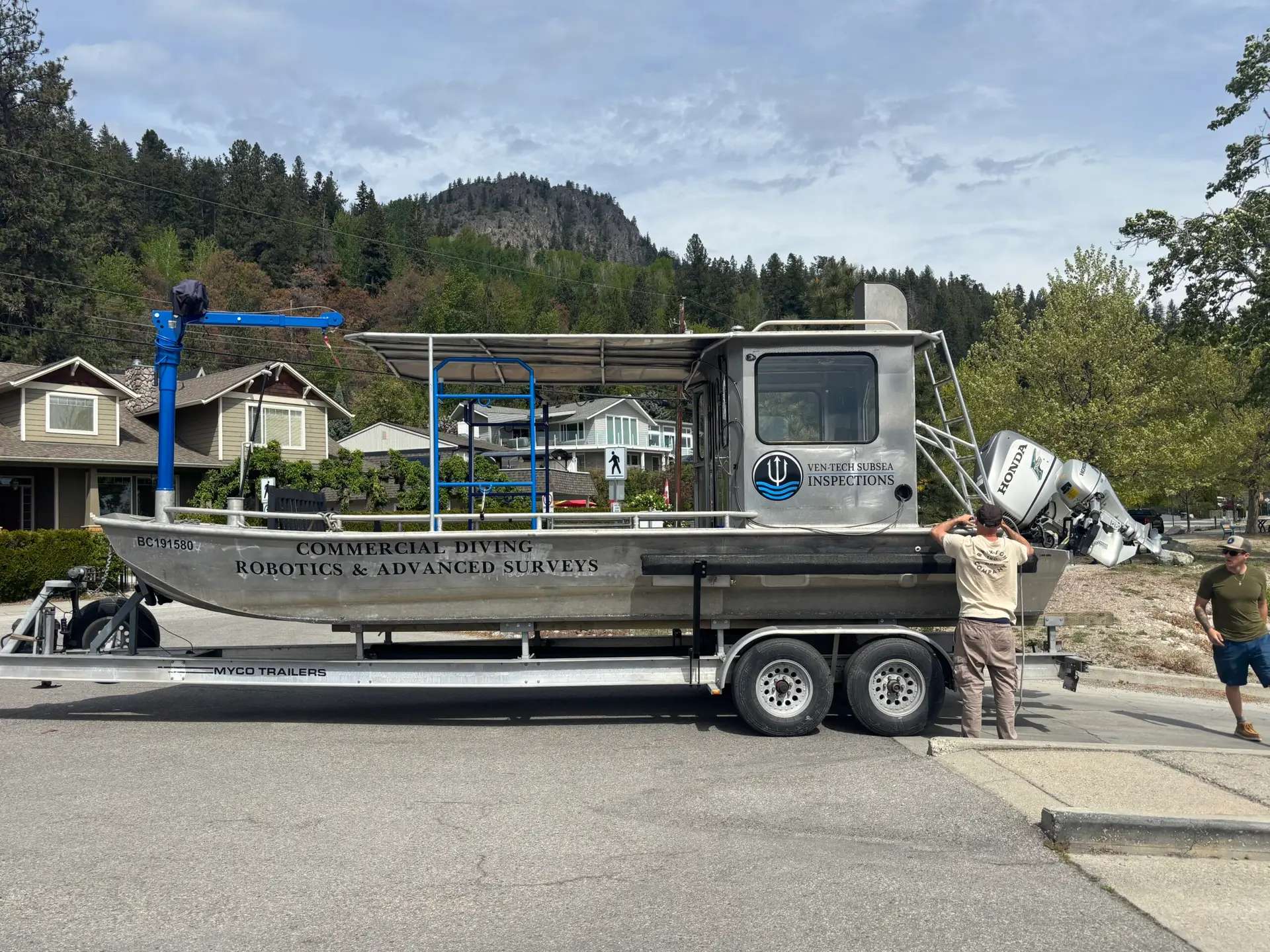
Marine Salvage deliverables
A recovery record
built for review.
The agreed package connects the initial target picture, approved method, field evidence, recovered items and final site condition.
Incident & asset summary
Known facts, assumptions, ownership and authority interfaces, site constraints and urgent priorities in one controlled record.
Search and survey package
Target coordinates, sonar images, bathymetry, ROV or diver observations, orientation and access notes where included in scope.
Recovery method statement
Sequence, roles, equipment, rigging, buoyancy, lifting or towing approach, hold points, weather limits and contingency actions.
Lift and rigging records
Selected components, working-load information, inspection status, load-path sketch, connection points and field verification records.
Environmental controls
Known pollutant sources, containment provisions, monitoring, waste interfaces, spill response coordination and sensitive-area considerations.
Indexed photo and video
Before, during and after evidence organized by target, activity or location so the recovery can be reviewed efficiently.
Recovered-item register
Item description, condition, location, chain-of-custody needs, owner direction and transfer or disposal status when required.
Marine Salvage closeout report
Completed work, recovered assets, final site condition, deviations, limitations, outstanding risks and recommended next actions.
Recovery targets
From lost equipment.
To complex vessel recovery.
Marine Salvage scope, equipment and project partners scale with the target. Ven-Tech can support industrial, municipal, construction, marine, energy and resource clients across varied water environments.
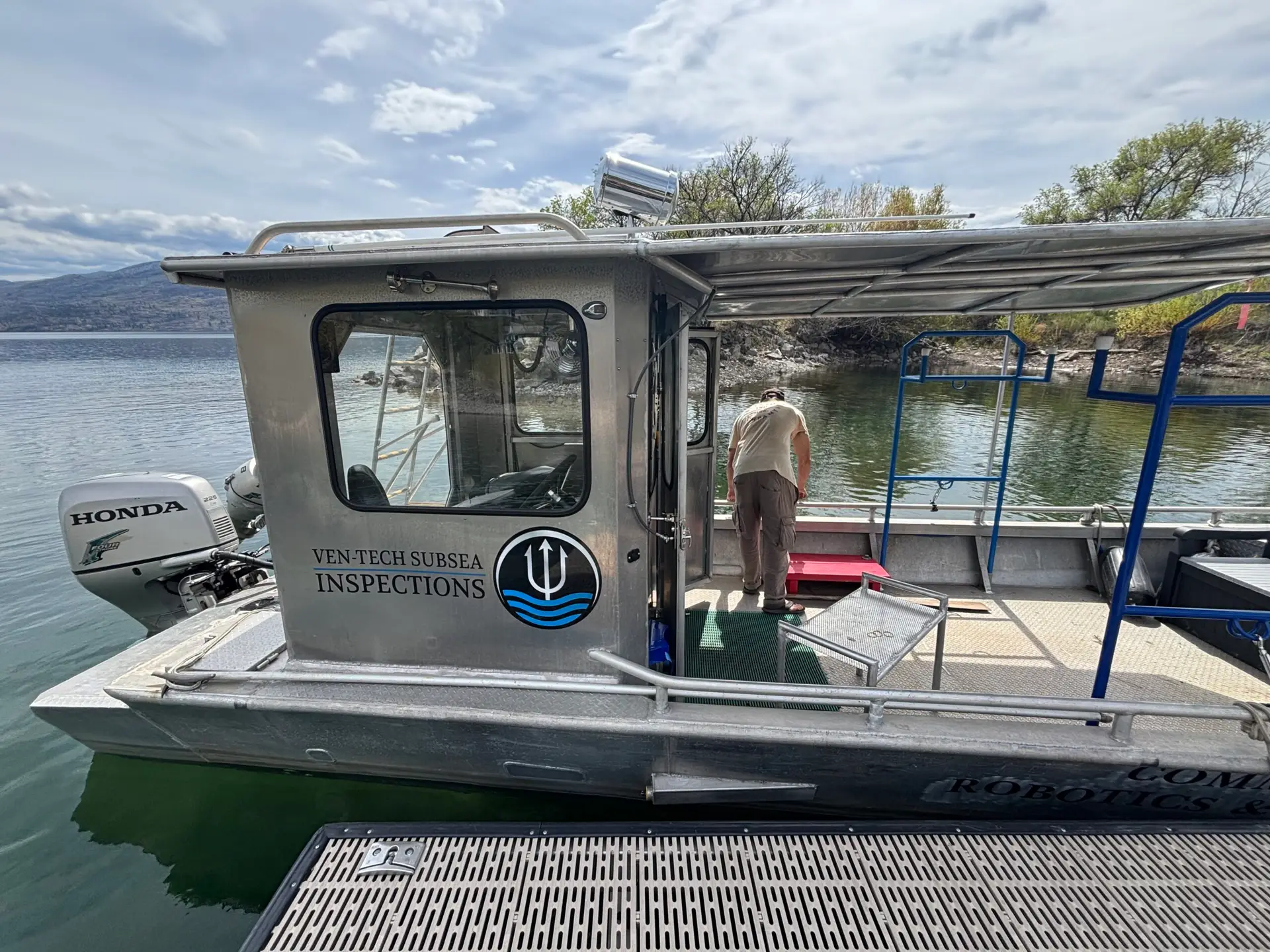
01Grounded or sunken vessels↗
02Vehicles and mobile equipment↗
03Construction plant and machinery↗
04Lost tools and project equipment↗
05Cargo and container contents↗
06Dock and terminal debris↗
07Navigation obstructions and wreckage↗
08Submerged infrastructure components↗
HSE is the operating system
High-consequence work.
Clear field authority.
Marine Salvage work is planned within Ven-Tech’s health, safety, environmental and contractor-assurance system. Project-specific controls address commercial diving, lifting, rigging, vessel interfaces, stored energy, unstable loads, environmental conditions, communications and emergency response.
BCCSA COR® CertifiedISNetworld Member ContractorISNetworld ESG BadgeAvetta ApprovedCognibox CertifiedAlcumus SafeContractorCSA diving frameworkWorkSafeBC Part 24Project-specific lift planningStop-work authority
Review Ven-Tech HSE →Marine Salvage FAQ
Recovery questions.
Clear answers.
Every incident and target is different. These answers explain how Ven-Tech develops a responsible Marine Salvage approach.
What does a Marine Salvage project include?+
Marine Salvage may include incident assessment, search and location, sonar or ROV survey, diver inspection, stabilization, pollution-prevention interfaces, rigging, lifting, towing, cargo or equipment recovery, debris removal and project closeout. The actual scope depends on the target, ownership, authority, environment and required outcome.
Can Ven-Tech recover a sunken or grounded vessel?+
Ven-Tech can assess vessel recovery requirements and configure commercial diving, ROV, sonar, survey and recovery support for suitable projects. Vessel size, structural condition, displacement, flooding, access, bottom contact, pollutants, weather, permits and available lifting or towing assets determine the practical approach.
How do you locate a submerged asset before recovery?+
Search methods can include witness information, last-known coordinates, GNSS, side-scan sonar, multibeam or imaging sonar, bathymetry, ROV inspection and diver verification. The search pattern and sensor are selected for the target size, water depth, bottom type, visibility and expected search area.
Do you provide Marine Salvage diving and ROV services together?+
Yes. A hybrid Marine Salvage scope may use sonar and ROVs to find and assess the target, then commercial divers for tactile inspection, cleaning, rigging, cutting, sealing or connection work. Robotics can also monitor target movement and rigging during staged recovery.
How is a Marine Salvage lift planned?+
The team reviews target weight or displacement, trapped contents, buoyancy, flooding, structure, centre of gravity, bottom suction, lift points, sling angles, dynamic effects, equipment capacities and surface stability. A competent project team then defines the sequence, hold points, exclusion zones and contingency actions.
How are fuel, oil and environmental risks managed?+
Known tanks, batteries, cargo and pollutant pathways are identified during planning. The owner and project team coordinate containment, monitoring, spill-response equipment, waste handling and specialist environmental resources according to the site and authority requirements. Unknown conditions remain explicit until verified.
What records are delivered after Marine Salvage work?+
The agreed package may include the site and target assessment, search data, method statement, lift or rigging records, indexed photos and video, recovered-item register, environmental records, field changes, final site condition, limitations and recommended follow-up.
What information is needed to request Marine Salvage support?+
Provide the location, target or vessel, ownership, incident time, people or navigation risks, depth, access, known pollutants or cargo, photos, drawings or registration details, last-known coordinates, weather and tide information, authority contacts, required outcome and schedule. Do not enter or disturb a wreck before the applicable authority and safety responsibilities are confirmed.
Bring us the recovery problem
Find the target.
Build the recovery.
Send the location, target, ownership, incident information, known hazards, photos, coordinates, depth, access and required outcome. Ven-Tech will review the Marine Salvage requirements and identify the next responsible step.