Geometry, access, occupancy, water, atmosphere, material, energy and task determine the applicable confined-space, commercial-diving and site-control requirements.
CONFINED SPACE OPERATIONS · CANADA
Confined space operations.
Control every boundary.
Confined Space Operations for flooded tanks, pipelines, culverts, shafts and restricted industrial infrastructure—engineered around isolation, life support, rescue and verifiable results.
ISOLATEControl every energy path
ENTERSupport people and access
RECOVERPlan rescue before work
Restricted access demands complete control
Plan the entry.
Plan the exit.
Confined Space Operations begin with a simple principle: nobody enters until the hazards, boundaries and rescue system are understood.
Ven-Tech supports submerged and partially flooded work inside tanks, reservoirs, pipelines, culverts, chambers, shafts, tunnels and industrial structures. These environments can combine restricted access with water, unsafe atmosphere, engulfment, pressure, stored energy, contamination, difficult communications and limited rescue routes.
The planning process connects the owner’s confined-space and isolation systems with commercial-diving requirements where applicable. Drawings, connected services, openings, travel distance, water level, atmosphere, task, equipment and emergency access are assessed before personnel, life support, ventilation, retrieval and communications are configured.
Remote cameras, collision-tolerant drones, ROVs or LiDAR can sometimes establish conditions before human entry. When people must enter, the work proceeds within verified controls, live supervision and clear task boundaries. The final Confined Space Operations record connects completed work, evidence, limitations and recommended actions.
Permit and isolation disciplineEntry-specific rescue planningTraceable technical evidence
Flow, pressure, valves, pumps, gates, electrical, mechanical, hydraulic, pneumatic, chemical and process connections are identified and controlled through the owner’s system.
Entry, egress, breathing systems, atmosphere, ventilation, communications, tending, standby personnel, retrieval and emergency response are developed as one plan.
Coverage, measurements, NDT, repair records, media, hold points, limitations and final deliverables are aligned with the client’s technical decision before entry.
Confined-space capability
Confined Space Operations.
Configured for the space.
Every scope is shaped around geometry, access, water, atmosphere, connected energy, task, rescue and the required technical decision.
 01↗
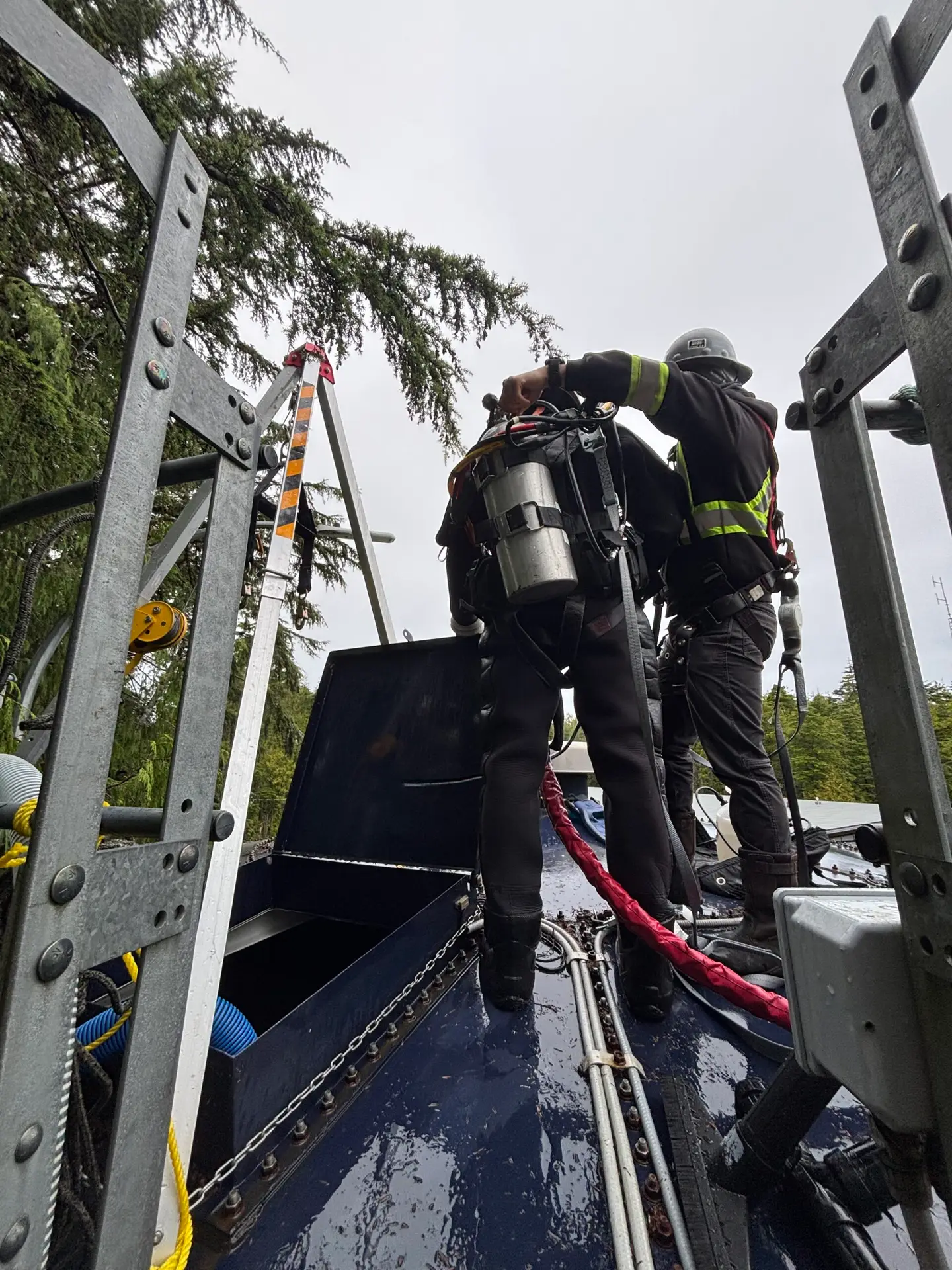
01↗Tanks, reservoirs & process vessels
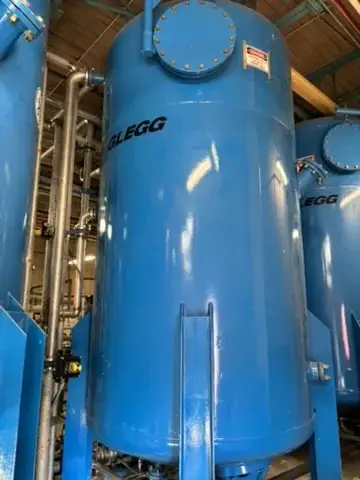
Confined Space Operations for submerged or partially flooded tanks, reservoirs, basins and pressure-vessel environments where restricted access, water, atmosphere and rescue interfaces must be managed together.
 02↗
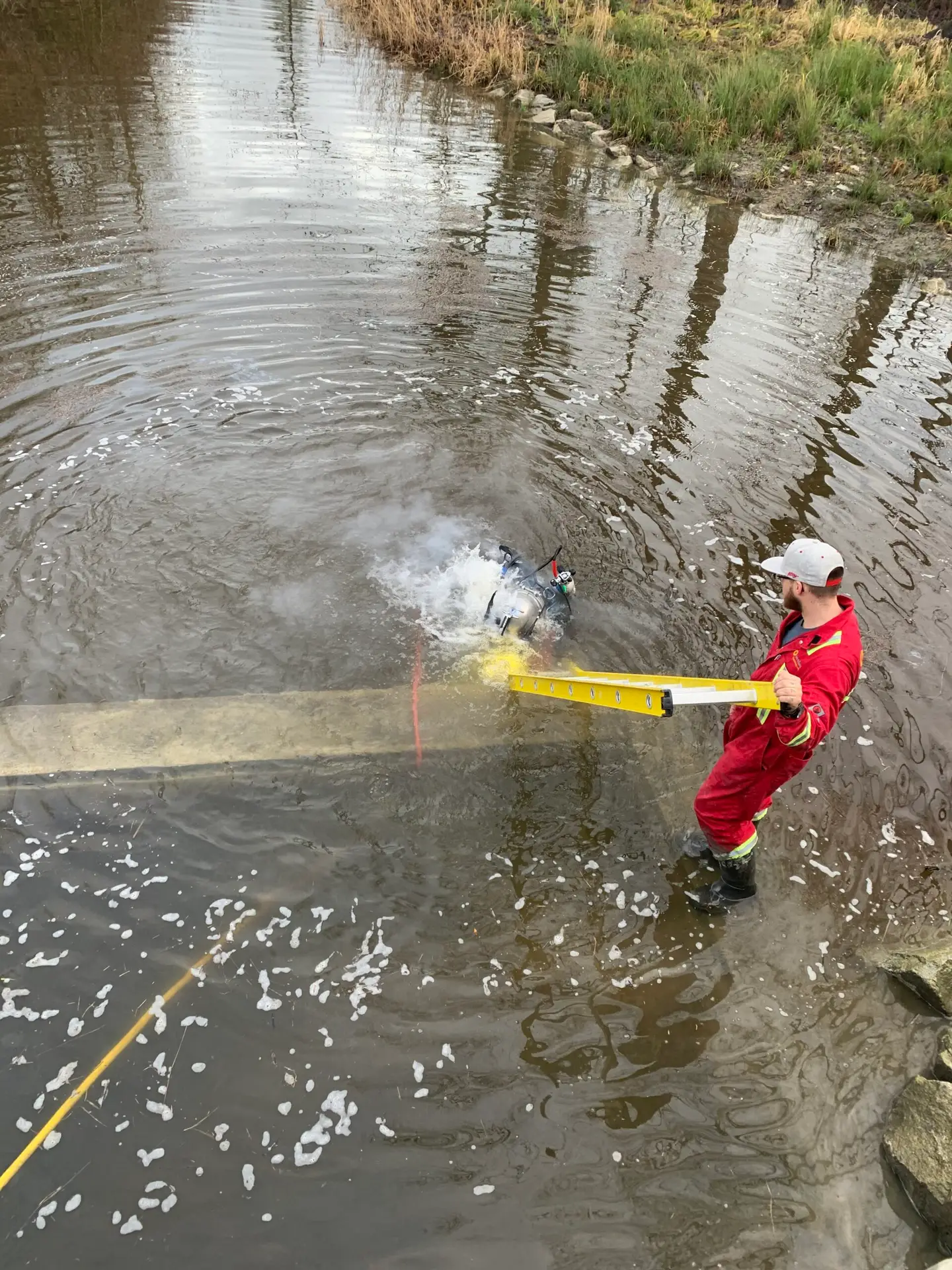
02↗Culverts, pipelines & chambers
Inspection, cleaning, measurement and maintenance in culverts, pipelines, valve chambers, pump stations and related linear assets where travel distance, geometry and egress shape the operating plan.
 03↗
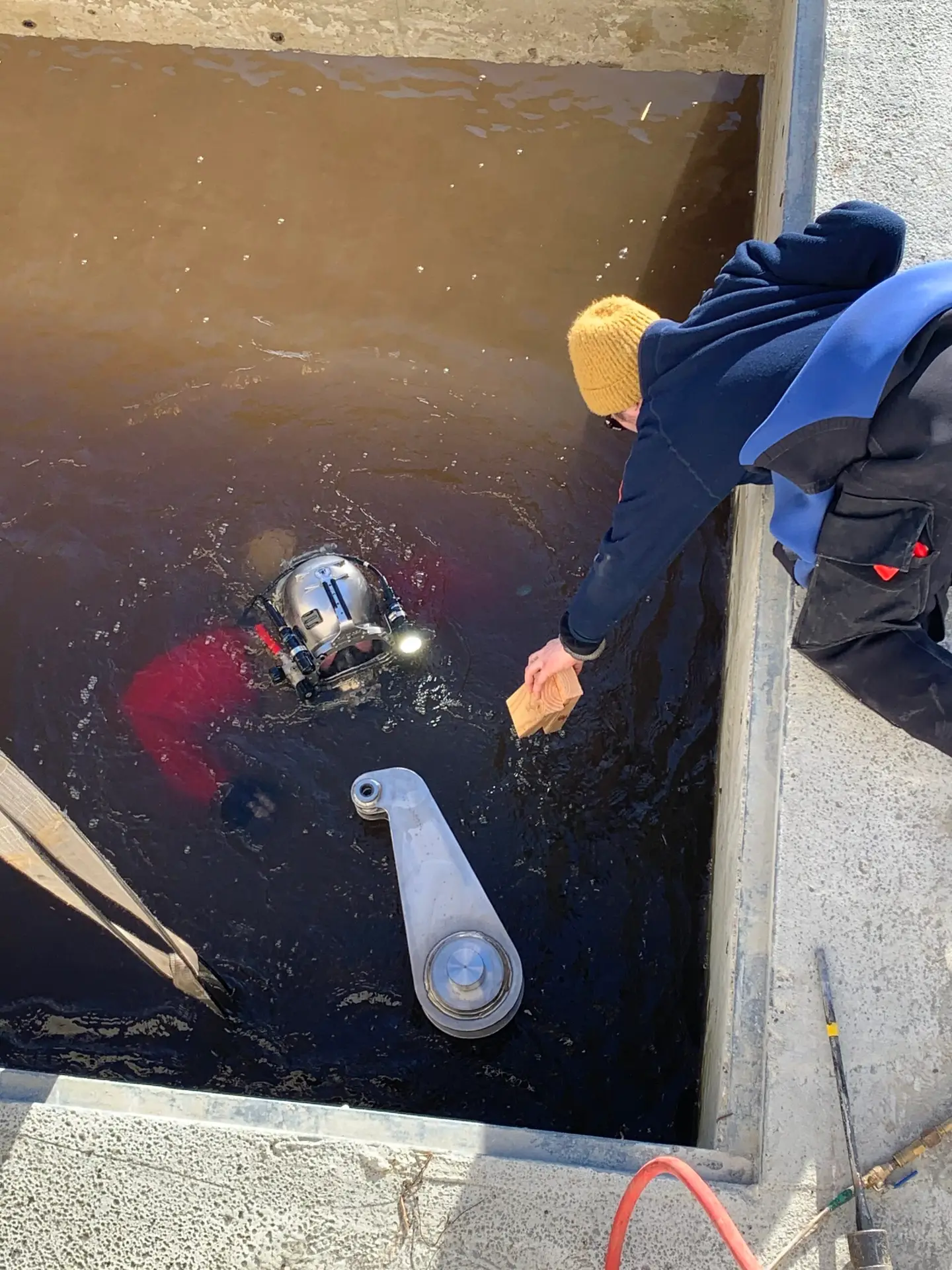
03↗Restricted underwater entry
Diver-led Confined Space Operations for submerged hatches, tunnels, shafts, gates, intakes and internal structures requiring controlled entry, continuous communications and a defined recovery path.
 04↗
04↗Industrial inspection & NDT
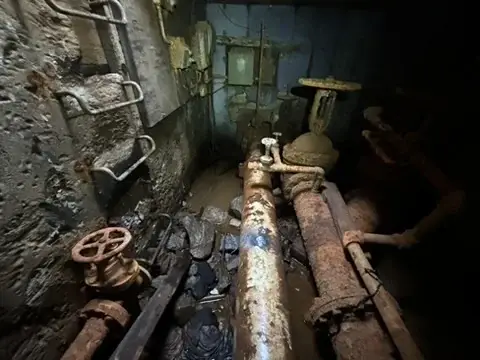
Visual inspection, indexed video, measurements, ultrasonic thickness testing and project-specific NDT support for internal pipework, steel, concrete, coatings, welds and submerged components.
 05↗
05↗Maintenance, repair & construction
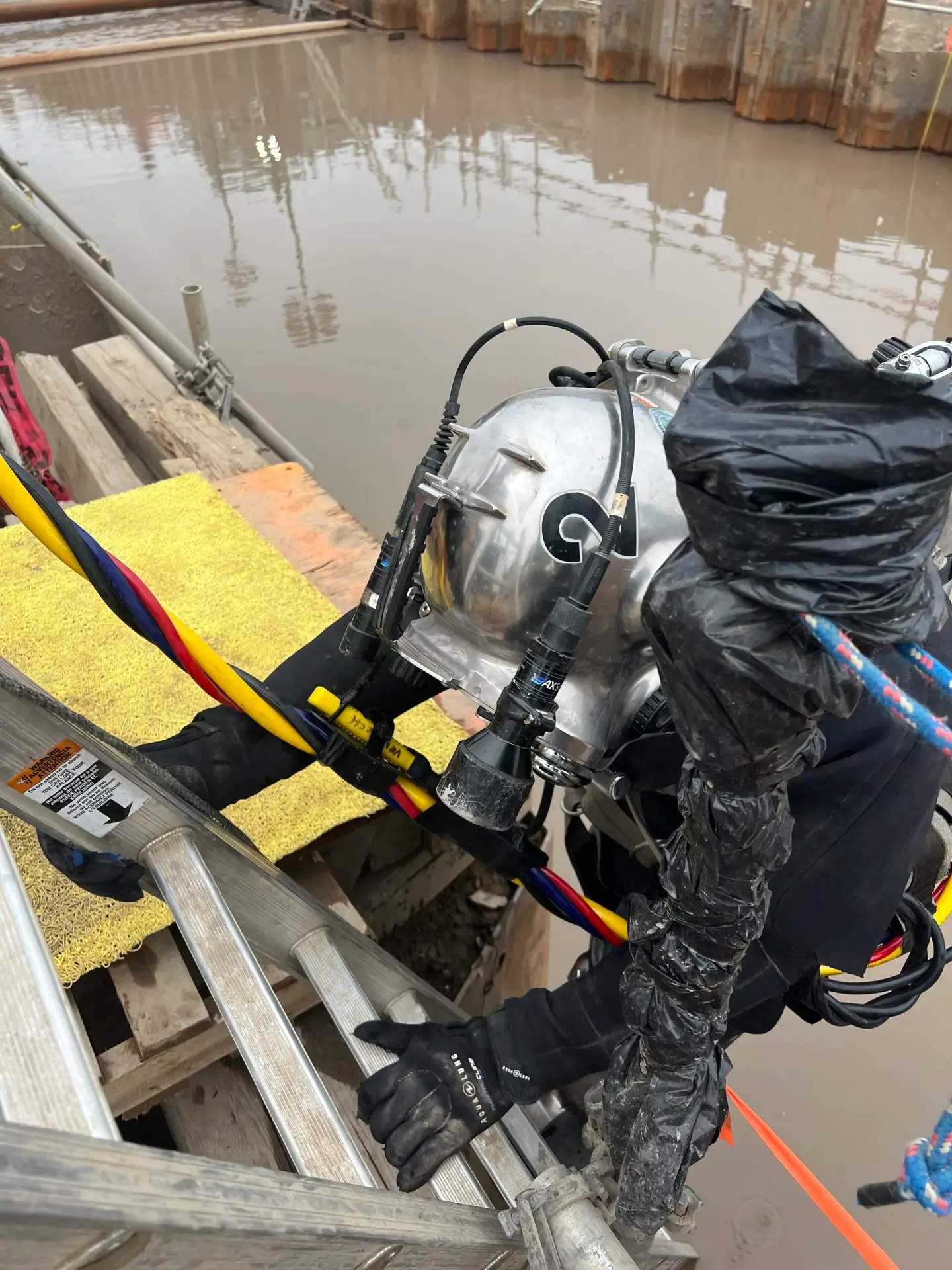
Cleaning, hydraulic tooling, fastening, rigging, component replacement, concrete, cutting, welding and construction support where the approved method, qualifications and rescue provisions apply.
 06↗
06↗Remote inspection before entry
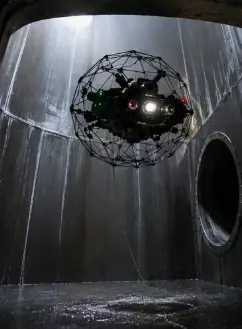
Collision-tolerant drones, ROVs, cameras, LiDAR and 3D mapping can establish initial conditions, locate hazards and refine the human-entry scope where the asset and environment are suitable.
Entry control
Control the opening.
Support the entrant.
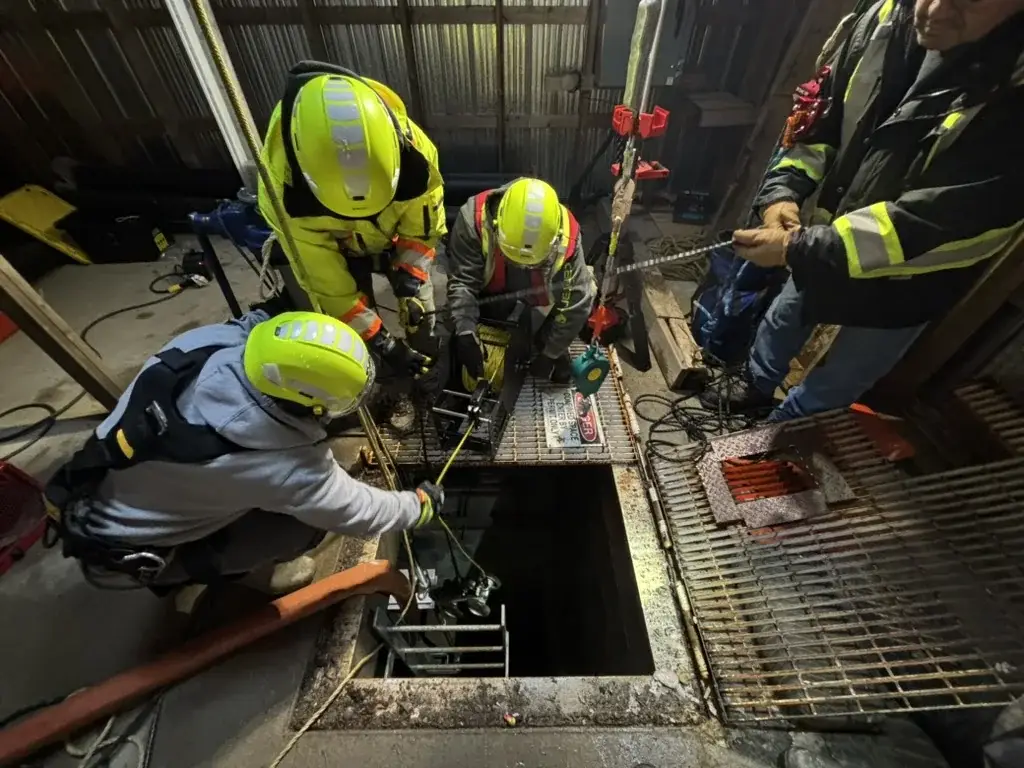
A confined-space opening is not merely an access point. It is part of the life-support and rescue system.
Personnel, tools, hoses, umbilicals, ventilation, atmosphere lines, communications and retrieval equipment must pass through limited geometry without creating entanglement, damage or blocked egress. Surface control keeps the entry point organized and continuously available.
- 01Authorized roles, communications and entry accountability
- 02Verified isolation, atmosphere and water controls
- 03Managed equipment, umbilicals and retrieval interfaces
- 04Standby capability and a practicable rescue route
Seven-stage operating framework
From hazard review
to controlled restoration.
A repeatable sequence keeps authorization, entry, work, rescue readiness and closeout connected throughout the operation.
Confirm the mission
Establish the asset, task, operating state, access, schedule, stakeholders, owner standards, required decisions and final deliverables.
Characterize the space
Review drawings and history, then evaluate geometry, openings, travel distance, water, atmosphere, contamination, engulfment, entrapment and rescue constraints.
Control energy and process hazards
Identify every connected system and coordinate lockout, blanking, valve control, flow control, pressure relief, electrical isolation and verification with the owner.
Develop entry and rescue plans
Define personnel, permits, dive mode, atmosphere and ventilation, equipment, communications, tending, retrieval, standby capability, medical and emergency actions.
Test before entry
Confirm permits, isolations, atmosphere, ventilation, communications, life-support equipment, access, retrieval systems and team readiness before authorizing entry.
Work within controlled boundaries
Perform inspection, cleaning, measurement, NDT, tooling or repair with continuous monitoring, supervision, clear task limits, hold points and stop-work authority.
Account for people, tools and evidence
Complete exit and personnel checks, reconcile equipment, restore the asset through the owner’s process, index records and issue the Confined Space Operations report.
Methods and critical controls
Use the right platform.
Reduce unnecessary entry.
Confined Space Operations can combine human capability with robotic reconnaissance, specialist instrumentation and space-specific access and rescue systems.
Surface-supplied commercial diving
A managed breathing-gas and communications platform for flooded or submerged restricted spaces where hands-on inspection, cleaning, tooling or repair is required.
Confined-space entry controls
Permit, attendant, entrant, supervisor, access, atmospheric testing, ventilation, communications, signage and unauthorized-entry controls are assigned to the actual space and task.
Isolation and zero-energy verification
Connected pipelines, pumps, valves, gates, pressure, electrical, mechanical and process systems are identified, isolated and verified through the owner’s lockout and operating procedures.
Rescue, retrieval and standby capability
Rescue is developed for the exact geometry, water condition, travel route, openings, obstructions and likely emergency—not copied from a generic site template.
Atmospheric monitoring and ventilation
Where an atmosphere is present or can develop, testing location, frequency, instruments, ventilation, exhaust routing and alarm actions are established before and during entry.
Remote reconnaissance and 3D mapping
Cameras, collision-tolerant drones, ROVs and LiDAR can identify configuration, condition and hazards before human entry, provided the platform can safely access and recover from the space.
Inspection, NDT and specialist tooling
HD video, stills, measurement, UT, hydraulic tools, cleaning systems and project-specific equipment are selected around access, material, visibility, atmosphere and recovery requirements.
Potable and contaminated environments
Hygiene, suit configuration, decontamination, cross-connection control, equipment segregation and water-quality considerations are added according to the asset and exposure assessment.
Remote reconnaissance and verification
See the space.
Before people enter.
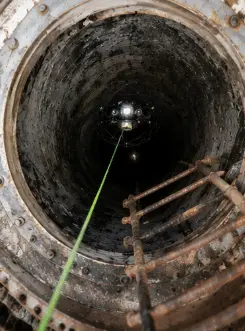
When conditions permit, collision-tolerant drones, cameras, ROVs and LiDAR can establish configuration, locate obstructions and identify areas requiring closer investigation.
Remote information can improve method selection, rescue planning and work boundaries. It does not replace the need to control the deployment area, connected energy or recovery of the robotic system, but it can reduce uncertainty and focus human exposure.
Internal visual reconnaissanceLiDAR, 3D mapping and dimensionsHazard and obstruction locationEntry planning and targeted follow-up
Confined Space Operations deliverables
Controlled in the field.
Defensible in the record.
The closeout package connects hazards and controls with the completed work, supporting evidence, limitations and restoration.
Space and hazard assessment
Asset configuration, entry points, water and atmosphere conditions, connected systems, energy sources, contamination, travel distance and rescue constraints.
Entry, dive and rescue plans
Roles, permits, access, equipment, life support, communications, atmospheric controls, retrieval, standby capability and emergency actions.
Isolation and verification record
Defined energy boundaries, owner coordination, lockout or blanking information, valve and gate controls, verification steps and restoration responsibilities.
Daily operation records
Personnel, entry and dive times, conditions, atmosphere where applicable, task progress, completed coverage, observations, issues and client coordination.
Indexed imagery and mapping
Video, photographs, scan or model outputs organized by location, component, station, drawing reference or finding for efficient technical review.
Measurements and test results
Dimensions, clearances, UT readings, NDT observations, equipment information, calibration details and limitations where included in scope.
Intervention and closeout evidence
Before-and-after records for cleaning, repair, installation, tooling or recovery, plus outstanding items and approved field changes.
Confined Space Operations report
A concise package connecting the objective, controls, completed work, findings, supporting evidence, limitations and recommended next actions.
Restricted industrial environments
Complex spaces.
Critical assets.
Confined Space Operations support municipal, hydroelectric, industrial, marine, transportation, energy and resource infrastructure across Canada.
01Potable-water reservoirs and tanks↗
02Wastewater and process facilities↗
03Pipelines, culverts and utility chambers↗
04Hydroelectric and dam infrastructure↗
05Oil, gas and industrial plants↗
06Mining and resource infrastructure↗
07Marine, port and vessel compartments↗
08Municipal and transportation assets↗
Original Ven-Tech videos
See the capability.
Understand the system.
Learn how Ven-Tech connects commercial diving, robotics, inspection and a company-wide HSE operating system around demanding infrastructure.
Ven-Tech Subsea Services
Commercial diving, underwater inspection, construction, robotics and field support for critical infrastructure.
Ven-Tech Subsea HSE
The health, safety and environmental operating system supporting high-consequence and restricted-access work.
Confined-space, diving and contractor assurance
Rescue is a system.
Not a paragraph.
Confined Space Operations are planned within Ven-Tech’s company-wide HSE and contractor-assurance system. Controls address permits, roles, isolation, atmosphere, ventilation, access, water, commercial diving, life support, communications, retrieval, decontamination, medical response and restoration.
BCCSA COR® CertifiedISNetworld Member ContractorISNetworld ESG BadgeAvetta ApprovedCognibox CertifiedAlcumus SafeContractorWorkSafeBC Part 9WorkSafeBC Part 24CSA Z1006 considerationsCSA Z275 diving frameworkAWWA considerations as applicableNFPA considerations as applicable
Confined Space Operations FAQ
Technical questions.
Clear answers.
These answers explain how Ven-Tech approaches restricted-access underwater and industrial work.
What are Confined Space Operations?+
Confined Space Operations involve work in enclosed or partially enclosed spaces with restricted access or hazards that can include unsafe atmosphere, engulfment, entrapment, drowning, uncontrolled energy or difficult rescue. For flooded spaces, confined-space and commercial-diving controls may need to function together within one project-specific plan.
Which assets can Ven-Tech access?+
Ven-Tech can assess reservoirs, tanks, process vessels, basins, culverts, pipelines, shafts, tunnels, chambers, pump stations, intake structures, gates and other restricted submerged environments. Suitability depends on geometry, access, travel distance, operating condition, water, atmosphere, contamination, isolation and rescue feasibility.
How are confined-space hazards controlled before entry?+
The team reviews the space, connected systems, energy sources, atmosphere, water, contamination, access and rescue constraints. Owner-controlled isolation, permits, atmospheric testing, ventilation, communications, life support, retrieval and emergency provisions are verified before entry. Conditions are then monitored throughout the work.
Can work proceed while the surrounding facility operates?+
Sometimes, but only when the owner and project team can establish reliable isolation, access and emergency controls. Pumps, valves, gates, pressure, flow, electrical systems, process connections and adjacent work must be addressed. Production continuity cannot override the entry, diving or rescue requirements.
Can drones or robots inspect the space before a person enters?+
Yes, where geometry, visibility, environment, communications and recovery allow. Collision-tolerant drones, ROVs, cameras and LiDAR can establish configuration, locate hazards and focus a later human-entry scope. Remote inspection does not automatically remove the need for isolation, access control or rescue planning around deployment personnel.
What rescue provisions are required?+
Rescue must be designed for the exact space and task. The plan considers openings, ladders, water, vertical or horizontal travel, obstructions, atmosphere, diver equipment, casualty packaging, retrieval forces, standby personnel, medical support and the route to definitive care. Generic rescue language is not enough for a complex confined space.
What deliverables are provided after Confined Space Operations?+
The agreed package may include hazard and space information, entry and dive plans, isolation records, atmospheric logs where applicable, daily records, indexed video and photographs, measurements, UT or NDT results, mapping, completed-work evidence, limitations, restoration information and a final report with recommended actions.
What information is needed for a Confined Space Operations quote?+
Provide the asset and location, drawings, dimensions, access openings, travel distance, operating status, connected systems, water level, atmosphere or contamination concerns, previous inspections, isolation options, known hazards, site rules, schedule and required deliverables. Ven-Tech can then identify information gaps and the next responsible planning step.
Bring us the space, the task and the constraints
Plan the entry.
Prove the exit.
Send the drawings, access dimensions, connected services, operating condition, water or atmosphere concerns, known hazards, schedule and deliverables. Ven-Tech will review the Confined Space Operations scope and define the next responsible step.