The engineer, owner and project team establish the load path, material, joint, weld class, service condition, design life, acceptance criteria and governing requirements.
UNDERWATER WELDING & BURNING · CANADA
Underwater welding & burning.
Qualified for the repair.
Underwater Welding, burning and precision cutting for submerged steel repairs, construction and removal—built around engineering intent, project qualification and documented acceptance.
DESIGNDefine function and class
QUALIFYProcedure and welder-diver
VERIFYInspect and document
More than striking an arc
Engineer the repair.
Qualify the execution.
Underwater Welding succeeds when the design, procedure, welder-diver, underwater environment and inspection plan are developed around the same acceptance requirement.
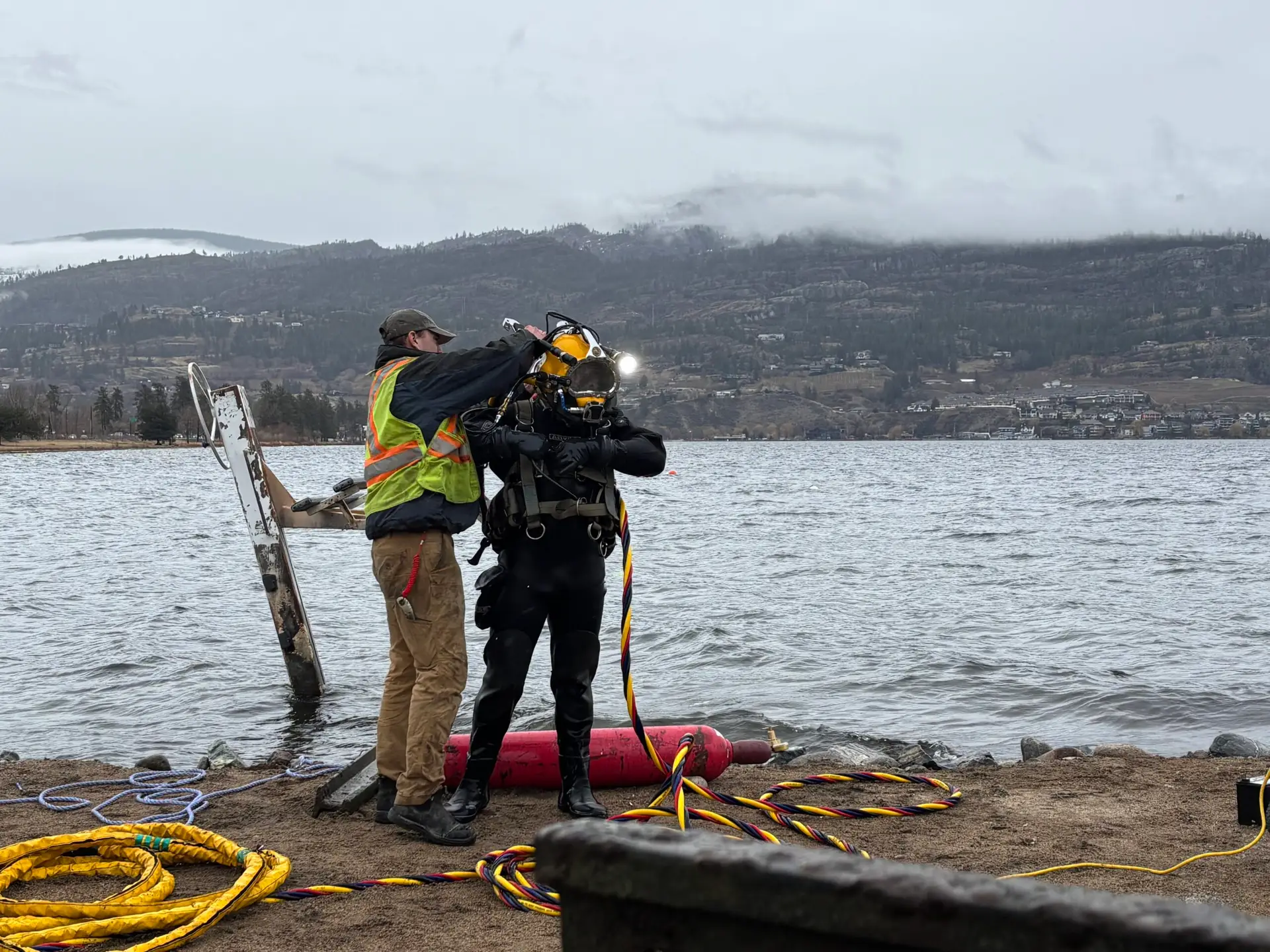
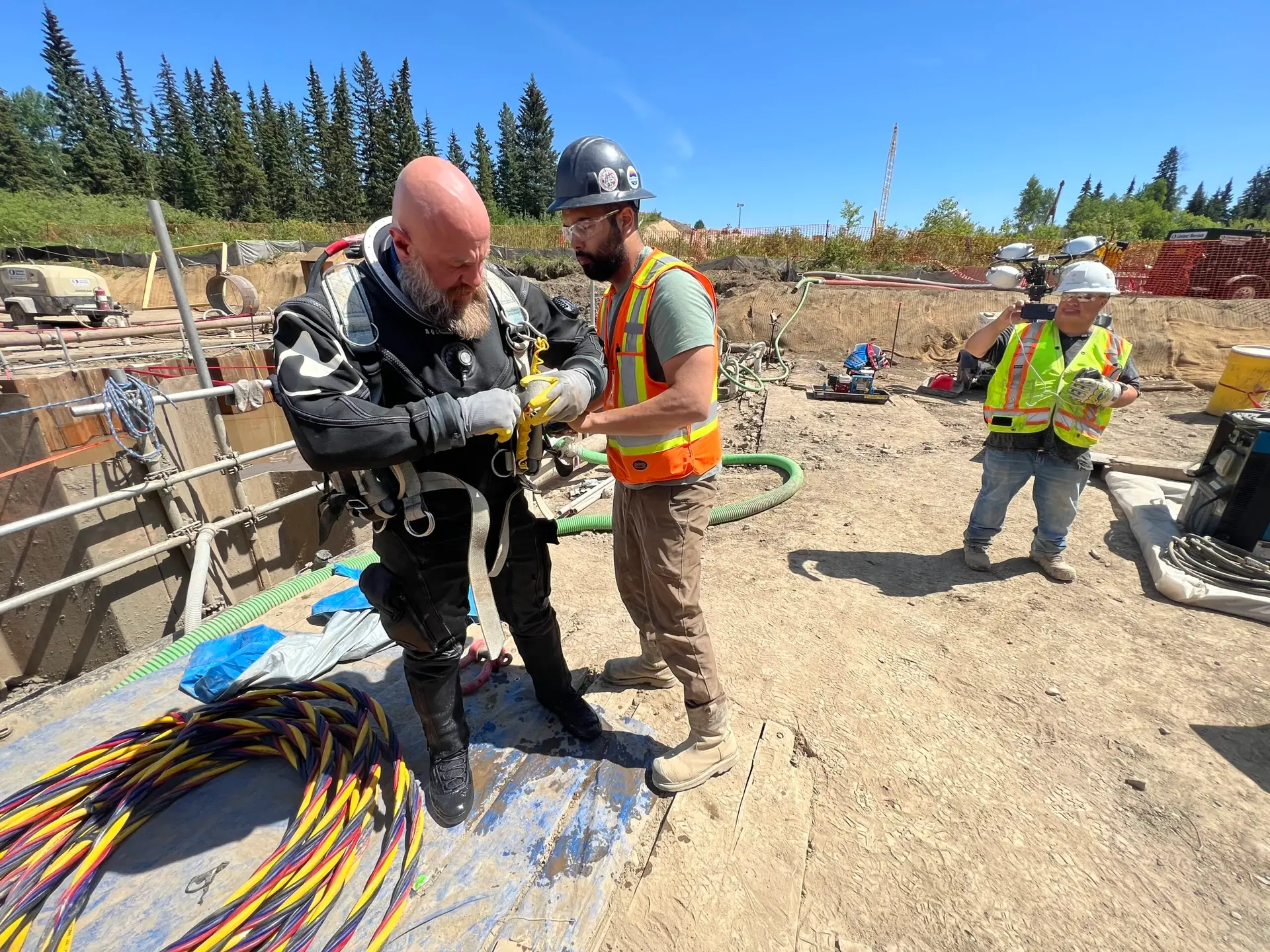
Ven-Tech supports engineered steel repair, construction, attachment, burning and cutting below the waterline. Experienced tradesperson-divers work with owners, engineers, contractors and inspectors to translate the approved repair intent into a practical field sequence.
The team first verifies the existing material, geometry, deterioration, access and service condition. The repair detail, weld class, consumables, joint, position, depth, fit-up, temporary works and acceptance criteria are then connected to the applicable procedure and personnel qualifications. Project-specific weld coding or representative testing can be incorporated where required.
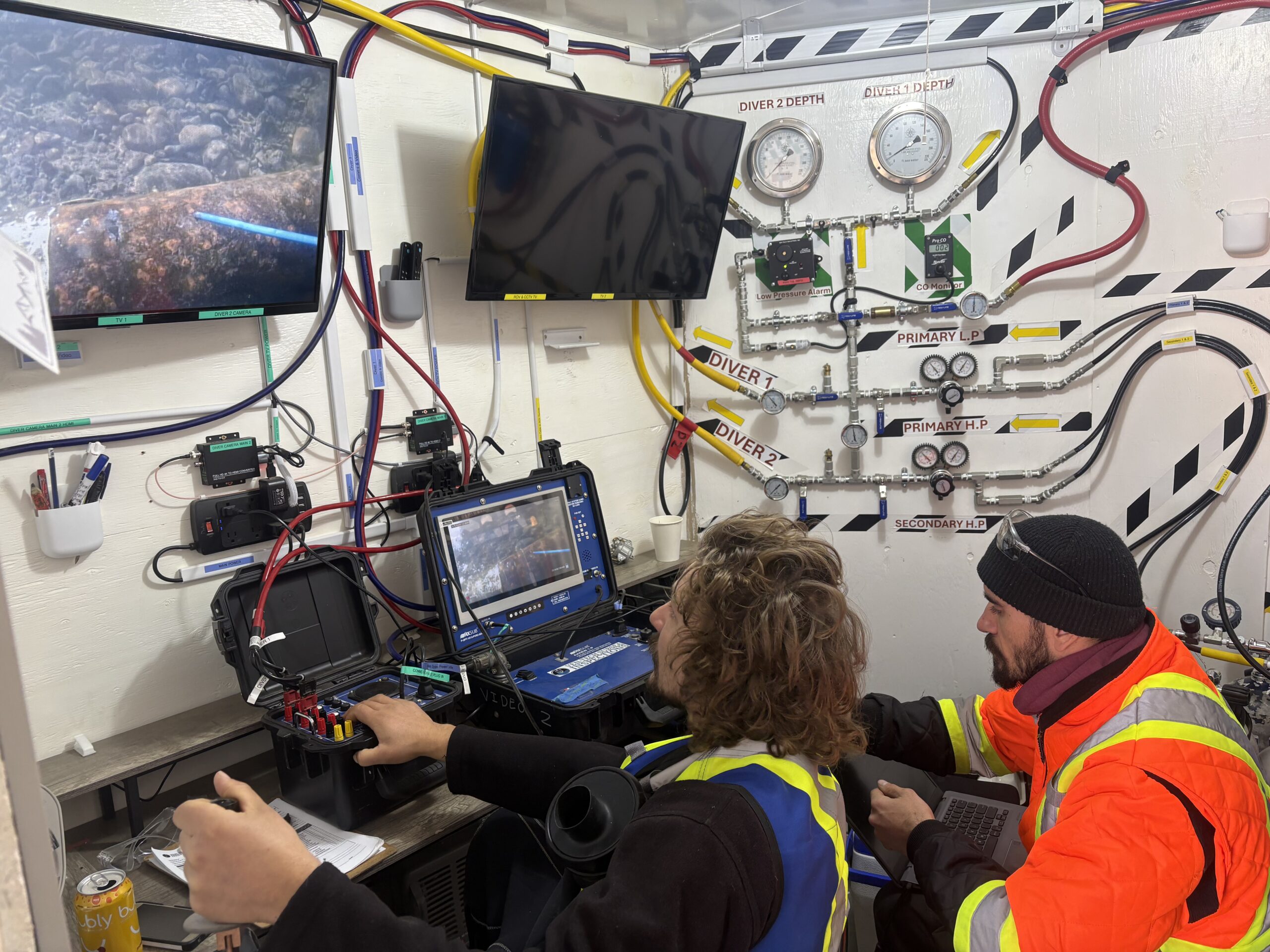
Surface-supplied diving, live communications, underwater video, electrical controls, rigging, cleaning and specialist tooling support execution. Final visual and dimensional inspection, NDT or test-coupon results are organized into an Underwater Welding record that allows the owner and design authority to review completed work.
Tradesperson-diver capabilityProject-specific qualificationTraceable QA and closeout
Welder-diver qualification, procedure, electrodes, base material, position, depth range, environment and test requirements are confirmed for the project.
Access, visibility, current, temperature, electrical safety, grounding, isolation, gas generation, fire exposure, rigging and recovery are addressed in the field method.
Surface preparation, fit-up, hold points, visual criteria, NDT, test coupons, documentation, repair of defects and final acceptance are defined before execution.
Steel intervention below the waterline
Underwater Welding.
Configured for the repair.
Every capability is planned around engineering intent, material, condition, access, environment, procedure, qualification and acceptance.
 01↗
01↗Wet welding repairs & attachments
Underwater Welding for engineered repair details, brackets, doubler plates, reinforcing elements, attachments and project-specific structural work where the approved weld class, procedure and acceptance requirements permit.
 02↗
02↗Underwater burning & cutting
Controlled burning, arc-oxygen cutting and mechanical or hydraulic cutting for damaged steel, piles, pipe, plate, bolts, flanges, rebar and components scheduled for modification, separation or removal.
 03↗
03↗Pipeline, pile & structural repair
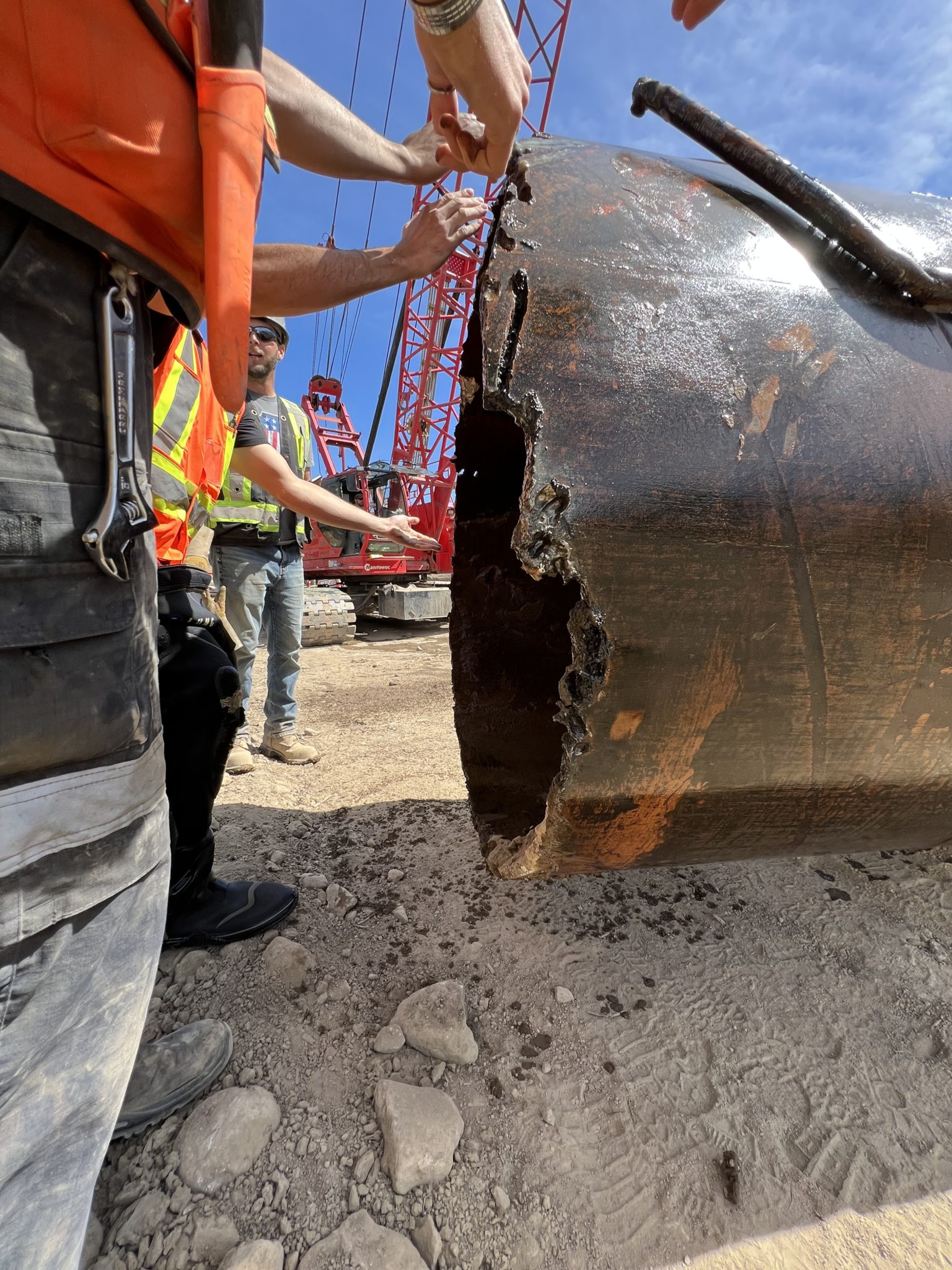
Condition-based steel intervention following corrosion, impact, cracking or loss of section, including preparation, fit-up, repair components, clamps, sleeves, supports and engineered reinforcement.
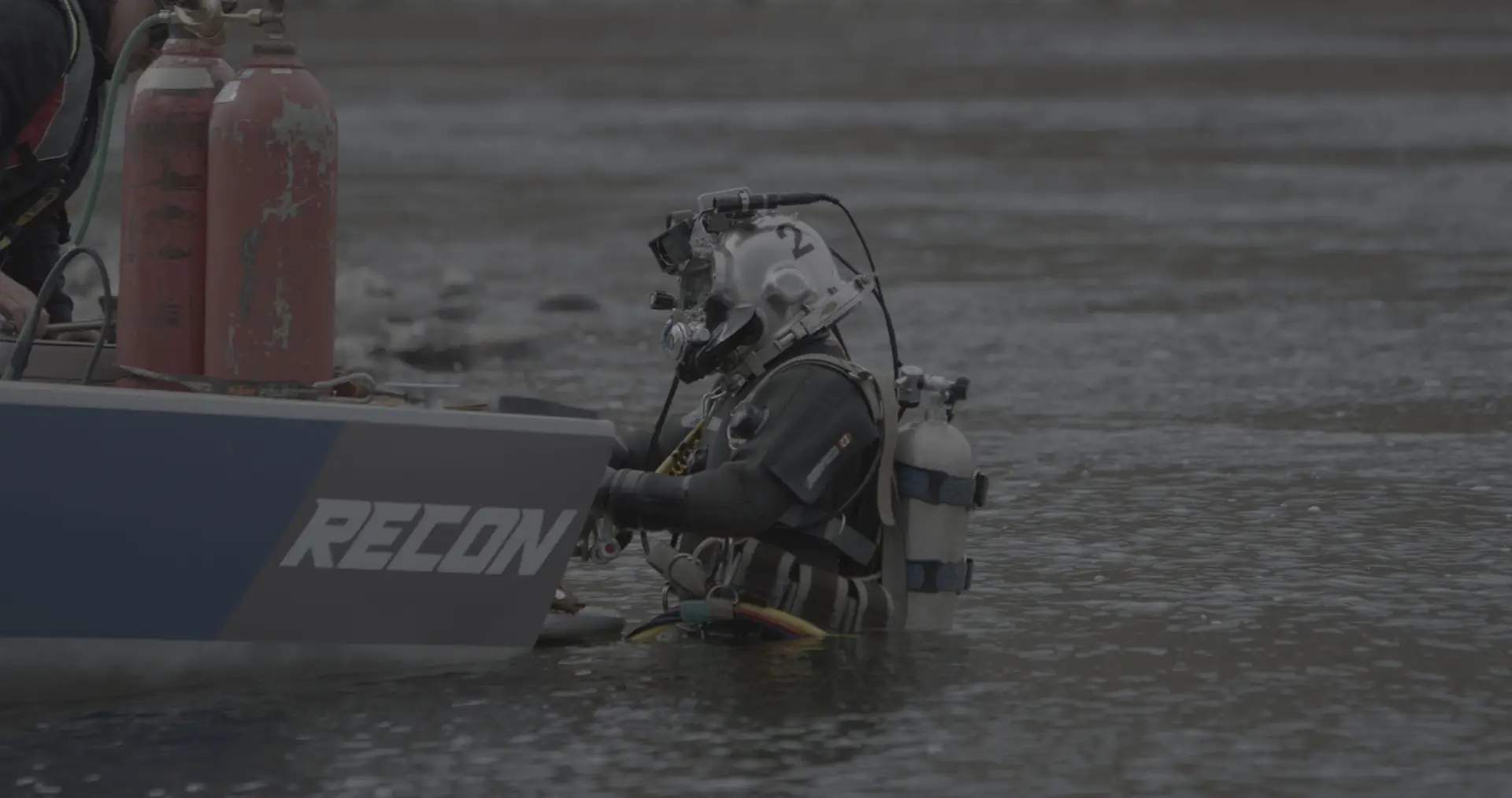 04↗
04↗Construction & installation support
Underwater Welding support for steel assembly, guides, frames, brackets, gates, intake components, marine structures and temporary works within an approved underwater construction sequence.
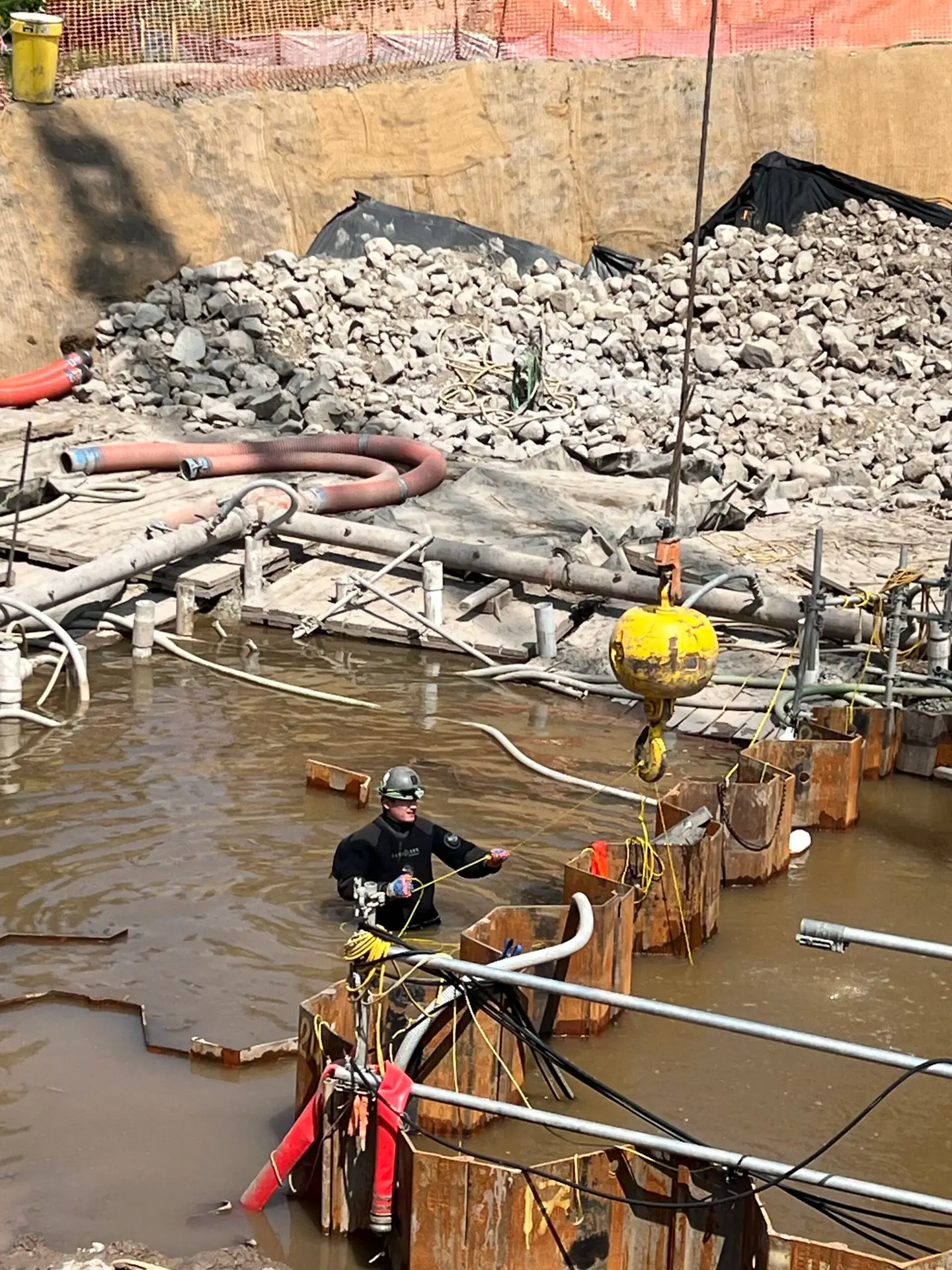 05↗
05↗Emergency stabilization & removal
Rapid assessment, temporary stabilization, rigging, cutting and repair support for damaged or obstructing assets, subject to safe access, isolation, engineering direction and available personnel and equipment.
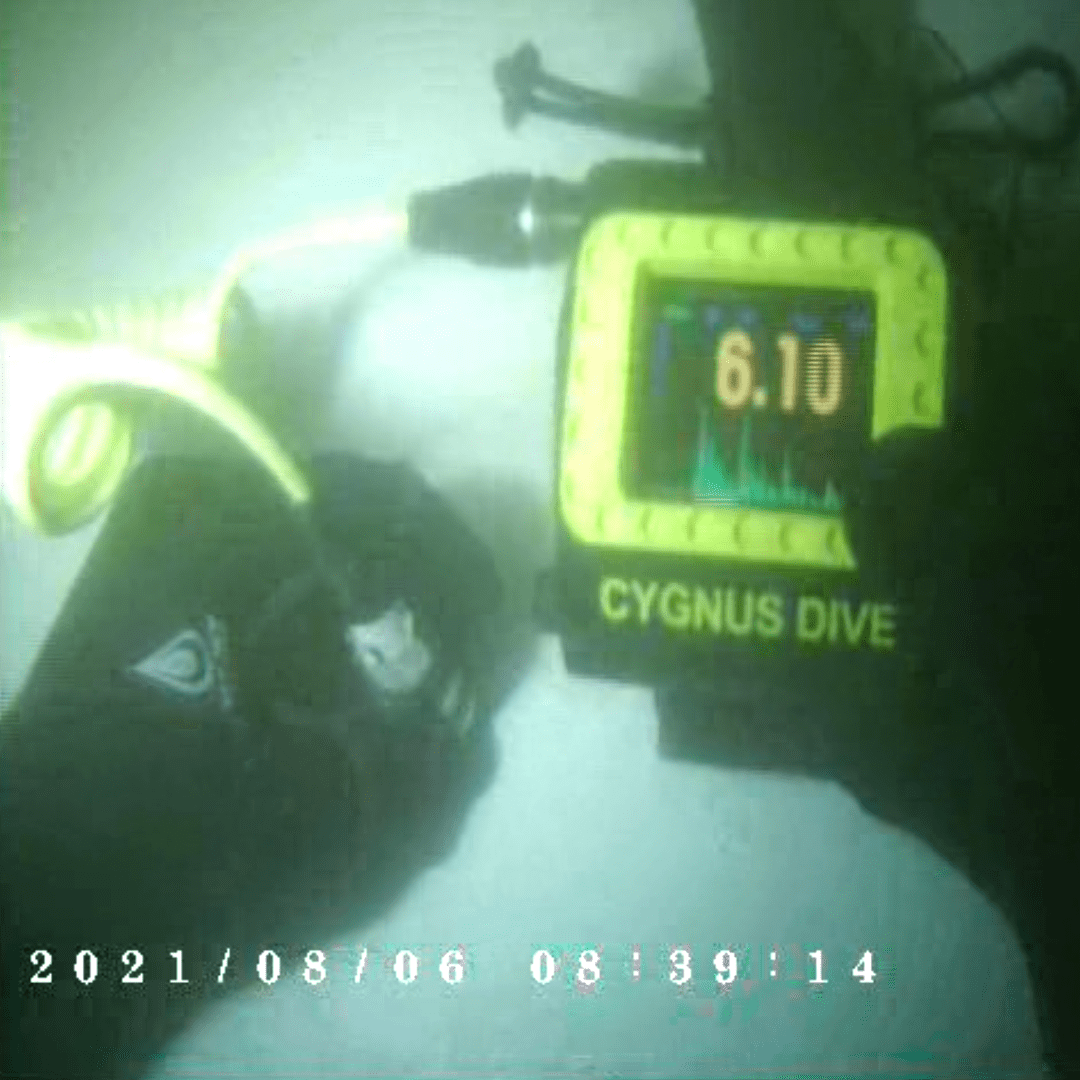 06↗
06↗Weld inspection, NDT & QA
Visual inspection, dimensional checks, indexed video, ultrasonic thickness testing and project-specific NDT or destructive test-coupon review to document preparation, execution and acceptance.
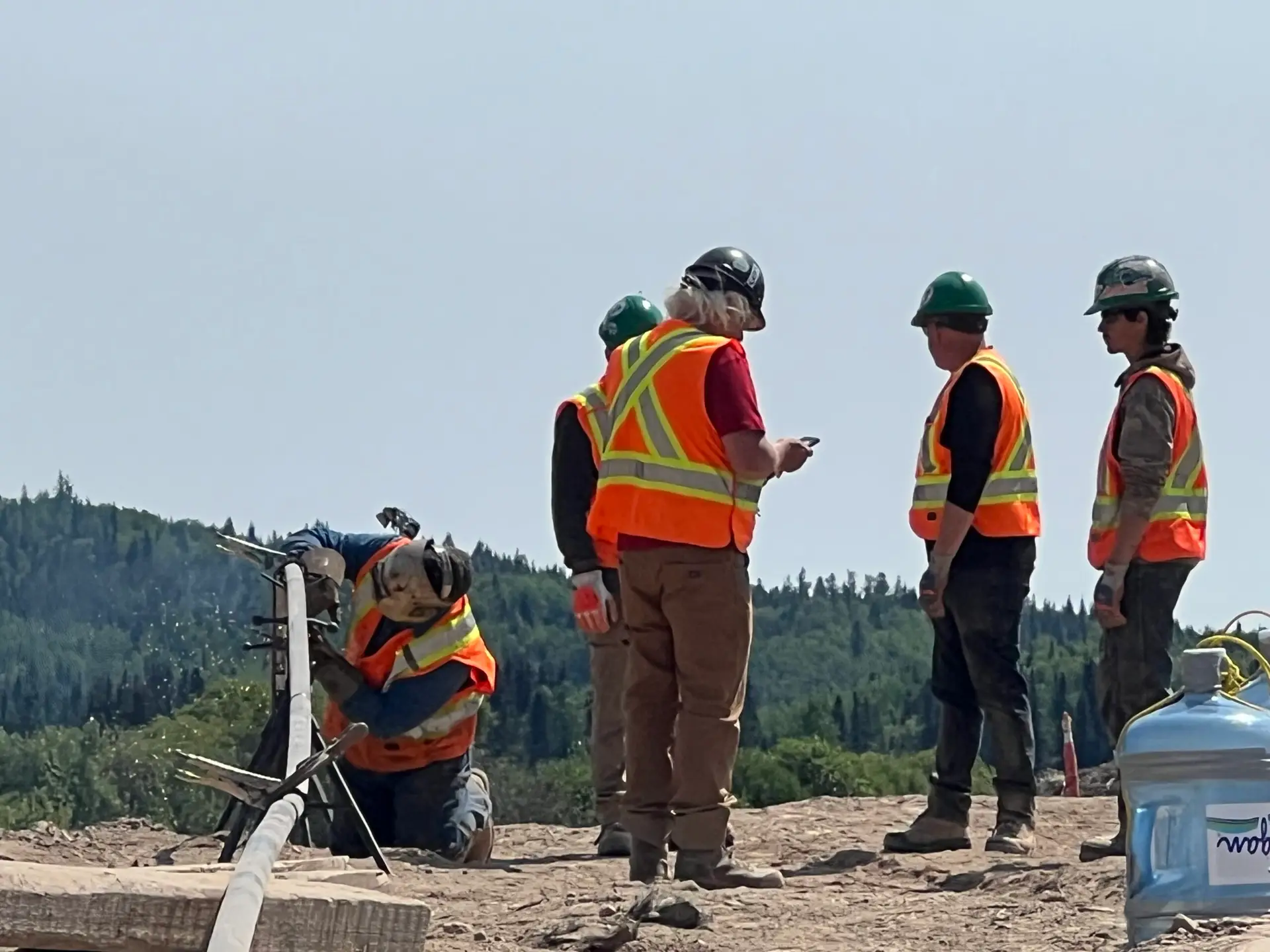
Procedure and qualification
Match the welder-diver.
To the real joint.
A general welding ticket does not by itself define suitability for every underwater weld.
Process, electrode, base material, joint, position, depth, environment and acceptance requirements must align with the applicable procedure and qualification. When specified, representative test welds can reproduce project variables before production begins.
- 01Approved design detail and governing requirements
- 02Applicable procedure and essential variables
- 03Welder-diver qualification matched to the scope
- 04Defined test, inspection and acceptance plan
Seven-stage welding framework
From damaged steel
to accepted work.
A controlled sequence keeps repair design, qualification, execution, inspection and final documentation connected.
Confirm the repair objective
Establish the asset, damage, required function, operating state, design authority, schedule, service conditions, access and final deliverables.
Verify material and condition
Review drawings and history, then confirm geometry, material, corrosion, cracking, coating, marine growth, visibility, access and adjacent components using diver, ROV or NDT evidence.
Develop the repair and weld basis
Translate the design into joint details, material, weld class, consumables, preparation, fit-up, temporary works, sequence, hold points and acceptance criteria.
Confirm procedure and welder-diver
Verify the applicable procedure, essential variables, depth and position limits, personnel qualification, project test requirements and any representative weld coding before production.
Build safe access and fit-up
Coordinate permits, isolation, electrical controls, cleaning, cutting, rigging, templates, clamps, components, alignment, communications and emergency provisions.
Weld or cut in controlled stages
Complete the approved sequence with live supervision, stable positioning, managed cables and hoses, controlled arc time, hold points and stop-work authority when conditions change.
Inspect, test and close out
Complete visual and dimensional checks, NDT or coupon testing where specified, resolve nonconformities, index evidence and issue the Underwater Welding quality package.
Methods and project controls
Join it. Cut it.
Prove the result.
Underwater Welding can be integrated with burning, mechanical cutting, fit-up, rigging, inspection and robotic monitoring around the approved work method.
Surface-supplied construction diving
Live voice communications, surface supervision, managed breathing gas and project-specific emergency support provide the operating platform for welding, burning, cutting and fit-up.
Wet shielded metal arc welding
Project-selected electrodes, polarity, current, cable condition, base material, joint, position and depth are controlled through the applicable procedure and welder-diver qualification.
Arc-oxygen burning and cutting
Steel removal is planned around material thickness, orientation, gas and power supply, ignition, visibility, slag, gas accumulation, adjacent systems, recovery and exclusion zones.
Mechanical and hydraulic cutting
Saws, grinders, drills, shears, splitters and other tooling can supplement or replace thermal cutting where fire, atmosphere, material, precision or operating constraints require another method.
Fit-up, clamps and temporary works
Templates, strongbacks, clamps, bolts, guides, hoists and supports maintain geometry and positioning while divers prepare, align, tack, weld or remove the component.
Cleaning and surface preparation
Marine growth, coating, corrosion and contamination are removed to the extent required for material confirmation, fit-up, welding and reliable inspection of the completed work.
Inspection, NDT and testing
Visual inspection, profile checks, measurements, UT, project-specific NDT and destructive test coupons connect the completed weld to defined acceptance criteria and limitations.
ROV, sonar and remote monitoring
Robotics can establish condition, monitor work, document inaccessible areas and support verification before or during Underwater Welding where the environment and task are suitable.
Inspection and acceptance
A weld is not complete.
Until it is verified.
Inspection requirements are established before the project starts, not after the diver finishes welding.
Live video and communications support field supervision. Preparation, fit-up, weld profile and dimensions can be reviewed at defined hold points. NDT and representative coupon testing can be added where specified, with nonconformities and repairs tracked through the agreed quality process.
Preparation and fit-up evidenceIndexed production video and recordsVisual, dimensional and NDT resultsNonconformity, repair and acceptance status
Underwater Welding deliverables
Built for the joint.
Documented for the owner.
The closeout package connects design intent, qualification, field execution, inspection and final acceptance.
Design and repair basis
Asset information, engineering detail, material, joint, weld class, service condition, governing requirements, acceptance criteria and responsibilities.
Procedure and qualification package
Applicable welding procedure information, essential variables, personnel qualifications, depth and position limitations, consumables and project test requirements.
Dive and HSE documentation
Project-specific dive plan, hazard assessment, permits, isolation, electrical controls, communications, rescue and environmental provisions.
Material and equipment records
Repair components, material traceability, electrodes, equipment checks, cable and power information, gas systems, rigging and manufacturer documentation where applicable.
Daily production records
Personnel, conditions, preparation, fit-up, weld sequence, current or consumable information where specified, completed work, hold points and field changes.
Indexed photo and video
Before, during and after evidence organized by component, joint, location, drawing reference, weld number or repair step for efficient review.
Inspection and test results
Visual and dimensional findings, NDT, UT, coupon testing, nonconformities, repairs, retesting and acceptance records where included in the scope.
Underwater Welding closeout
A concise package connecting the repair objective, approved method, completed work, evidence, limitations, accepted deviations and recommended follow-up.
Applications and infrastructure
Submerged steel.
Critical function.
Underwater Welding and burning support planned repair, construction, maintenance, demolition and emergency intervention across Canada.
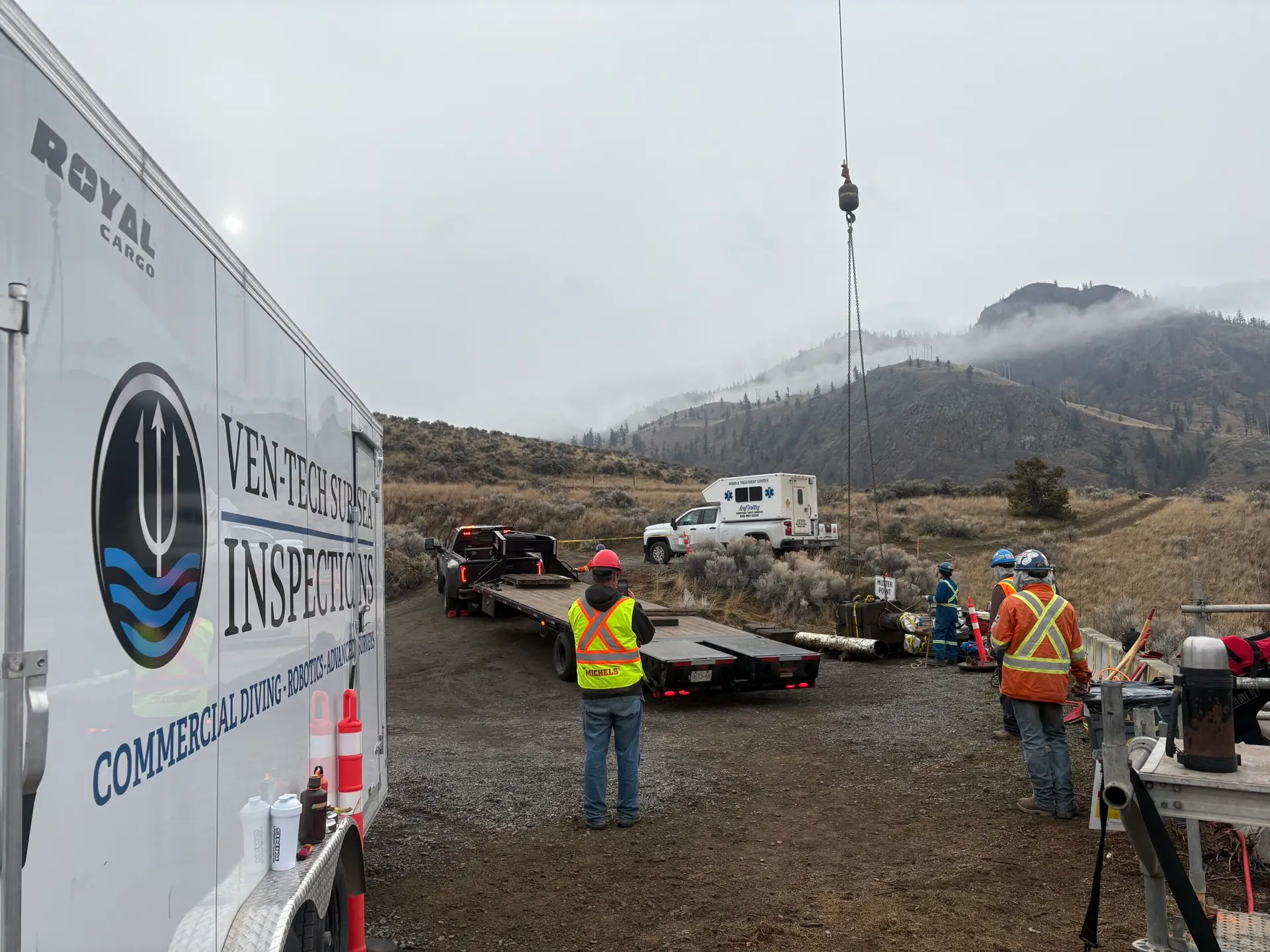
01Marine terminals, docks and wharves↗
02Pipelines, crossings and process systems↗
03Dams, intakes and hydroelectric assets↗
04Bridges, piles and transportation infrastructure↗
05Vessels, barges and floating equipment↗
06Oil, gas and industrial facilities↗
07Municipal water and wastewater assets↗
08Mining and resource infrastructure↗
Original Ven-Tech videos
See the capability.
Understand the system.
Learn how Ven-Tech connects commercial diving, underwater construction, inspection and a company-wide HSE operating system.
Ven-Tech Subsea Services
Commercial diving, underwater construction, inspection, robotics and field support for critical infrastructure.
Ven-Tech Subsea HSE
The health, safety and environmental operating system supporting construction diving, welding and burning.
Construction-diving and welding assurance
Control the arc.
Control the environment.
Underwater Welding and burning are delivered within Ven-Tech’s company-wide HSE and contractor-assurance system. Project controls address commercial diving, electrical energy, welding current, oxygen and gas systems, hot work, gas accumulation, isolation, tools, lifting, vessel interfaces, fire exposure, environmental conditions and emergency response.
BCCSA COR® CertifiedISNetworld Member ContractorISNetworld ESG BadgeAvetta ApprovedCognibox CertifiedAlcumus SafeContractorWorkSafeBC Part 24CSA Z275 diving frameworkAWS D3.6M as specifiedCWB capability as applicableProject-specific procedureDefined inspection and acceptance
Underwater Welding FAQ
Technical questions.
Clear answers.
These answers explain how Ven-Tech turns a submerged steel problem into a qualified, controlled and verifiable work package.
What is Underwater Welding used for?+
Underwater Welding can support engineered repairs, attachments, brackets, doubler plates, reinforcing elements, piles, pipelines, marine structures, gates and project-specific steel construction. Suitability depends on the design, material, joint, weld class, service condition, access, environment, procedure, qualification and required inspection.
Is every underwater weld considered a permanent structural repair?+
No. The engineer and governing specification determine the weld’s intended function, class, design life and acceptance criteria. Some underwater welds may be temporary or service-specific. Ven-Tech develops the field method around the approved repair detail and documents limitations rather than assuming every wet weld is equivalent to an above-water fabrication weld.
How are welder-divers qualified for a project?+
Qualification is matched to the applicable code, procedure and project variables. These can include process, electrode, base material, joint type, position, depth range and environment. A representative weld test or project-specific coding may be required, with coupons tested or examined according to the approved quality plan.
What is the difference between underwater welding and burning?+
Underwater Welding joins or builds up suitable metal using an approved welding process. Underwater burning or cutting separates or removes material using a thermal or mechanical method. Cutting work must address gas and power supply, ignition, electrical safety, slag, gas accumulation, visibility, adjacent systems, material recovery and fire or explosion hazards.
Can you weld on a corroded underwater structure?+
Possibly, but the existing material and load path must first be understood. Cleaning, visual inspection, measurements, ultrasonic thickness testing or other NDT may be required to confirm remaining section, material condition and attachment location. The engineer then determines whether welding, a clamp, bolted repair, replacement or another method is appropriate.
How is Underwater Welding inspected?+
The quality plan may include cleaning, fit-up checks, live video, visual inspection, weld-profile measurements, dimensional verification, UT or other NDT and destructive testing of representative coupons. The methods and acceptance criteria must be defined before production so the completed work can be evaluated against a known requirement.
Can ROVs support an underwater welding project?+
Yes. ROVs and sonar can establish condition, inspect access, monitor work and document surrounding areas. Divers remain essential for cleaning, fit-up, tactile confirmation, welding, cutting and hands-on repair. A hybrid method can improve information and focus diver exposure without replacing the required welding and diving controls.
What information is needed for an Underwater Welding quote?+
Provide the asset and location, drawings, material, damage or required modification, engineering detail if available, water depth, visibility, current, operating state, isolation options, access, known hazards, required schedule, governing specifications, inspection criteria and deliverables. Ven-Tech can then identify investigation, engineering and qualification needs.
Bring us the drawing, material and failure information
Repair the steel.
Prove the work.
Send the asset information, condition evidence, engineering detail, depth, access, operating constraints, schedule and acceptance criteria. Ven-Tech will review the Underwater Welding scope and define the next responsible step.