Connect sonar, control, motion, heading, sound speed and water level within the agreed project reference.
BATHYMETRY · CHARTING · ENGINEERING DATA
Hydrographic survey
services.
Measure what lies below.
Ven-Tech delivers Hydrographic Survey Services across Canada for bathymetry, dredging, navigation, reservoirs, marine construction, scour, environmental programs and underwater infrastructure.
MBESFull-swath mapping
RTKPositioned data
3DUsable surfaces
Depth, terrain and change
Soundings become
project intelligence.
Professional Hydrographic Survey Services connect field measurements to the decisions engineers, owners and regulators need to make.
Ven-Tech starts with intended use. A navigation survey, dredging quantity, reservoir-capacity model, scour assessment and construction as-built do not require the same coverage, detection capability, uncertainty, line plan or deliverables.
Multibeam and single-beam echosounders are integrated with suitable GNSS positioning, heading, motion, sound-velocity and water-level controls. USVs, survey vessels and robotic platforms are selected around the water body, access, depth, traffic, environment and required result.
Field quality control verifies coverage and identifies gaps while the team can still reacquire them. Processing then preserves the coordinate reference, vertical datum, corrections, filtering, uncertainty and limitations so the final surface or chart remains traceable.
Project-selected survey orderLive field quality controlEngineering-ready outputs
Design line spacing and overlap around depth, terrain, target size, detection and survey-order requirements.
Review coverage, density, noise, cross lines and system health before the platform leaves the worksite.
Provide the charts, profiles, volumes, models and files that match the project’s actual engineering use.
Hydrographic Survey Services capabilities
Map the bottom.
Quantify the change.
Ven-Tech configures Hydrographic Survey Services around the required accuracy, coverage, detection, environment and final decision—not around a single fixed sensor package.
 01↗
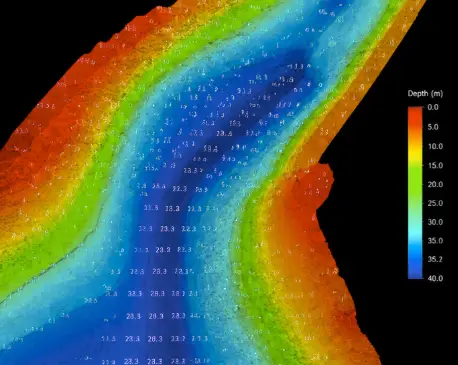
01↗Multibeam bathymetry
Collect dense, positioned depth observations across a swath to produce detailed seabed surfaces, contours, profiles and point clouds. System configuration, line spacing, overlap and survey order follow the project’s accuracy, coverage and detection requirements.
Explore capability →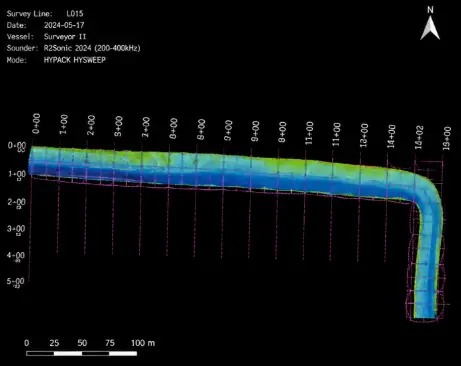 02↗
02↗Coverage & quality verification
Review survey-line coverage, overlap, density, cross lines, navigation and data quality during acquisition. Questionable areas can be rerun before demobilization, reducing gaps and avoidable return visits.
Explore capability →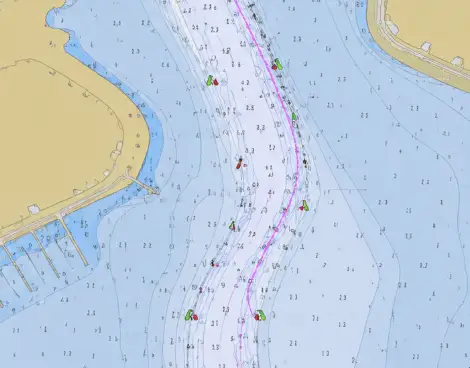 03↗
03↗Charting & navigation products
Convert controlled depth and feature data into bathymetric charts, contours, route sheets and project-selected navigation products. References, scale, intended use and limitations remain clear in every issued drawing or dataset.
Explore capability →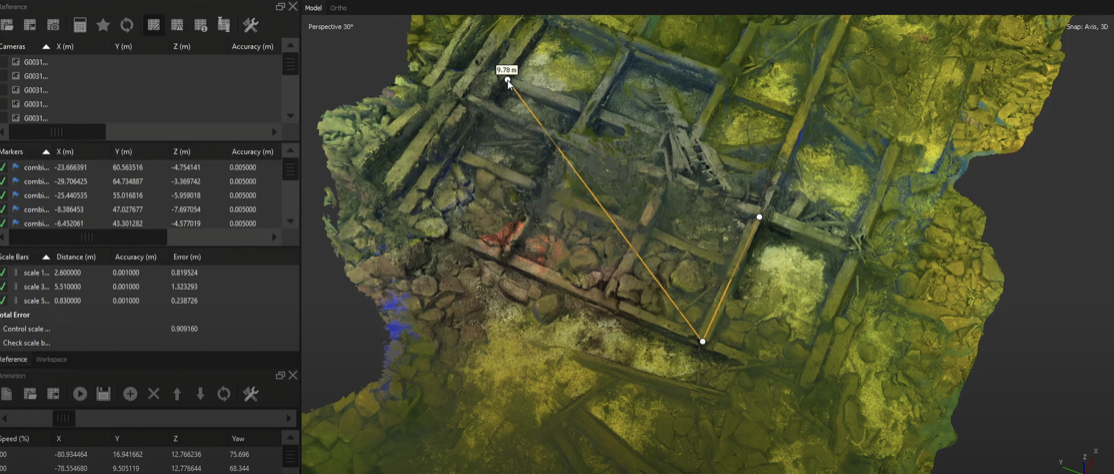 04↗
04↗Dredging & volume calculations
Compare pre-dredge, progress and post-dredge surfaces for quantities, cut-and-fill, high spots, clearance and completion review. Repeatable references and documented processing protect the value of change analysis.
Explore capability →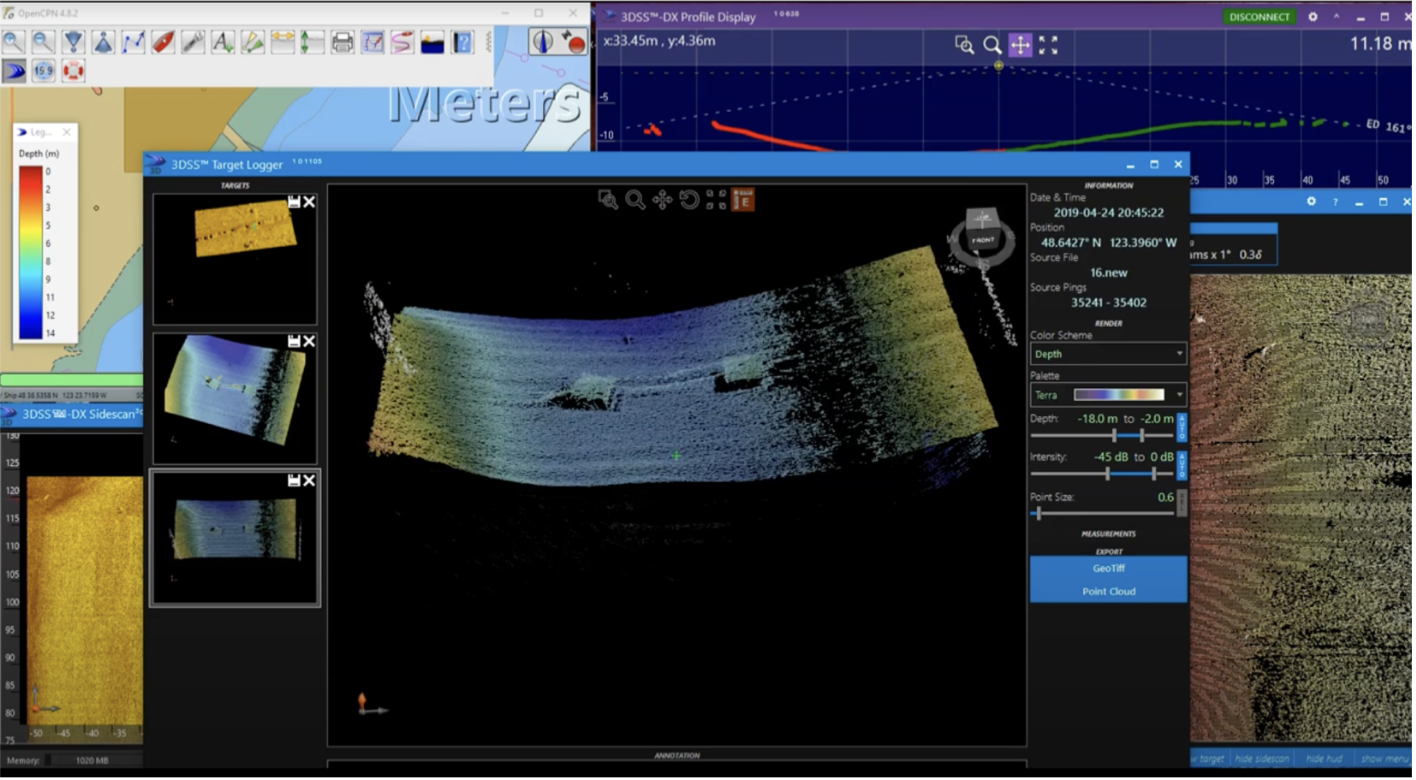 05↗
05↗Water-column & current data
Integrate project-selected ADCP, CTD, sound-velocity, water-level and environmental observations to support flow, sediment, intake, outfall and acoustic-correction requirements.
Explore capability →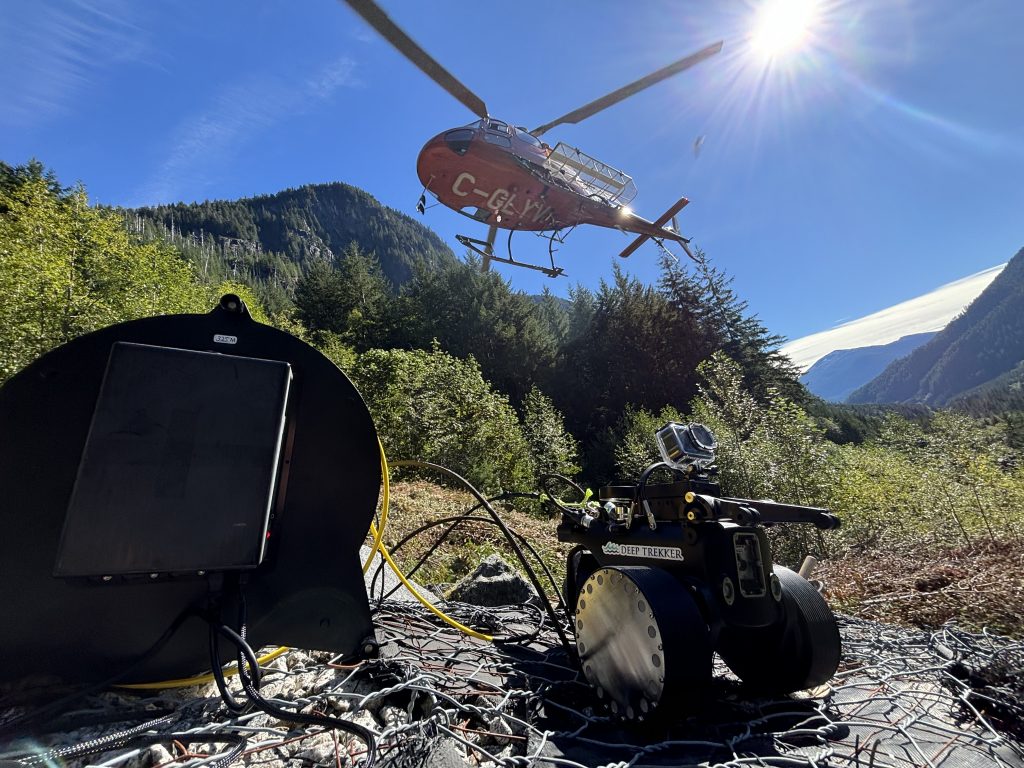 06↗
06↗Shoreline & topobathymetry
Connect GNSS, terrestrial or UAS data with underwater soundings to build continuous land-water terrain context for flood modelling, reservoirs, shore protection, ports and infrastructure design.
Explore capability →From field to final surface
Capture the depth.
Control the uncertainty.
Hydrographic Survey Services are defensible when positioning, vessel motion, sound velocity, water level, calibration, coverage and processing remain connected.
- 01 Establish horizontal and vertical references
- 02 Calibrate and verify the integrated system
- 03 Monitor coverage and quality live
- 04 Document processing and limitations
Platforms & survey systems
Right platform.
Right water body.
Hydrographic Survey Services can be deployed from USVs, crewed vessels or robotic platforms according to access, depth, line length, sea state, payload, traffic and the final data objective.
 01
01SHALLOW / REPEATABLE
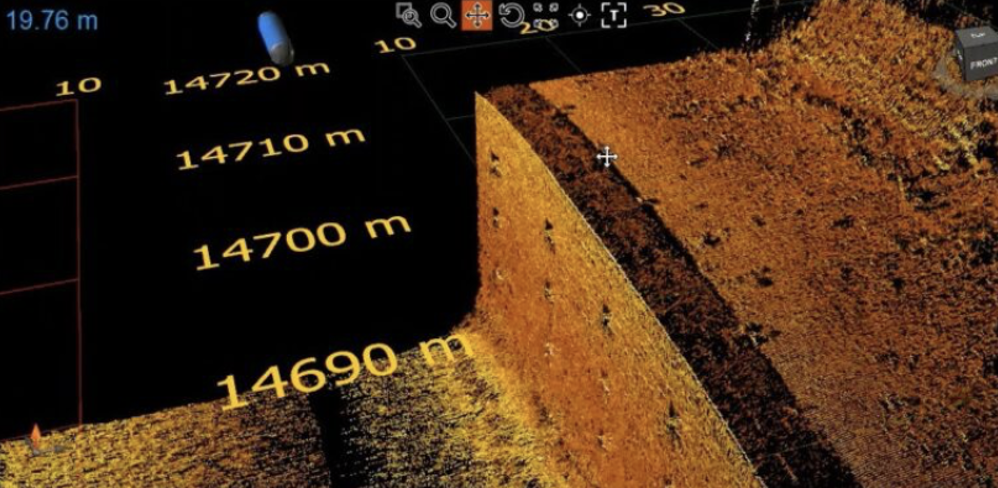
Unmanned surface vessels
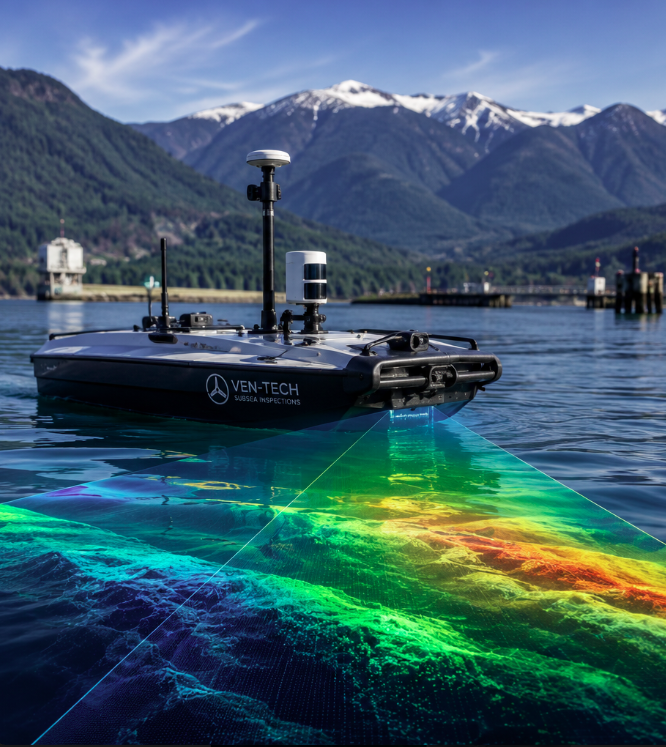
Compact USVs support controlled line keeping and reduced personnel exposure in suitable reservoirs, ports, rivers, ponds and nearshore waters. Payload, endurance, communications and safe recovery are confirmed for each location.
 02
02RANGE / ENDURANCE
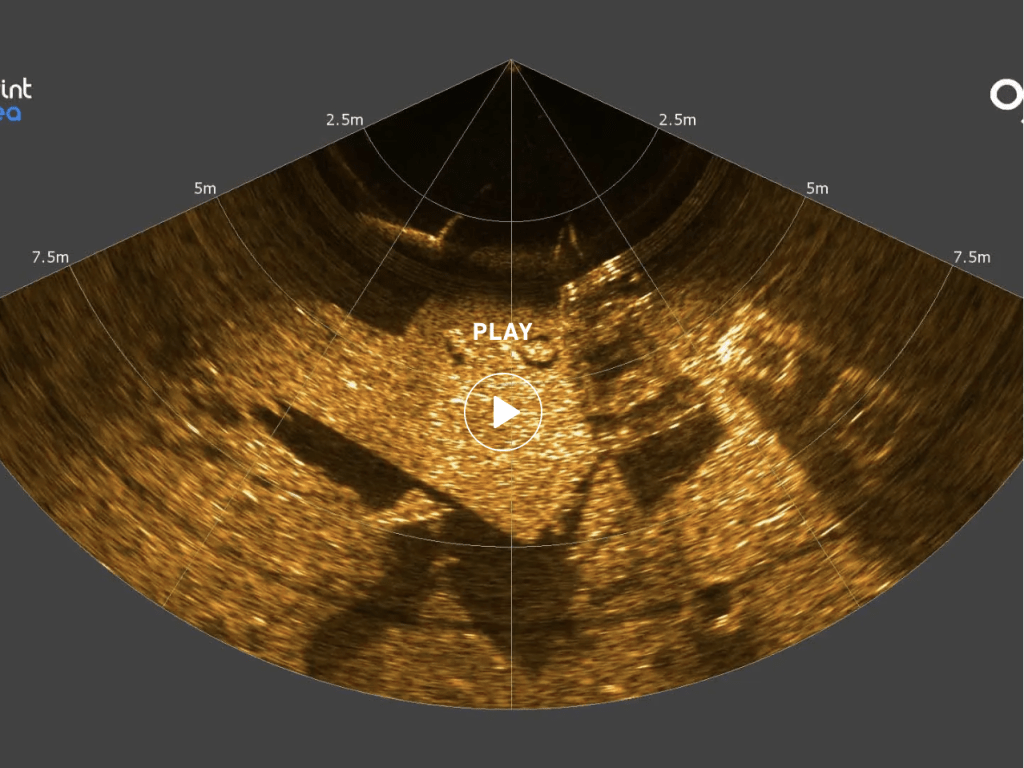
Survey & work vessels
Crewed vessels carry integrated sonar, navigation, motion, sound-velocity and water-level systems for longer lines, higher payloads and exposed or traffic-managed sites.
 03
03TARGETED / CLOSE RANGE
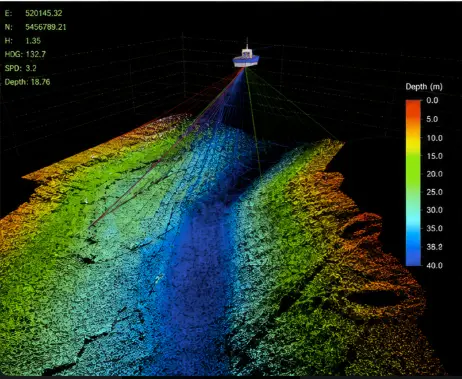
ROV & confined-water platforms
ROVs and robotic platforms support targeted bathymetry, imaging sonar and structure verification in tanks, conduits, intakes and restricted areas where a surface vessel cannot provide the required geometry.
 04
04SURFACE / QA-QC
Processing & quality systems
Navigation, motion, sound speed, water level and sounding records are processed together to create cleaned point clouds, surfaces, contours, volumes and reports with traceable quality controls.
Six-stage hydrographic workflow
Specify first.
Survey with purpose.
Ven-Tech keeps Hydrographic Survey Services planning, acquisition, processing and reporting connected so the final deliverable supports its intended use.
Discuss your survey scope ↗Specify the decision
Confirm the purpose, area, depth range, required survey order, detection need, intended use, coordinate and vertical references, schedule and final formats.
Establish the reference
Review control, GNSS method, datum, water levels, tide or non-tidal corrections, geoid model, sound velocity, benchmarks and transformation requirements.
Match system to site
Select multibeam or single-beam sonar, platform, frequency, range, mounting, motion sensor, heading, positioning, line plan, speed, overlap and calibration checks.
Prepare safe operations
Address vessel or USV traffic, weather, launch and recovery, shallow hazards, exclusion zones, communications, environmental limits, emergency provisions and stop-work criteria.
Verify quality live
Monitor positioning, motion, sound velocity, water level, coverage, density, overlap, noise and cross-line agreement. Reacquire questionable areas before leaving site.
Process with traceability
Apply agreed corrections and filtering, preserve raw and processed records, document uncertainty and issue the required surfaces, drawings, files, calculations and technical report.
Hydrographic survey deliverables
More than depths.
A usable project record.
Hydrographic Survey Services deliverables are established before mobilization so survey density, references, processing and quality controls support the client’s engineering, navigation, construction or environmental workflow.
Bathymetric surface
Cleaned gridded depth model with resolution, reference system, coverage and processing stated.
Point cloud
Project-selected XYZ, LAS or other point formats with appropriate attributes and filtering information.
Contours & charts
Bathymetric charts, soundings, contours, shaded relief and navigation or engineering annotations.
Profiles & sections
Longitudinal profiles, cross-sections, clearances and selected measurements tied to the survey reference.
Volumes & change
Cut-and-fill, dredging quantities, sediment change, reservoir capacity and surface-to-surface comparisons.
CAD & GIS files
Agreed raster, vector, point and surface formats prepared for design, mapping and asset systems.
Target register
Referenced shoals, obstructions, features and anomalies with imagery, dimensions and confidence where scoped.
Technical report
Equipment, method, control, calibrations, quality checks, results, uncertainty, limitations and deliverable index.
About Ven-Tech Subsea
Advanced systems.
Accountable field teams.
The About Ven-Tech film introduces the integrated survey, robotics, diving, reservoir and inspection capability supporting complex infrastructure work across Canada.
ABOUT VEN-TECH / 2025
One integrated project team
See the people, platforms and operating disciplines behind Ven-Tech’s survey design, field acquisition, quality control and client-ready reporting.
Learn more about Ven-Tech ↗Standards, control & uncertainty
Define the order.
Design the survey.
Hydrographic quality begins with a clear specification.
The International Hydrographic Organization lists S-44 Edition 6.2.0, October 2024, as the current standard for hydrographic surveys. The Canadian Hydrographic Service also publishes national standards and management guidance addressing survey instructions, control, orders, data acquisition and quality procedures.
Ven-Tech reviews the applicable survey order, client specification, regulator requirements and intended use before mobilization. The report documents positioning, reference systems, equipment, calibration, field checks, processing, uncertainty and known limitations without claiming a universal accuracy that the site or method cannot support.
Horizontal reference
Define positioning method, datum, control, offsets, transformations and required uncertainty.
Vertical reference
Confirm water-level method, gauge, tide, chart datum, geoid or project elevation reference.
System calibration
Address mounting, patch testing or selected checks, sound velocity, latency and sensor health.
Data traceability
Preserve raw records, corrections, filtering, quality results, exclusions and final limitations.
HSE · QUALITY · OPERATIONAL CONTROL
Remote acquisition.
Responsible execution.
Survey technology does not replace safe marine operations. Ven-Tech plans vessel or USV launch and recovery, traffic, weather, shallow hazards, towing, electrical and mechanical risks, communications, exclusion zones, environmental controls and emergency provisions around the actual site.
BCCSA COR® CertifiedISNetworld Member ContractorISNetworld ESG BadgeAvetta ApprovedCognibox CertifiedAlcumus SafeContractorProject-specific survey instructionsLive field QA/QCTraceable processingCHS / IHO scope alignmentUSV / ROV / vessel integrationATHENA™ operational framework
Industries we support
Critical water.
Measured clearly.
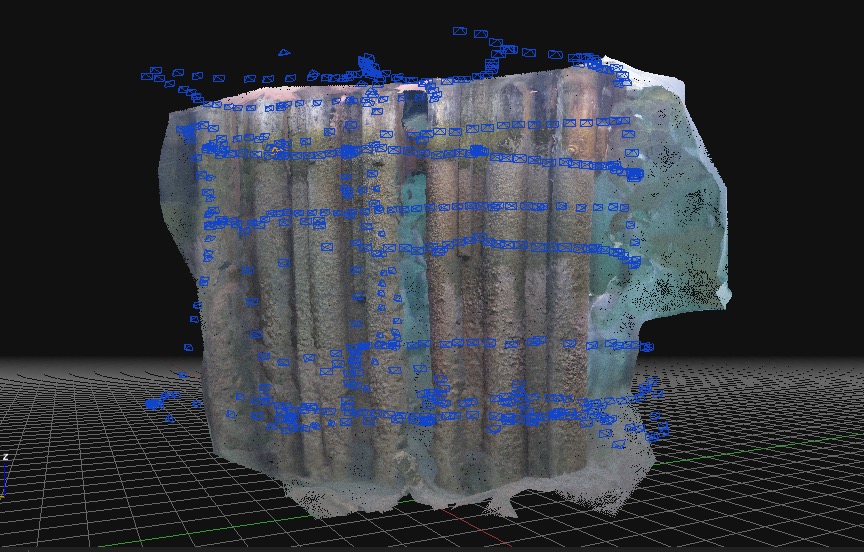
Hydrographic Survey Services support organizations responsible for navigation, construction, water storage, submerged infrastructure, environmental performance and asset continuity.
01Ports, harbours & terminals↗
02Dredging & marine construction↗
03Dams, reservoirs & hydropower↗
04Municipal water & wastewater↗
05Bridges & transportation↗
06Mining & tailings facilities↗
07Oil, gas & subsea corridors↗
08Environmental & habitat programs↗
Hydrographic Survey Services FAQ
Plan the survey
with confidence.
These answers are a practical starting point. Ven-Tech confirms the survey order, platform, sensors, references, HSE controls and deliverables for the actual project.
What are Hydrographic Survey Services used for?+
Hydrographic Survey Services measure and map water depth, seabed terrain and project-selected underwater features. Clients use the results for navigation, engineering design, dredging, construction QA, reservoir capacity, scour, environmental assessment, route planning, asset management and regulatory submissions.
What is the difference between multibeam and single-beam sonar?+
Multibeam sonar collects many depth observations across a swath and can provide dense seabed coverage. Single-beam sonar measures directly beneath the transducer and is useful for targeted profiles or suitable lower-complexity scopes. The required coverage, detection, accuracy, depth, access and budget determine the method.
Can Ven-Tech survey from an unmanned surface vessel?+
Yes, when water depth, sea state, traffic, communications, payload, endurance and safe launch and recovery make a USV appropriate. Some sites require a crewed survey vessel, ROV or combined approach. Ven-Tech selects the platform after reviewing the environment and data objective.
How accurate is a hydrographic survey?+
Accuracy is a property of the complete system and method—not a sonar model alone. Positioning, control, water level, sound velocity, motion, heading, mounting, calibration, line plan, environmental conditions, processing and quality checks all contribute. Ven-Tech confirms the required survey order or project uncertainty before acquisition.
Do Hydrographic Survey Services follow IHO and CHS standards?+
When the intended use requires it, Ven-Tech aligns the survey plan with the applicable current IHO S-44 requirements, Canadian Hydrographic Service standards, client specifications and regulator requirements. The survey order, coverage, detection, uncertainty and deliverables are agreed before fieldwork rather than claimed universally.
Can bathymetry be used for dredging and volume calculations?+
Yes. Pre-work, progress and post-work bathymetric surfaces can support dredging quantities, cut-and-fill, clearance, sediment distribution and change analysis. Reliable comparison depends on consistent references, suitable density, controlled acquisition and documented processing assumptions.
What deliverables can Ven-Tech provide?+
Depending on scope, Hydrographic Survey Services can provide soundings, point clouds, bathymetric surfaces, contours, profiles, cross-sections, charts, target registers, volumes, change maps, CAD or GIS files, field records and a technical report describing equipment, control, quality checks, uncertainty and limitations.
What information is needed for a survey proposal?+
Provide the site and purpose, survey limits, approximate depths, access, known hazards, existing control or data, required survey order or accuracy, target size, coordinate and vertical references, intended use, schedule and required file formats. Early agreement keeps field acquisition aligned with the final decision.
Start with the required decision
Need accurate depth
and defensible data?
Send the site, survey limits, depth range, access, hazards, existing control, required accuracy or survey order, intended use, schedule and deliverable formats. Ven-Tech will help define a practical Hydrographic Survey Services approach.