The owner or licensee retains control of the radiation-protection program, radiological work authorization, dose limits, access, security and facility operating boundaries. Ven-Tech integrates the dive plan with those controls.
CONTROLLED UNDERWATER WORK · CANADA
Nuclear Diving Services.
Dose planned. Work controlled.
Nuclear Diving Services for inspection, cleaning, maintenance and recovery—integrated with the facility licensee, radiation-protection program, ALARA controls and a verifiable closeout record.
ALARAExposure optimized
RWPFacility controlled
LIVEVoice, video and supervision
Radiological work first
Underwater access.
Facility discipline.
Inside a licensed nuclear facility, the water is only one part of the environment. The work must also fit the licence basis, radiation-protection program, operating state, security controls, contamination strategy and owner acceptance process.
Ven-Tech develops Nuclear Diving Services as an integrated field scope. The facility licensee and its authorized radiation-protection organization retain control of radiological work, dose limits, monitoring, worker classification, access, release and waste decisions. Ven-Tech controls the commercial-diving system and coordinates it with those requirements.
This distinction matters. It turns a generic underwater task into a controlled work package with clear interfaces, hold points and decision authority. Personnel qualifications, nuclear-worker training, security clearance, dosimetry and task authorizations are verified for the actual facility; they are not assumed from a marketing label.
Facility-led authorizationProject-specific qualificationDocumented stop-work authority
Six critical controls
Control the field.
Control the work.
Every Nuclear Diving Services scope is built around the actual facility, radiological conditions, asset and owner decision—not a one-size-fits-all procedure.
Radiation, contamination, water chemistry, visibility, temperature, geometry, sediment, flow, differential pressure and task loading are reviewed together. Unknowns become survey points or hold points.
Time, distance and shielding are considered during work sequencing, tooling, mock-ups, diver rotation and contingency planning. A dose budget and action levels are confirmed with facility radiation protection.
Clean and controlled zones, personnel protective equipment, suit and helmet interfaces, umbilicals, tools, foreign-material exclusion, decontamination and waste pathways are defined before mobilization.
The diving supervisor, facility contact and radiation-protection authority maintain communications, dose awareness, task status and stop-work authority throughout execution. Changes trigger reassessment.
Personnel, equipment, tools and materials move across boundaries only after the required surveys, decontamination and release decisions. Dive logs, media, findings and closeout records preserve the technical basis.
Underwater capability
Nuclear Diving Services.
Facility-ready execution.
From remote reconnaissance to approved diver intervention, the method is selected to obtain the needed result while managing exposure and facility risk.
 01↗
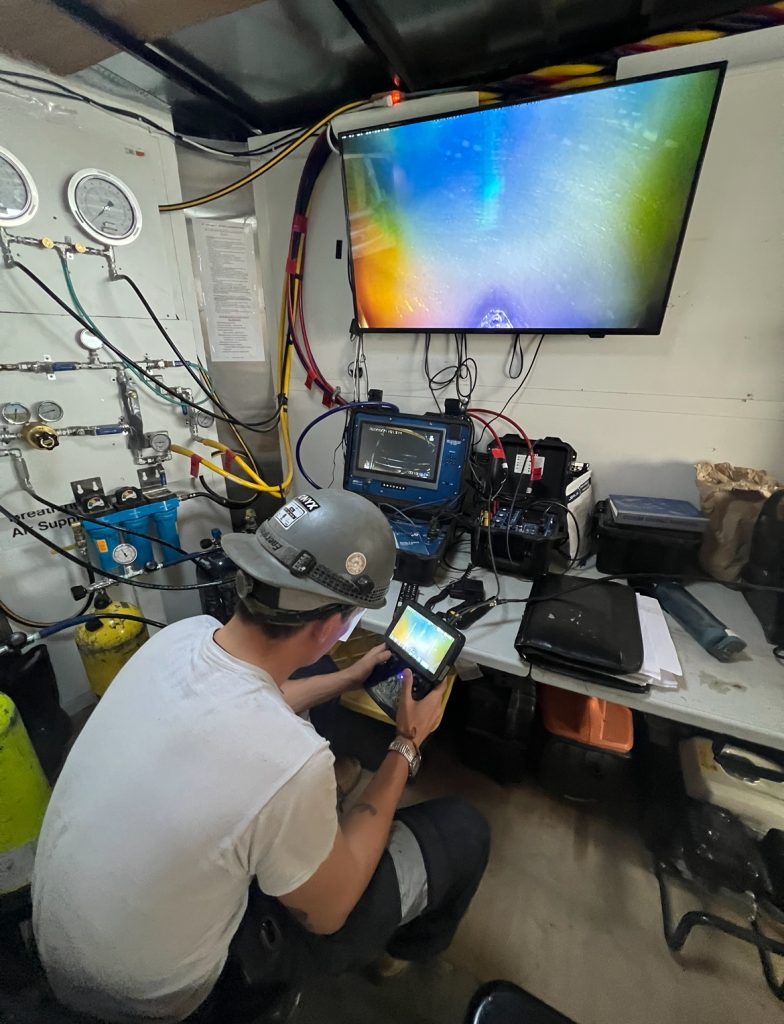
01↗Visual inspection & video
Live surface communications and recorded helmet-camera video document submerged structures, components, liners, gates, screens, pools and water systems against an owner-approved inspection plan.
 02↗
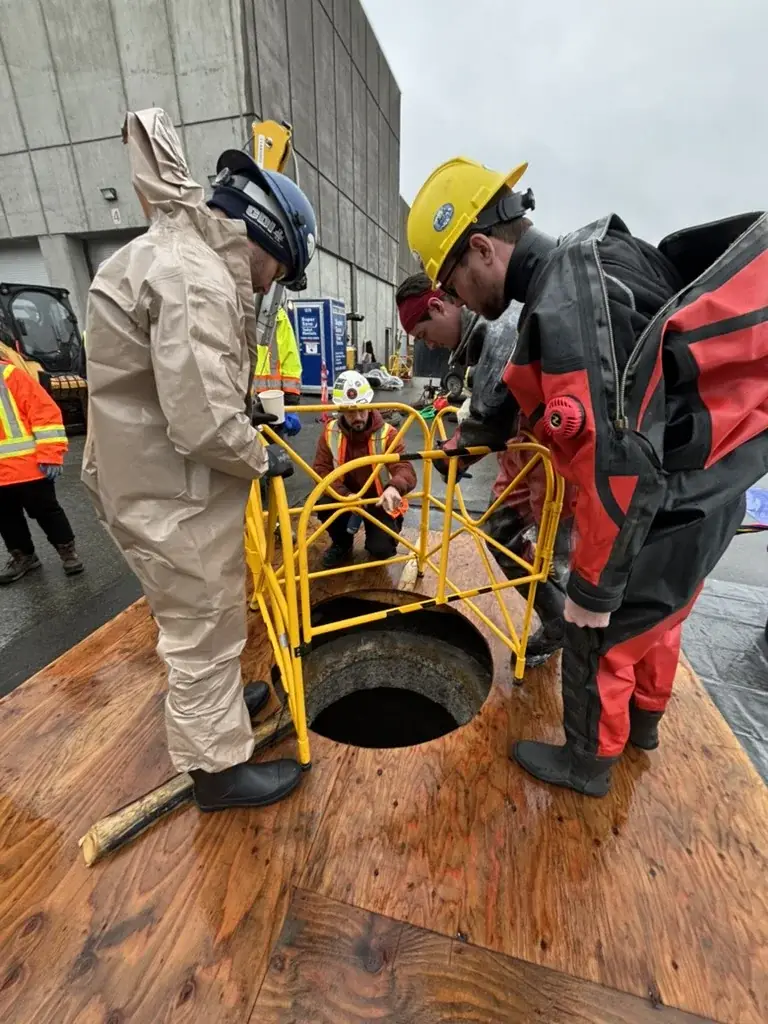
02↗Approved NDT & measurement
When authorized by the facility and supported by qualified personnel and procedures, the scope can include dimensional checks, ultrasonic thickness readings, cathodic-protection measurements and targeted condition data.
 03↗
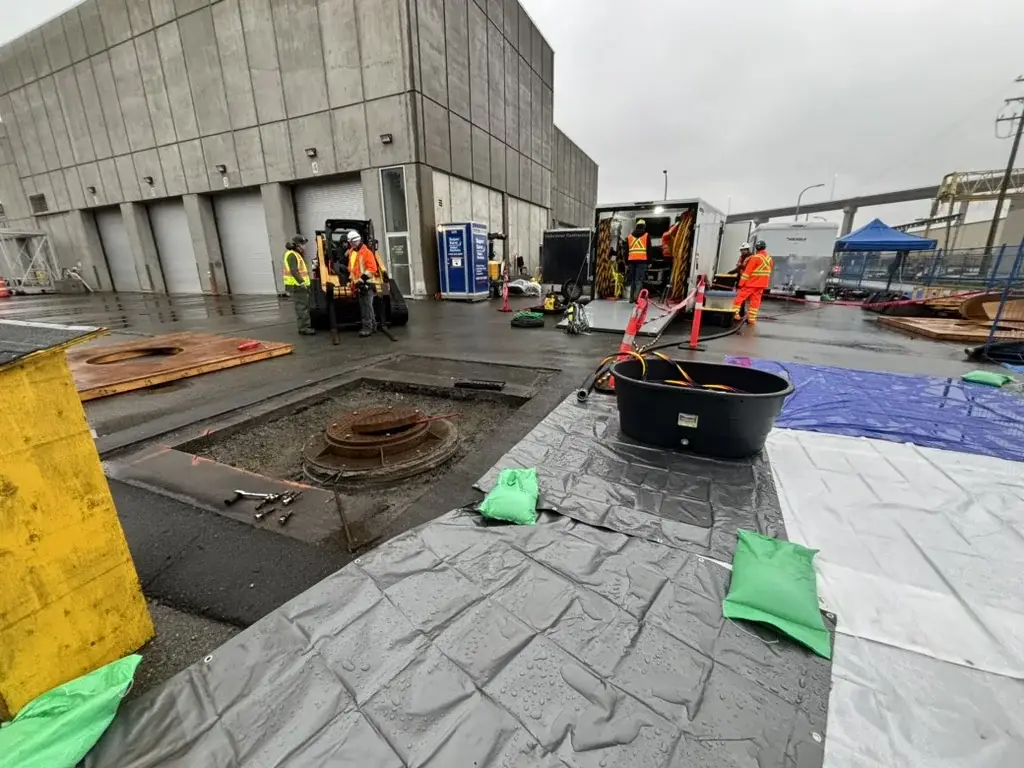
03↗Decontamination & cleaning
Purpose-specific brushing, vacuuming, flushing, sediment handling or surface preparation can support inspection and maintenance while water-quality, spread-of-contamination and waste controls remain active.
 04↗
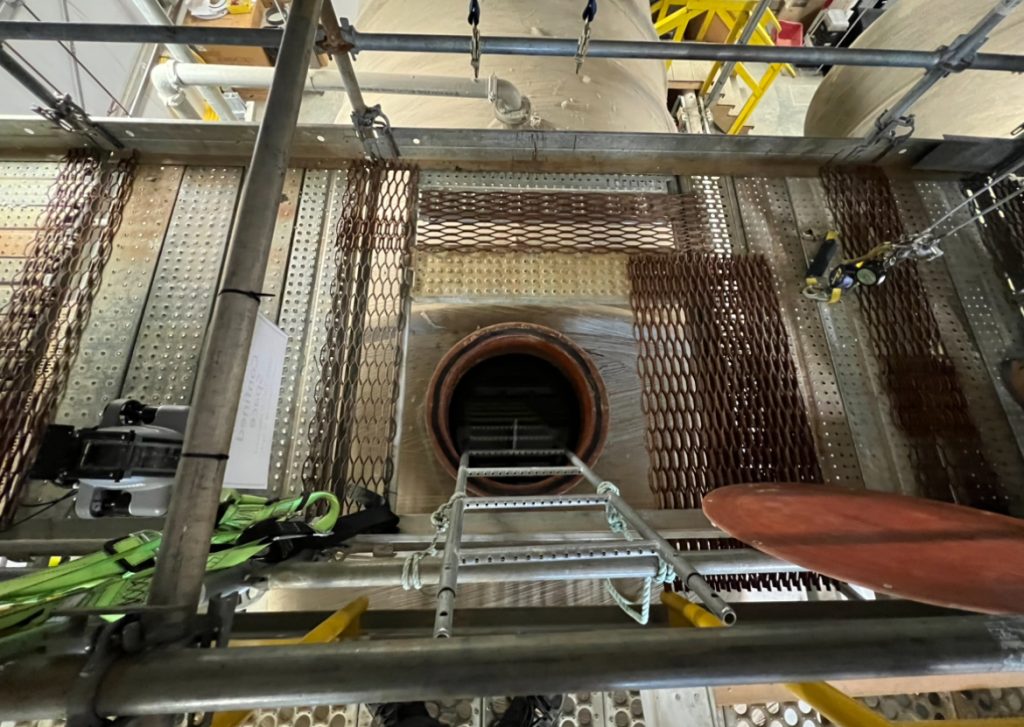
04↗Maintenance & component support
Divers can support project-approved fastening, fitting, retrieval, installation, sealing, rigging and tool-based intervention where engineering, radiation protection and facility operations authorize the method.
 05↗
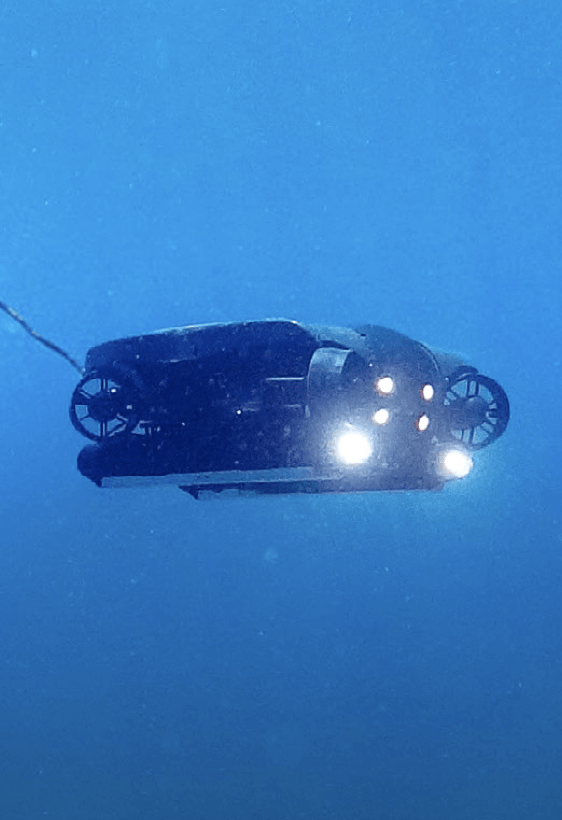
05↗ROV & remote reconnaissance
A remotely operated vehicle can reduce diver exposure, characterize access, locate targets, inspect broad areas or verify conditions before a person enters. Diver and ROV methods can be combined in one work package.
 06↗
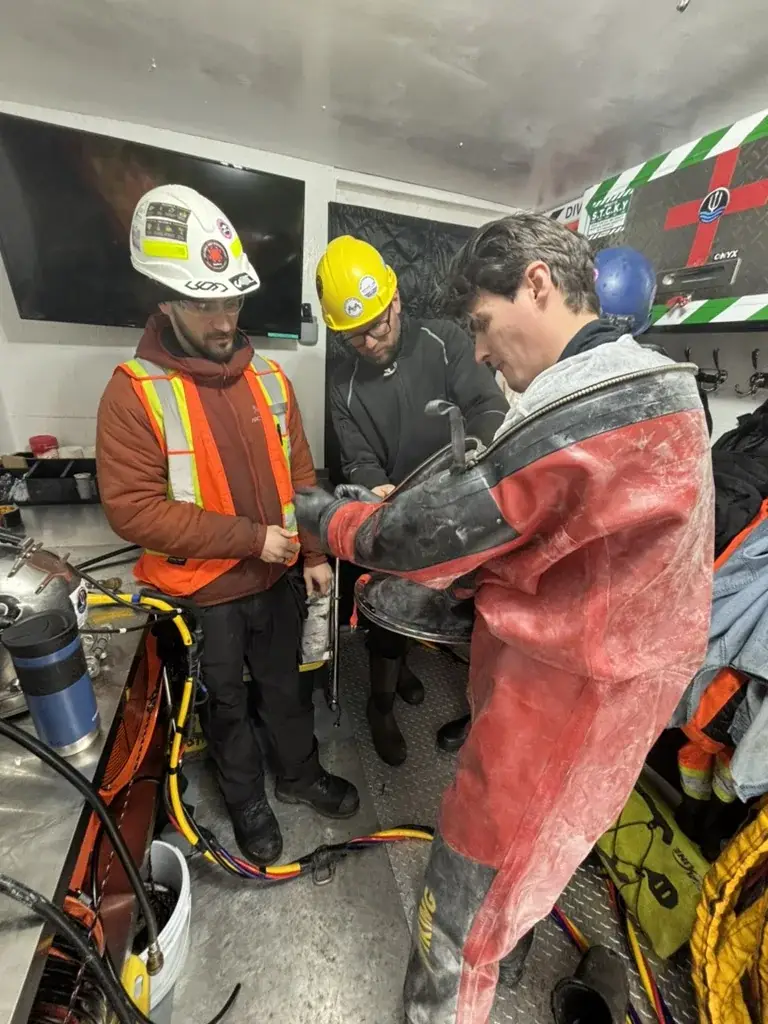
06↗Outage & emergent support
Planned outage work and emergent underwater needs are organized around facility authorization, readiness reviews, defined hold points and a traceable closeout package—without bypassing radiological or operational controls.
Licensee integration
The work package starts
with the facility.
Nuclear Diving Services do not sit beside the radiation-protection program. They operate inside it.
Before mobilization, the Nuclear Diving Services work package aligns the dive plan with facility operations, radiation protection, engineering, security, industrial safety, work control, water chemistry, foreign-material exclusion and emergency response. The interface matrix identifies who authorizes entry, who controls dose, who can stop the work, who accepts technical evidence and who releases people and equipment from controlled areas.
- 01Facility licence and operating-state boundaries
- 02Radiological work permit and dose-control basis
- 03Dive plan, isolation and recovery requirements
- 04Tool, material and foreign-material exclusion controls
- 05Decontamination, survey, release and waste pathways
Eight-step delivery model
One authorization path.
One traceable result.
The Nuclear Diving Services sequence keeps technical, diving and radiological decisions connected from the first question through closeout.
Define the owner decision
Confirm the component, defect question, required work, acceptance criteria, outage window, operating state, evidence format and the technical authority who will use the result.
Build the radiological and asset picture
Review dose-rate information, contamination potential, water chemistry, geometry, access, depth, visibility, flow, stored energy, sediment, drawings, history and credible condition changes.
Align the RWP and dive plan
Integrate the facility radiological work permit, radiation-protection program, dive plan, lockout, boundaries, security, dose controls, communication tree, emergency response and required approvals.
Configure tools and containment
Select breathing apparatus, suit interfaces, dosimetry, monitoring, communications, cameras, tooling, retrieval, foreign-material exclusion, decontamination and waste arrangements for the actual task.
Stage, inspect and brief
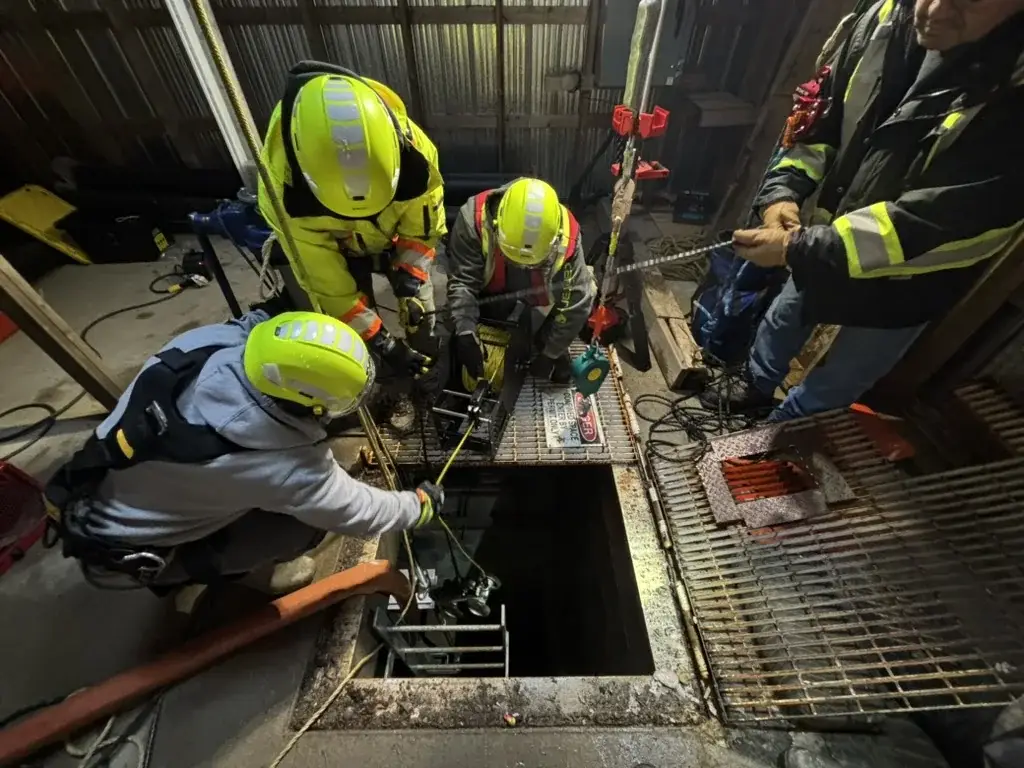
Verify qualifications, fit, equipment, tool inventory, control zones, mock-ups, monitoring, hold points, bailout, standby diver, recovery, decon route and facility coordination before entry.
Control the live operation
The supervisor controls the dive while radiation protection tracks the radiological basis. Voice, video, depth, exposure, water conditions, task progress and changes remain visible to the responsible parties.
Exit through controlled boundaries
Recover the diver and equipment through the planned route; survey, contain, decontaminate and release according to facility direction. Exceptions and retained items are clearly identified.
Issue the verified record
Compile indexed video, stills, locations, measurements, dive logs, findings, limitations, material accountability, survey references and closeout actions for owner and engineering review.
Protective operating system
Protect the diver.
Protect the facility.
The Nuclear Diving Services equipment spread is configured around the water chemistry, contamination potential, task, access and approved facility controls.
Protective diving system
The helmet, suit, valves, penetrations, gloves, boots and umbilical are selected for the water chemistry, contamination potential, temperature, task and facility program. Positive pressure or other protective features are not treated as universal solutions.
Surface-supplied breathing air
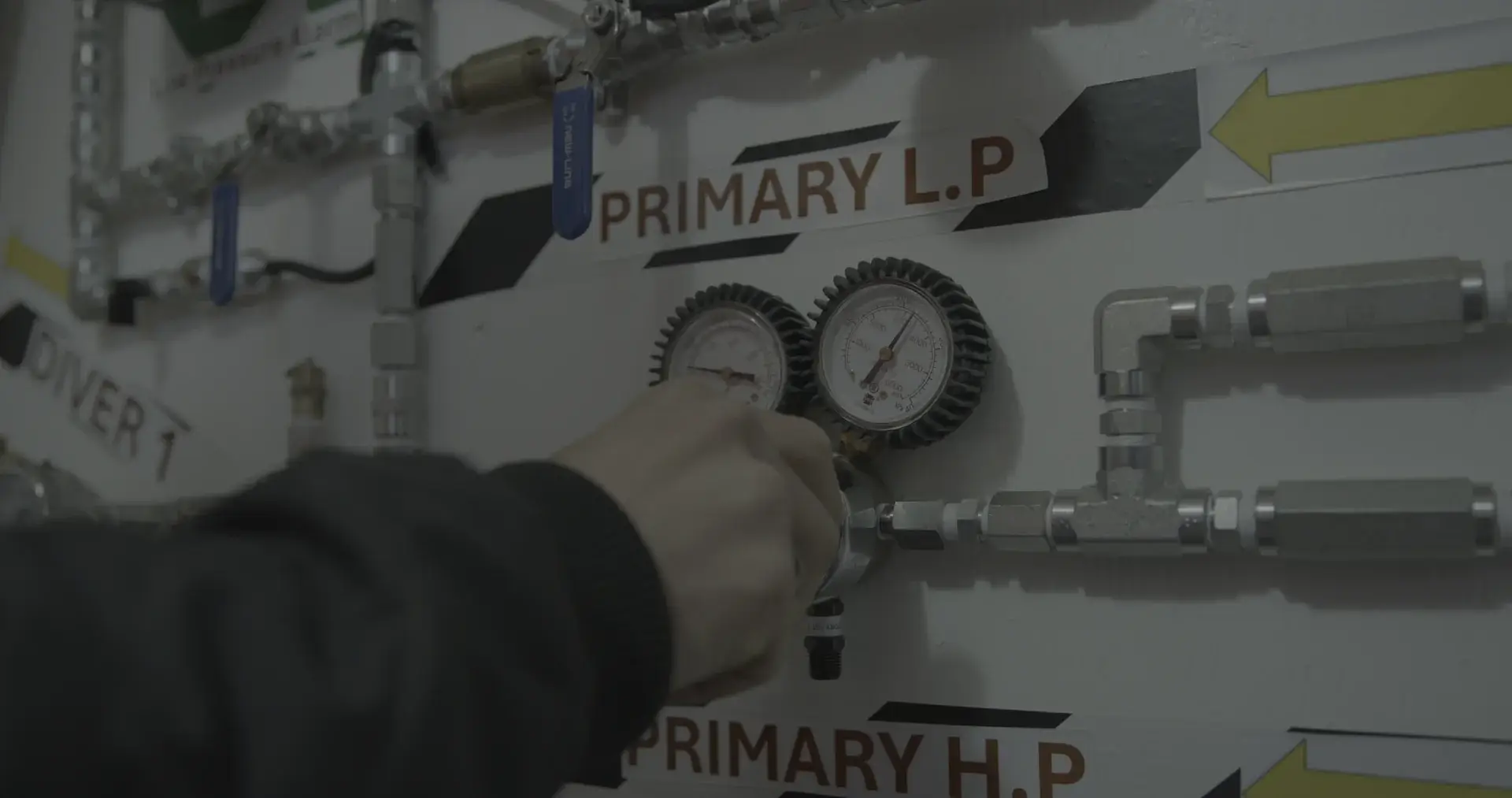
Primary and independent reserve breathing-gas sources, bailout, tested communications, video, depth monitoring and recovery arrangements form the core life-support system. Compatibility with facility restrictions is verified.
Dosimetry and radiation monitoring
Personal dosimetry, area or task monitoring, alarming instruments and data ownership are established by the facility radiation-protection program. Licensed dosimetry is used where Canadian requirements call for it.
Live communications and video
Hard-wired voice, supervisor control, helmet video, lighting and recorded annotation allow the dive and radiological teams to coordinate the task, stop work and preserve location-based evidence.
Water and contamination controls
Water chemistry, contamination, turbidity and disturbance can affect both the inspection and radiological conditions. Monitoring, sampling, filtration or operational limitations are selected with facility authorities.
Foreign-material exclusion
Every tool, fastener, tether, consumable and recovered item is identified and controlled. Tooling is simplified, positively retained and configured to reduce dropped-object and unrecovered-material risk.
Clean and controlled boundaries
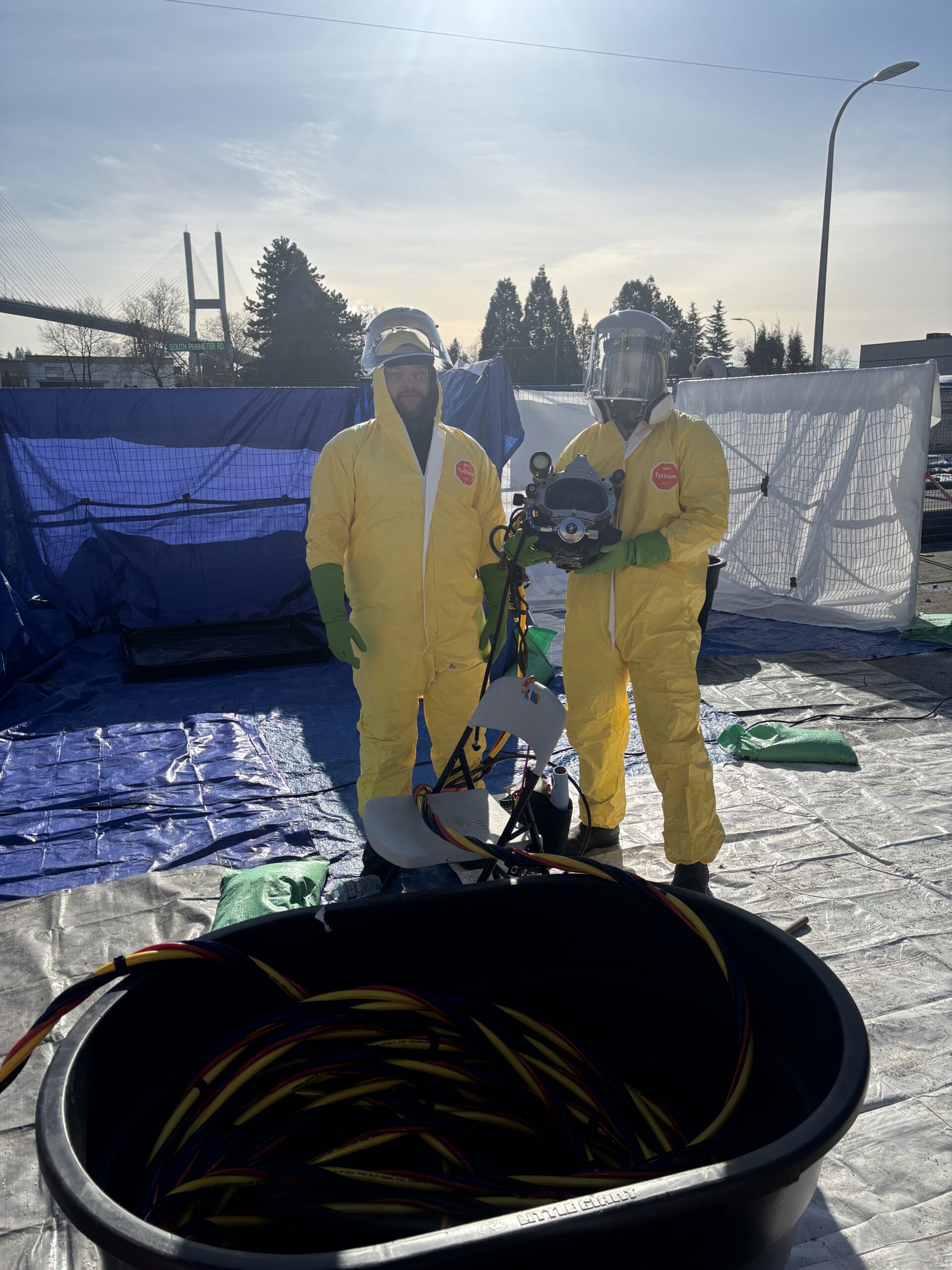
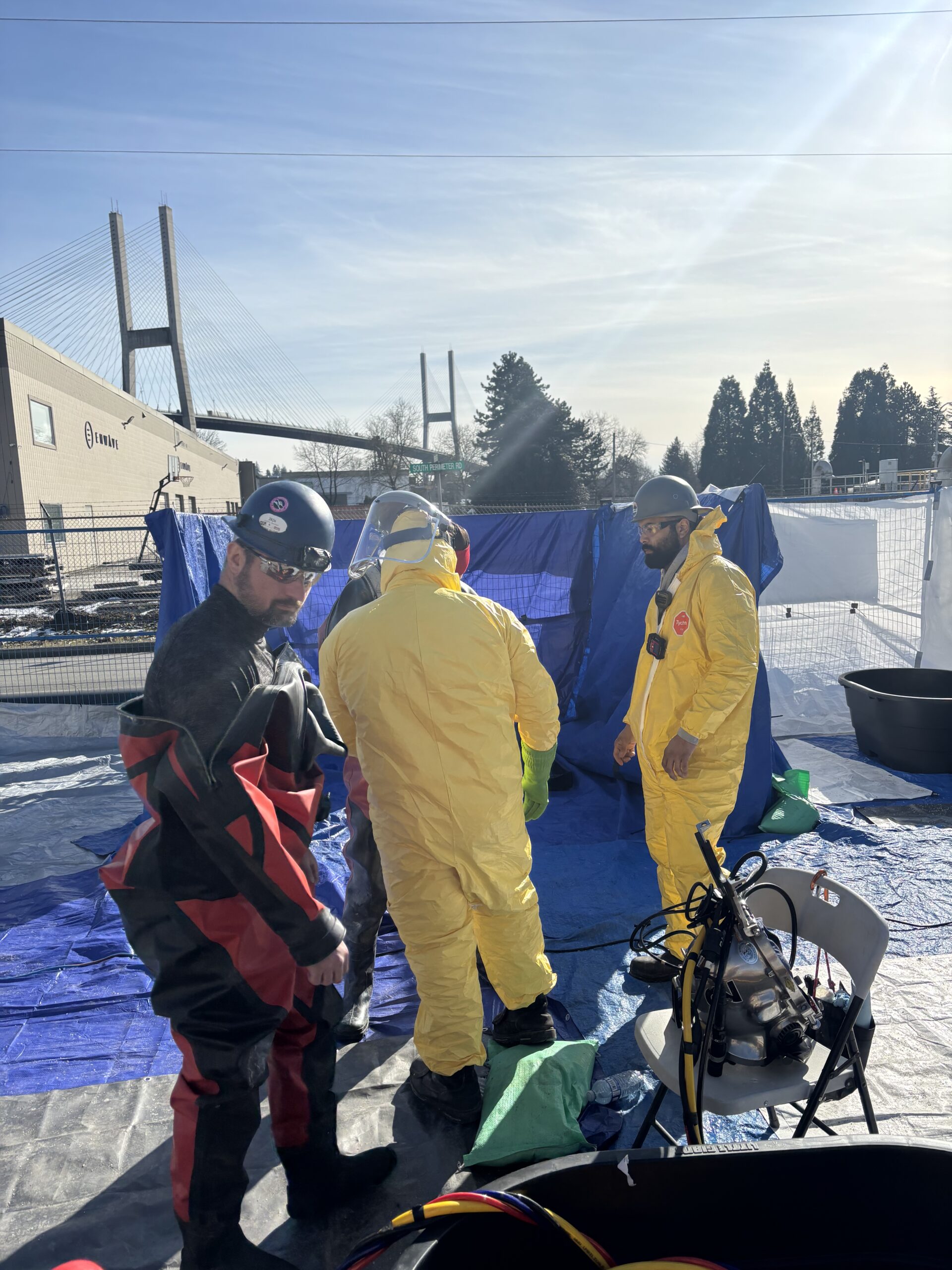
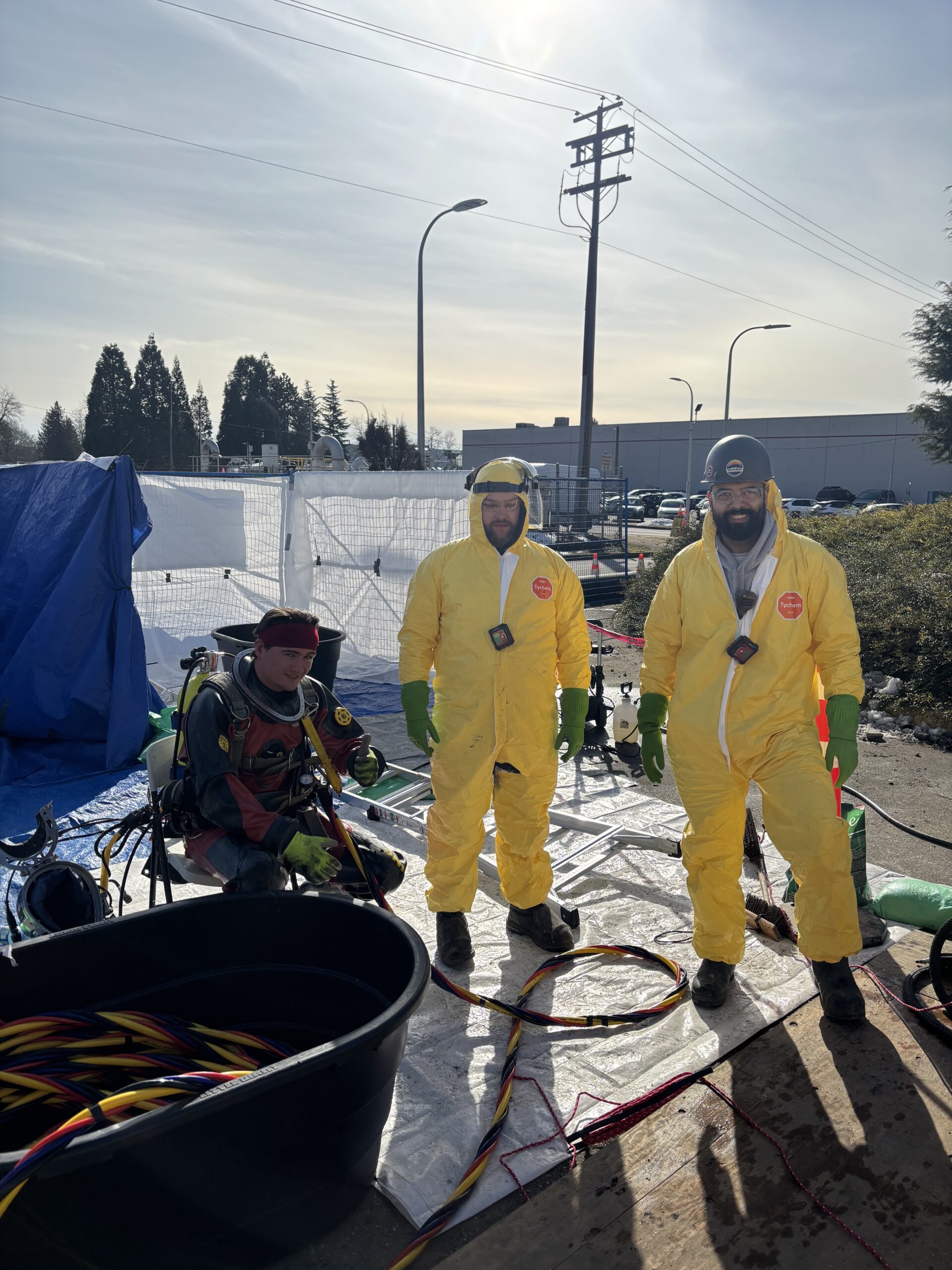
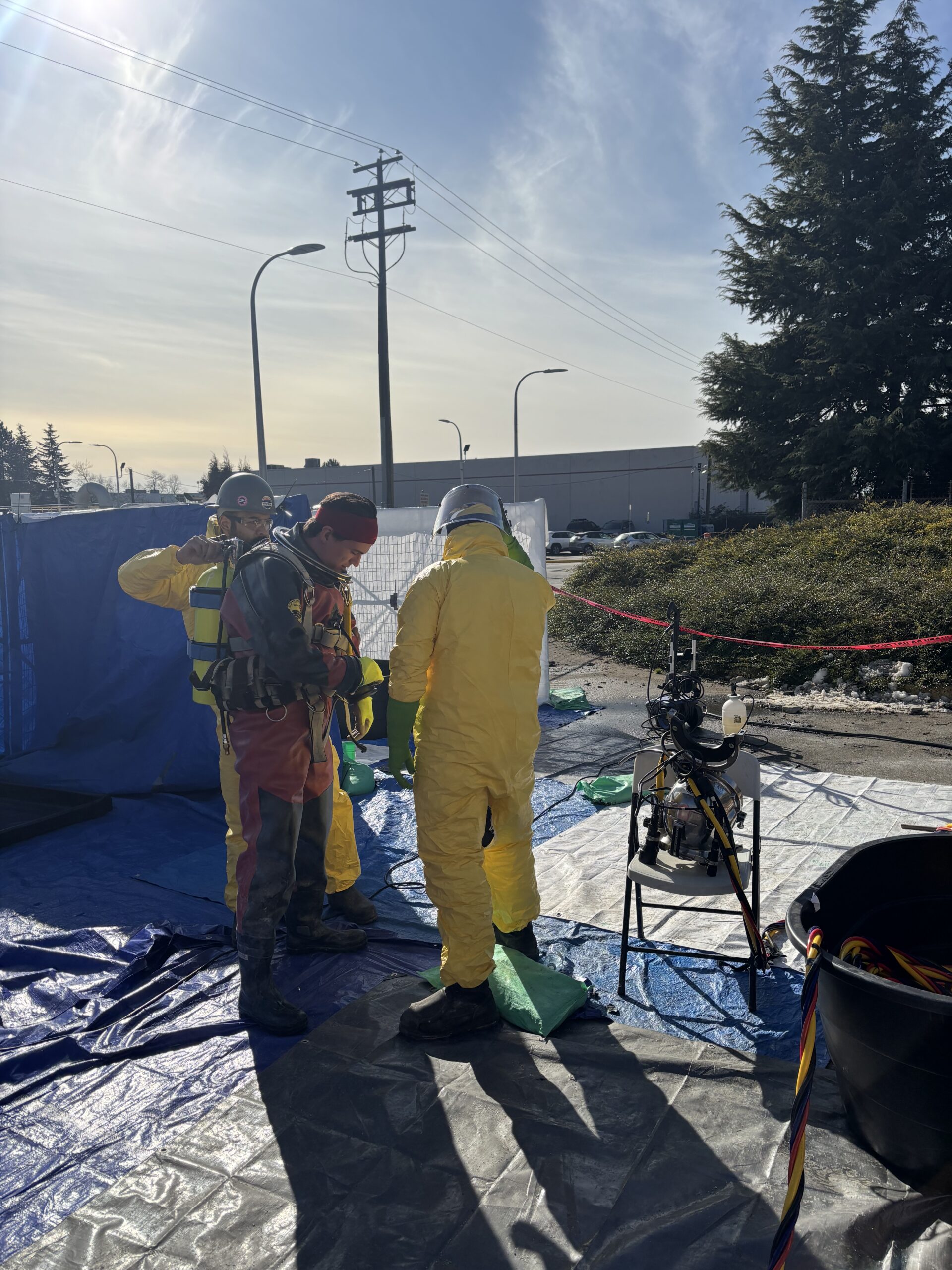
Access points, mats, tubs, barriers, ventilation interfaces, dress and undress sequences, personnel routes and equipment routes are planned so that the facility can maintain its contamination-control strategy.
Decontamination and release
Personnel and equipment decontamination methods, rinse collection, waste segregation, survey points, packaging and release criteria are agreed before entry. Release decisions remain with the authorized facility organization.
As low as reasonably achievable
Reduce uncertainty.
Reduce exposure.
ALARA is not a slogan at the end of the plan. It is a design input for reconnaissance, tooling, sequencing, training, diver rotation and stop-work decisions.
Time, distance and shielding are considered together. Water may provide significant shielding in some geometries, but source location, depth, suspended contamination, sediment disturbance and component movement can change the field. Facility radiation protection establishes the monitoring, dose budget, action levels and response to changing conditions.
Remote reconnaissance firstMock-ups and task rehearsalOptimized tool and material stagingDose budget and action levelsLive communications and monitoringHold points for changing conditions
Project deliverables
Prove the basis.
Preserve the evidence.
Nuclear Diving Services closeout connects the approved work package, the live operation and the technical result without blurring facility-controlled records.
Integrated work package
Scope, interfaces, operating state, responsibilities, permits, hold points, acceptance criteria and required approvals organized around the owner’s decision.
Personnel readiness matrix
Project-required diving qualifications, medical fitness, site orientation, radiation-worker training, security access and role authorization verified before deployment.
Radiological control interfaces
Facility-controlled RWP references, dose budget, action levels, monitoring plan, protective-equipment basis, contamination boundaries and reporting pathway connected to the dive plan.
Tool and material accountability
Configured tooling, tethering, foreign-material exclusion, consumable controls, component movement, equipment status and recovery checks documented for the work.
Dive and task records
Supervisory logs, diver identity, depth, time, breathing system, communications, environmental conditions, work status, deviations and stop-work decisions preserved.
Survey and release references
Dose, contamination, decontamination and release records are managed by the responsible facility organizations and referenced in closeout where applicable.
Indexed technical evidence
Recorded video, still images, voice notes, component locations, measurements, approved NDT data, condition observations and limitations organized for efficient review.
Closeout and action register
Completed work, unresolved findings, retained or packaged equipment, waste disposition references, limitations, recommended follow-up and owner acceptance actions summarized.
Assets and environments
Critical water.
Controlled access.
Each asset is reviewed for radiological conditions, operating state, water controls, access and technical acceptance. Work inside reactor, refuelling or fuel-storage water spaces is considered only when expressly authorized under the facility program.
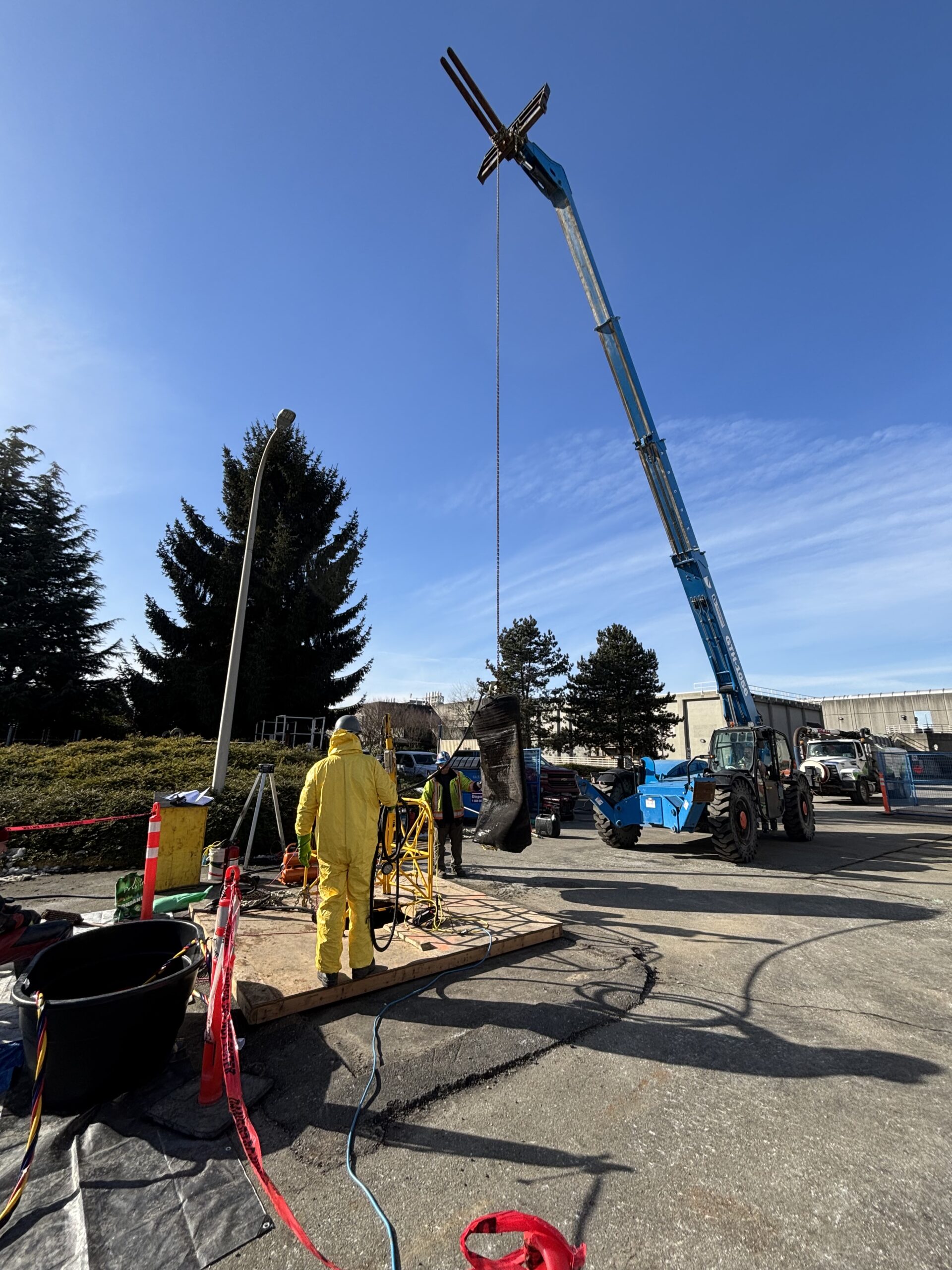
01Cooling-water intakes and forebays↗
02Service-water systems and reservoirs↗
03Storage basins, sumps and tanks↗
04Gates, screens, guides and pumps↗
05Liners, seals and submerged steelwork↗
06Authorized reactor or refuelling water spaces↗
07Decommissioning and legacy facilities↗
08Submerged tools, components and debris↗
Diver, ROV or hybrid
Match the method
to the exposure.
A remote platform can answer the first question, reduce uncertainty or complete the scope without a diver. When a person is needed, remote reconnaissance can shorten the exposure and improve the Nuclear Diving Services work package.
The decision considers access, radiation field, contamination, visibility, water depth, component geometry, manipulation requirements, data quality and equipment tolerance. Ven-Tech can combine ROV reconnaissance, diver inspection, targeted intervention and post-work verification under one coordinated plan.
Explore ROV Services →About Ven-Tech Subsea
People, systems
and field capability.
The About Ven-Tech video introduces the company’s commercial-diving, robotics, inspection, construction and project-support capability. Every nuclear underwater scope is then developed around the facility’s approved requirements and actual field conditions.
Discuss a nuclear scope →Radiation protection and diving HSE
Qualified people.
Defined authority.
Canadian nuclear work is performed within the licensee’s radiation-protection program and applicable federal requirements. Those controls address dose ascertainment, worker information, licensed dosimetry where required, action levels, dose limits, instrumentation and records. Commercial-diving requirements, industrial safety, emergency response and facility procedures remain active at the same time.
Ven-Tech does not replace the licensee’s radiation-protection authority. We provide a controlled diving system and integrate it with the facility’s approved work process. Project-specific training, security, medical fitness, diving qualification, radiation-worker status and authorization are confirmed before a person is assigned.
BCCSA COR® CertifiedISNetworld Member ContractorISNetworld ESG BadgeAvetta ApprovedCognibox CertifiedAlcumus SafeContractorFacility-controlled RWPLicensed dosimetry where requiredForeign-material exclusionStop-work authority
Nuclear Diving Services FAQ
Technical questions.
Clear boundaries.
These answers explain the control principles behind a responsible scope. Final authorization, exposure limits and work methods remain facility and project specific.
What are Nuclear Diving Services?+
Nuclear Diving Services are specialized underwater inspection, cleaning, maintenance or recovery activities performed inside or in support of a licensed nuclear facility. The dive is integrated with the facility radiation-protection program, radiological work authorization, dose controls, operating boundaries, security, contamination controls and technical acceptance process.
Are Ven-Tech divers ‘CNSC certified’?+
CNSC does not provide a generic commercial-diver certification called ‘CNSC certified.’ Personnel requirements are project and facility specific. Ven-Tech verifies the applicable commercial-diving qualifications, medical fitness, site access, nuclear-worker training, radiation-protection training, security and task authorization with the licensee before work begins.
How is radiation exposure kept ALARA?+
The facility and project team apply time, distance and shielding together with work sequencing, mock-ups, remote reconnaissance, tool design, diver rotation, dose budgets, action levels, live monitoring and stop-work authority. ALARA decisions are documented in the approved work package and updated if conditions change.
Does water always shield the diver from radiation?+
Water can provide useful shielding for some radiation fields, but it must never be assumed to make an operation safe. Source geometry, water depth, contamination, suspended material, sediment disturbance and task position can change exposure. Facility radiation protection establishes the monitoring and work limits.
Can an ROV be used before a nuclear dive?+
Yes. An ROV can inspect access, locate the target, gather video or sonar, identify obstructions and reduce uncertainty before a diver enters. It can also support no-entry inspection or post-work verification. The final method depends on radiation tolerance, water conditions, access, data needs and facility authorization.
What equipment is used for nuclear underwater work?+
The system can include surface-supplied breathing air, a project-selected protective suit and helmet, independent reserve gas, bailout, wired voice communications, helmet video, lighting, dosimetry, radiation monitoring, retained tools, foreign-material exclusion, clean and controlled boundaries, decontamination equipment and an emergency recovery arrangement.
What records are delivered after the work?+
The closeout package can include approved-work references, dive logs, indexed video and stills, measurements, NDT data, location records, tool and material accountability, findings, limitations and outstanding actions. Dose, contamination, decontamination, waste and release records are controlled or referenced by the responsible facility organizations.
What information is needed to plan a nuclear diving project?+
Provide the facility and asset, operating state, task, drawings, water chemistry, access, known dose and contamination information, outage window, isolation, security constraints, owner procedures, acceptance criteria, required evidence, tooling limitations, waste pathway and technical contacts. Ven-Tech can then identify gaps and define the next controlled planning step.
Bring us the facility, asset and decision
Plan the exposure.
Deliver the evidence.
Send the operating state, task, known radiological information, water conditions, access, outage window, owner procedures and required technical result. Ven-Tech will review the Nuclear Diving Services scope and define the next controlled planning step.