Condition, remaining thickness, visible damage, surface indications, geometry, obstructions or change over time.
ADVANCED UNDERWATER INSPECTION & NDT · CANADA
See the condition.
Measure the evidence.
Underwater Inspection and NDT for submerged infrastructure—combining qualified commercial divers, ROVs, visual testing, UT, MT, PT, sonar and traceable technical reporting.
VTVisual evidence
UTThickness data
MT / PTSurface testing
ROVRemote access
Evidence before intervention
Inspect what is submerged.
Report what matters.
Ven-Tech builds each Underwater Inspection and NDT scope around the decision the asset owner needs to make—not around a single instrument.
That starts with the asset, material, operating condition, access, known damage mechanisms and required acceptance basis. We then select the appropriate combination of commercial diver, ROV, visual testing, ultrasonic thickness measurement, magnetic particle testing, liquid penetrant testing, sonar or spatial documentation.
Field evidence is monitored during execution and organized into a traceable technical record. Observations, measurements and media remain distinct from engineering conclusions, and limitations are stated clearly so owners, consultants and engineers can use the results responsibly.
Method-specific planningLive quality controlDecision-ready reporting
Access, material, coating, cleanliness, geometry, visibility and acceptance criteria shape the inspection technique.
Location references, calibration, indexed media, measurements, observations and limitations remain connected.
Clients receive a clear closeout package for maintenance planning, engineering review and future comparison.
Underwater Inspection and NDT methods
One asset question.
Multiple ways to answer it.
Capabilities are configured for the actual component, material, environment and required level of evidence. Each photograph below is used once on this page.
 01↗
01↗Visual testing & documentation
Underwater Inspection and NDT visual records combine qualified personnel, live communications, scale references, high-definition imagery, location notes and indexed video.
 02↗
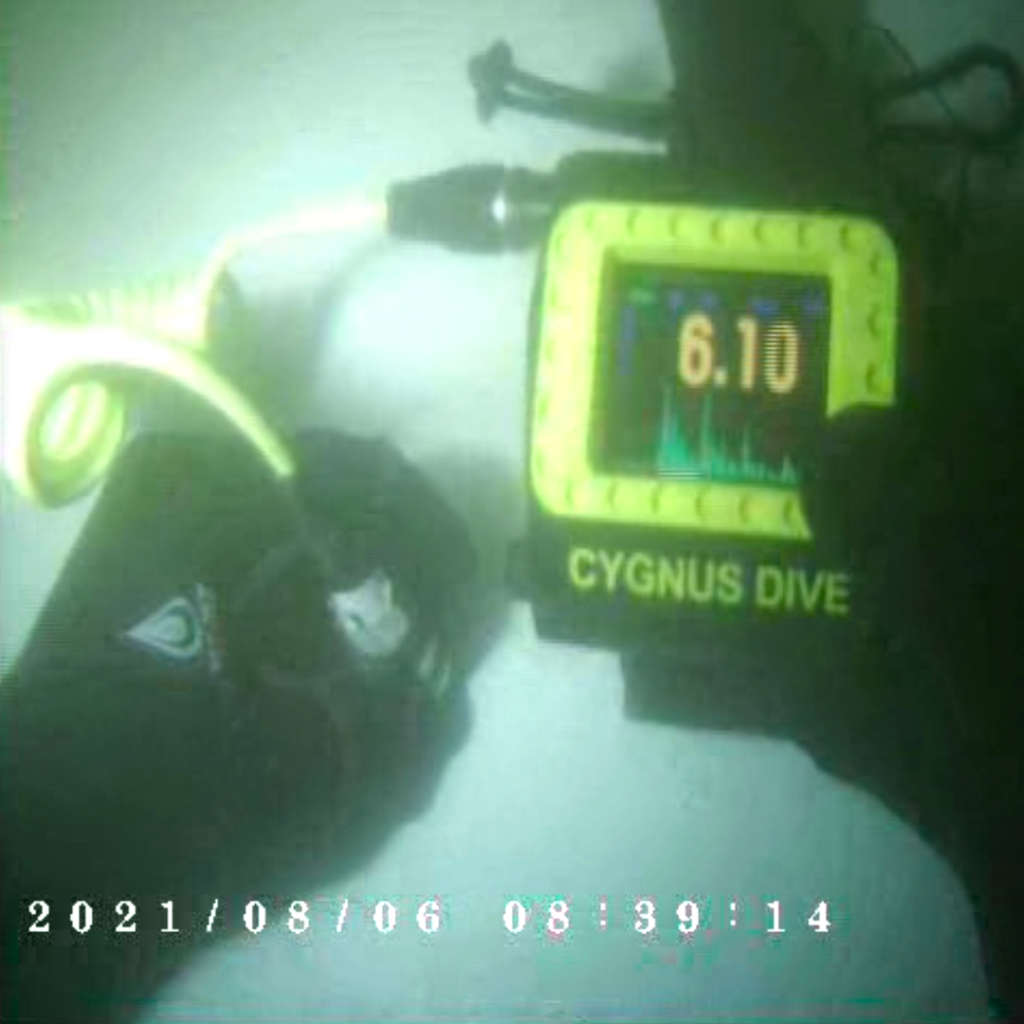
02↗Ultrasonic thickness measurement
Underwater Inspection and NDT UT readings for suitable metallic components include calibration, surface preparation, measurement locations and documented material assumptions.
 03↗
03↗Magnetic particle testing
Underwater Inspection and NDT can include surface-breaking discontinuity screening on suitable ferromagnetic materials where preparation, coating condition and an approved technique allow meaningful examination.
 04↗
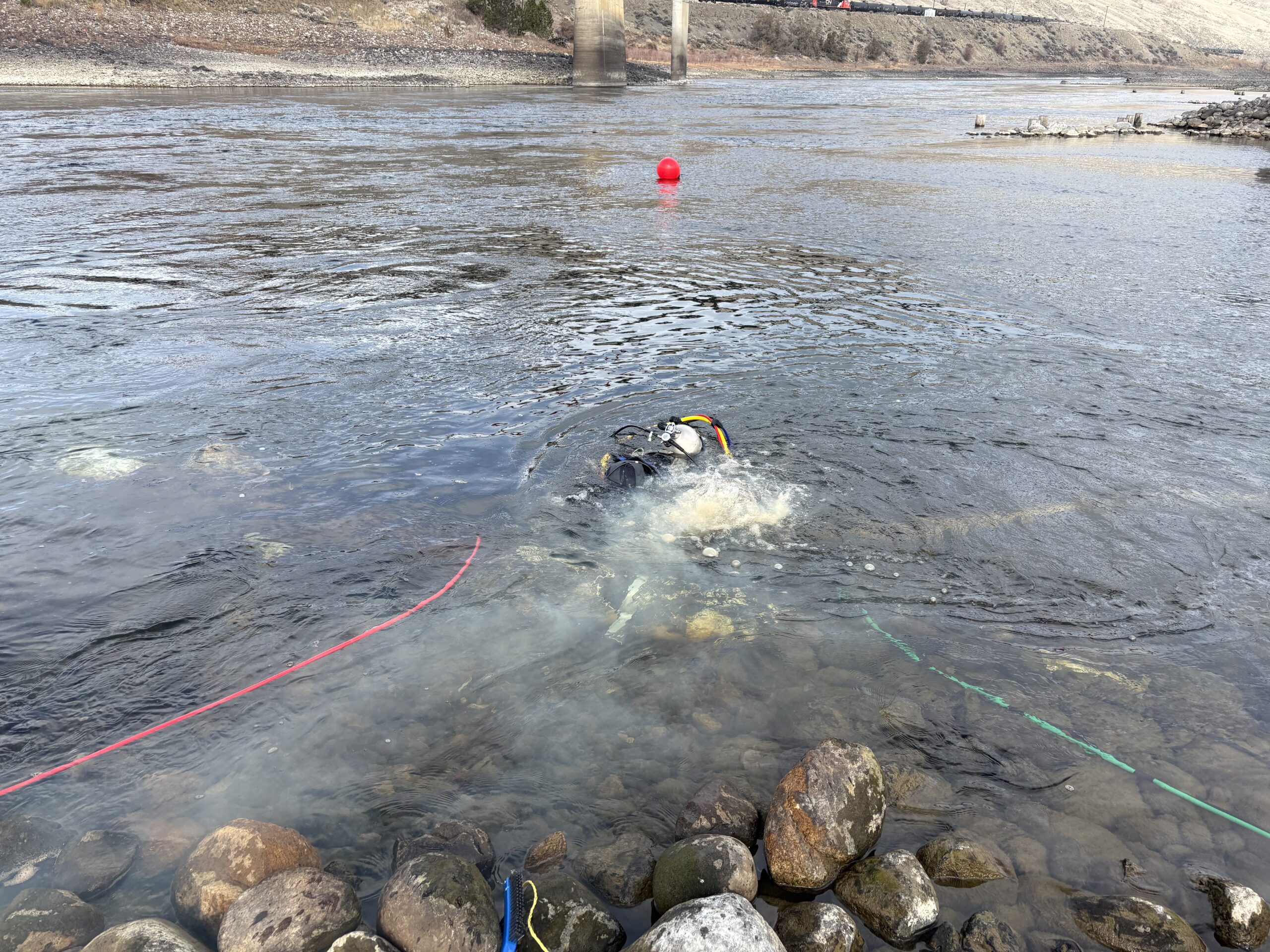
04↗Liquid penetrant testing
Underwater Inspection and NDT PT examination is completed on clean, accessible and compatible non-porous surfaces using a method selected for the material and environment.
 05↗
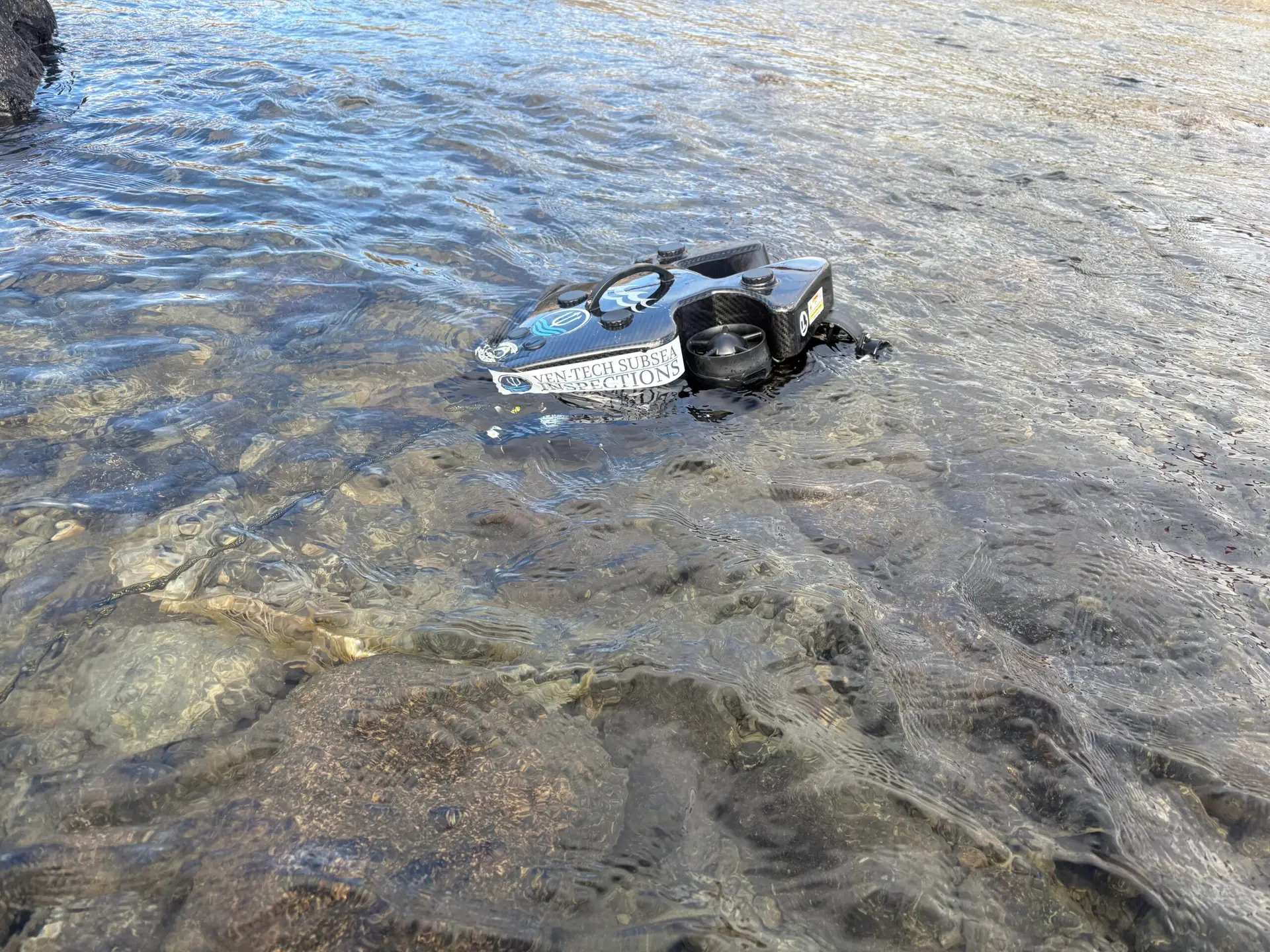
05↗ROV & remote inspection
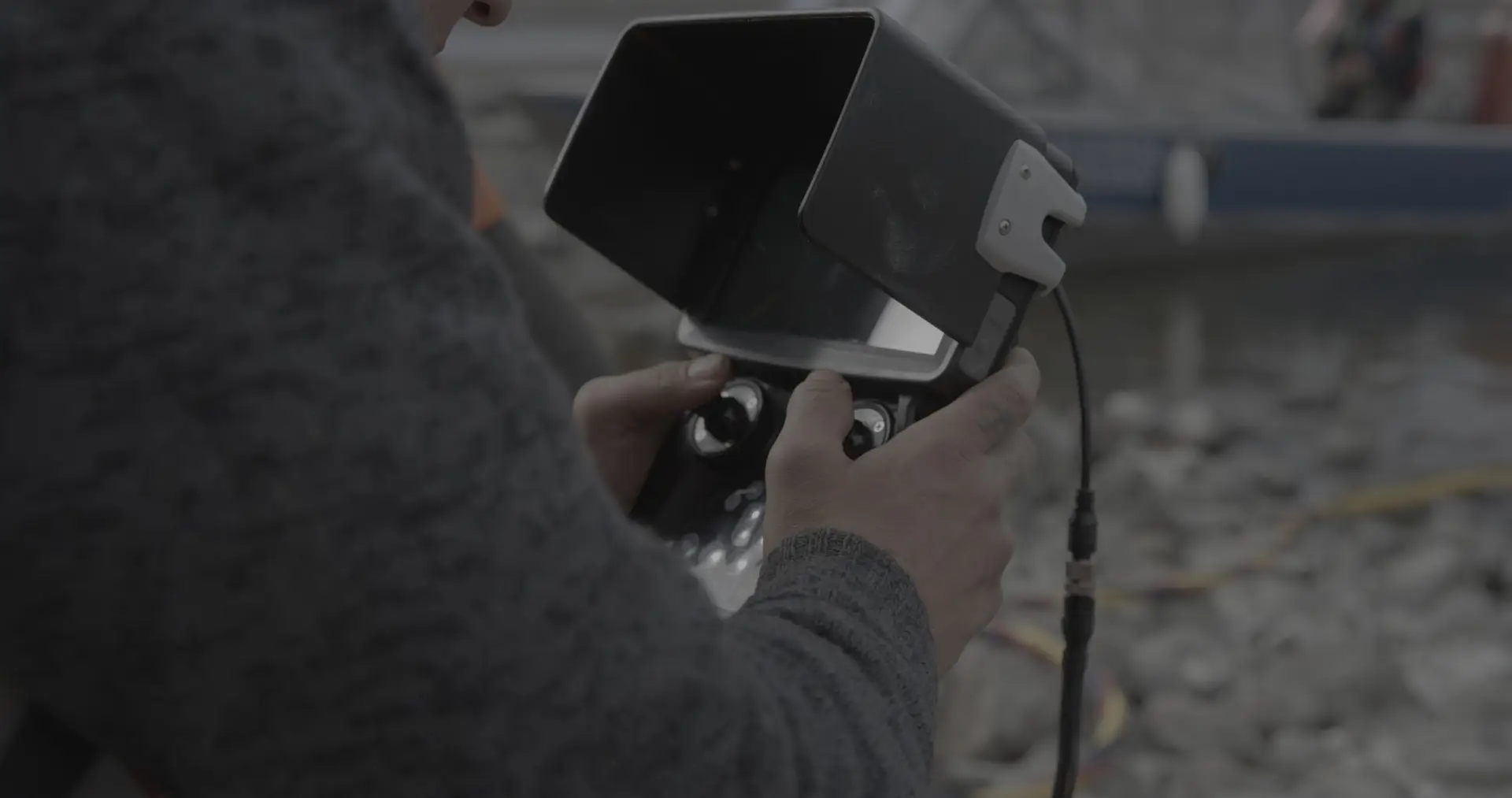
Underwater Inspection and NDT may use ROV imaging, sonar and sensors where remote access can reduce exposure, extend coverage or complement commercial divers.
 06↗
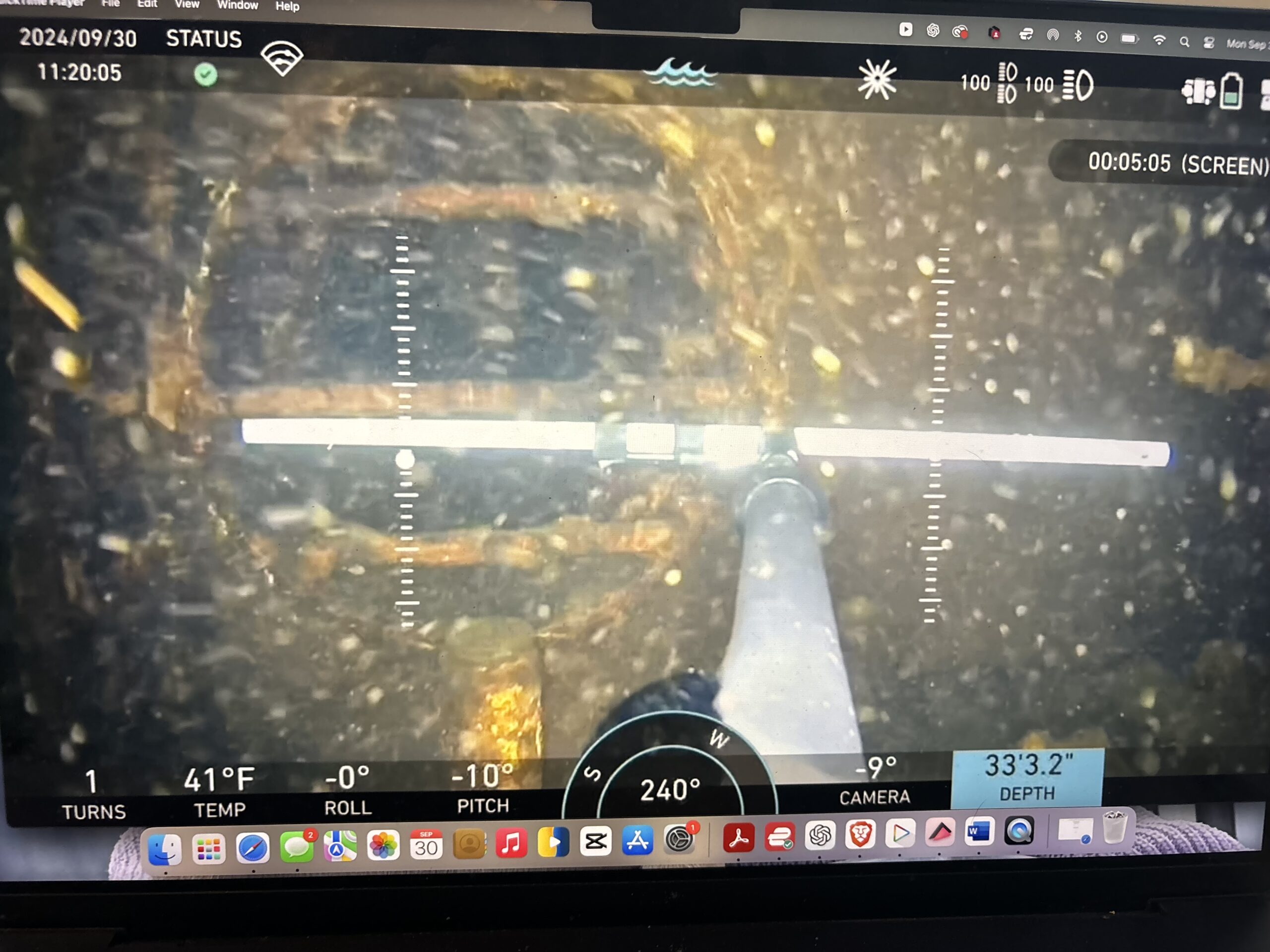
06↗Sonar, measurement & 3D evidence
Underwater Inspection and NDT can integrate imaging sonar, dimensional references, photogrammetry and spatial data when geometry, visibility or engineering context demands more than standard video.
Live inspection quality
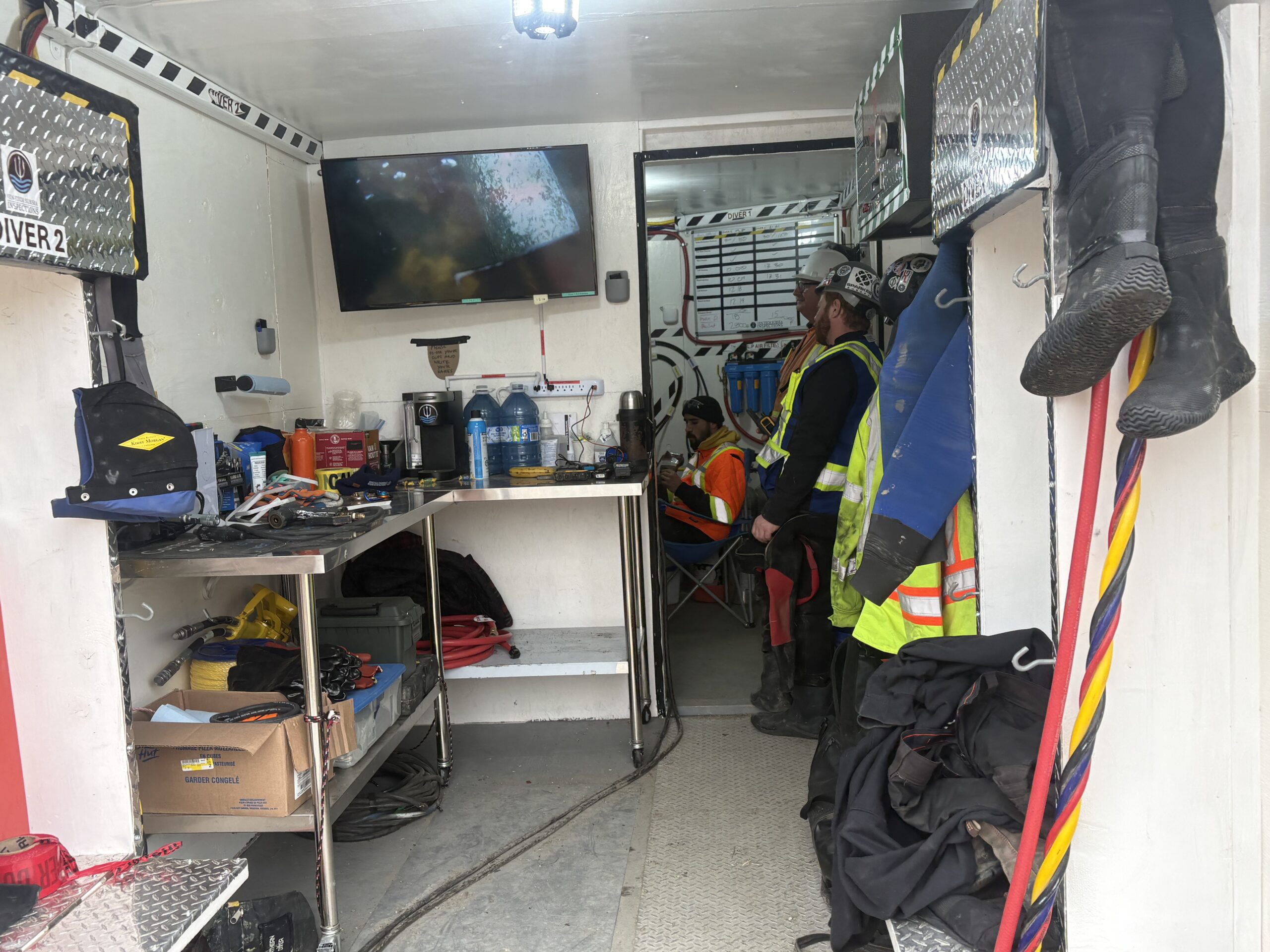
See it live.
Close gaps early.
The dive supervisor and inspection team can monitor video, communications, location references and data quality while the work is underway.
Real-time oversight allows the team to adjust cleaning, camera angle, lighting, measurement density or coverage before demobilization. Where client or engineering representatives join the review, key areas can be revisited while access and equipment remain available.
- 01Surface-to-diver communications and live video
- 02Inspection hold points and coverage confirmation
- 03Measurement verification and repeat readings
- 04Immediate documentation of access or visibility limits
Method selection
The right method.
Applied within its limits.
Underwater Inspection and NDT becomes more reliable when the procedure acknowledges what each technique can—and cannot—demonstrate.
Visual testing
Best for observable condition, damage, corrosion, marine growth, coating, weld profile and geometry. Visibility, access, cleaning and camera perspective affect confidence.
Ultrasonic testing
Used for thickness measurement on suitable materials. Reliable readings depend on calibration, couplant, contact, surface condition, geometry, material velocity and a defined measurement grid.
Magnetic particle
Targets surface and near-surface indications in ferromagnetic materials. It requires appropriate preparation, magnetization technique, viewing conditions and qualified interpretation.
Liquid penetrant
Targets surface-breaking indications on suitable non-porous materials. Cleanliness, dwell, removal, developer and environmental compatibility are controlled within the procedure.
Remote visual & sonar
Useful for reconnaissance, repetitive coverage, hazardous interfaces and areas where diver access is limited. It complements—rather than automatically replaces—contact NDT.
Photogrammetry & spatial data
Supports geometry, change comparison and contextual visualization when image overlap, scale, control, visibility and processing quality meet the project objective.
Inspection workflow
Planned for evidence.
Controlled for the field.
Six connected stages keep safety, technical quality and final reporting aligned from the first asset question through closeout.
Frame the decision
Confirm the asset, component, failure concern, operating state, required coverage, acceptance basis and how the findings will be used.
Study the asset
Review drawings, materials, coatings, inspection history, access, known defects, water conditions and available isolation information.
Select the method
Match diver, ROV, cleaning, VT, UT, MT, PT, sonar or 3D tools to the question, then document limitations and hold points.
Prepare safe access
Build the dive plan, hazard controls, communications, emergency arrangements, energy isolation and client interfaces around the actual site.
Acquire and verify
Complete calibration and function checks, monitor media and data quality live, record locations and correct gaps while the team remains mobilized.
Build the evidence record
Quality-control the findings, index media, map measurements, state limitations and issue a clear report for owner and engineering review.
Diver + robotic inspection
Put the right platform
closest to the evidence.
Commercial divers provide tactile access, cleaning, close examination and contact NDT. ROVs extend visual and sonar coverage, support reconnaissance and reduce exposure where remote methods can answer the question.
A hybrid Underwater Inspection and NDT plan can use ROV data to define priority areas, divers to complete targeted testing and survey technology to add location or geometry. The platform changes; the inspection objective and evidence chain remain consistent.
Explore ROV services →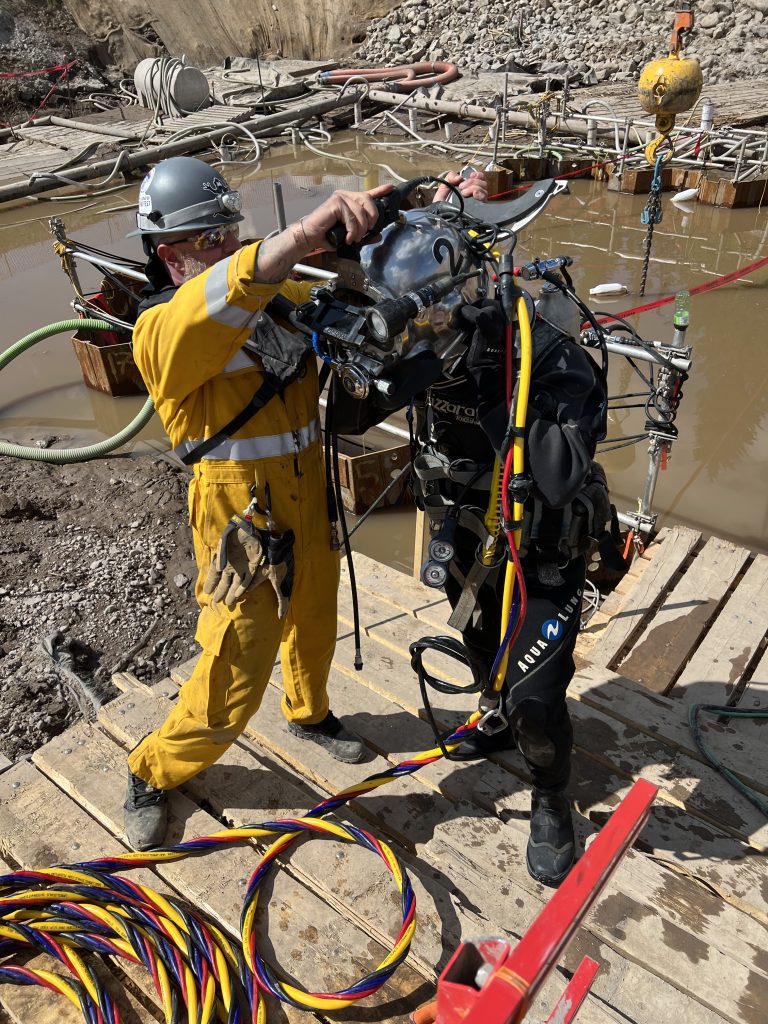
Technical deliverables
See it. Measure it.
Use it.
The agreed package turns field observations into a traceable record for maintenance planning, engineering review, tender development and future comparison.
Inspection plan & coverage map
Scope, components, methods, sequence, references, hold points and required coverage organized before execution.
Indexed HD photo & video
Time-stamped or location-referenced media organized so reviewers can trace an observation back to the source evidence.
Measurement tables
UT readings, locations, units, calibration references and comparison fields structured for practical review and future trending.
Finding register
Observed conditions, indication locations, dimensions where available, severity context, images and follow-up items in one register.
Method & quality records
Relevant equipment, calibration, technique, personnel qualifications, surface condition and quality checks documented for the scope.
Limitations & next actions
Access restrictions, visibility, unexamined areas, method limitations and recommended follow-up clearly separated from verified observations.
Sonar or 3D outputs
Selected point clouds, models, sonar files, annotated views or comparison products delivered when included in the agreed scope.
Decision-ready report
A concise technical narrative connecting objectives, completed work, evidence, findings, limitations and practical next steps.
Assets we inspect
Critical water.
Critical infrastructure.
Underwater Inspection and NDT supports public, industrial, marine, energy and resource assets across British Columbia, Alberta and project locations throughout Canada.
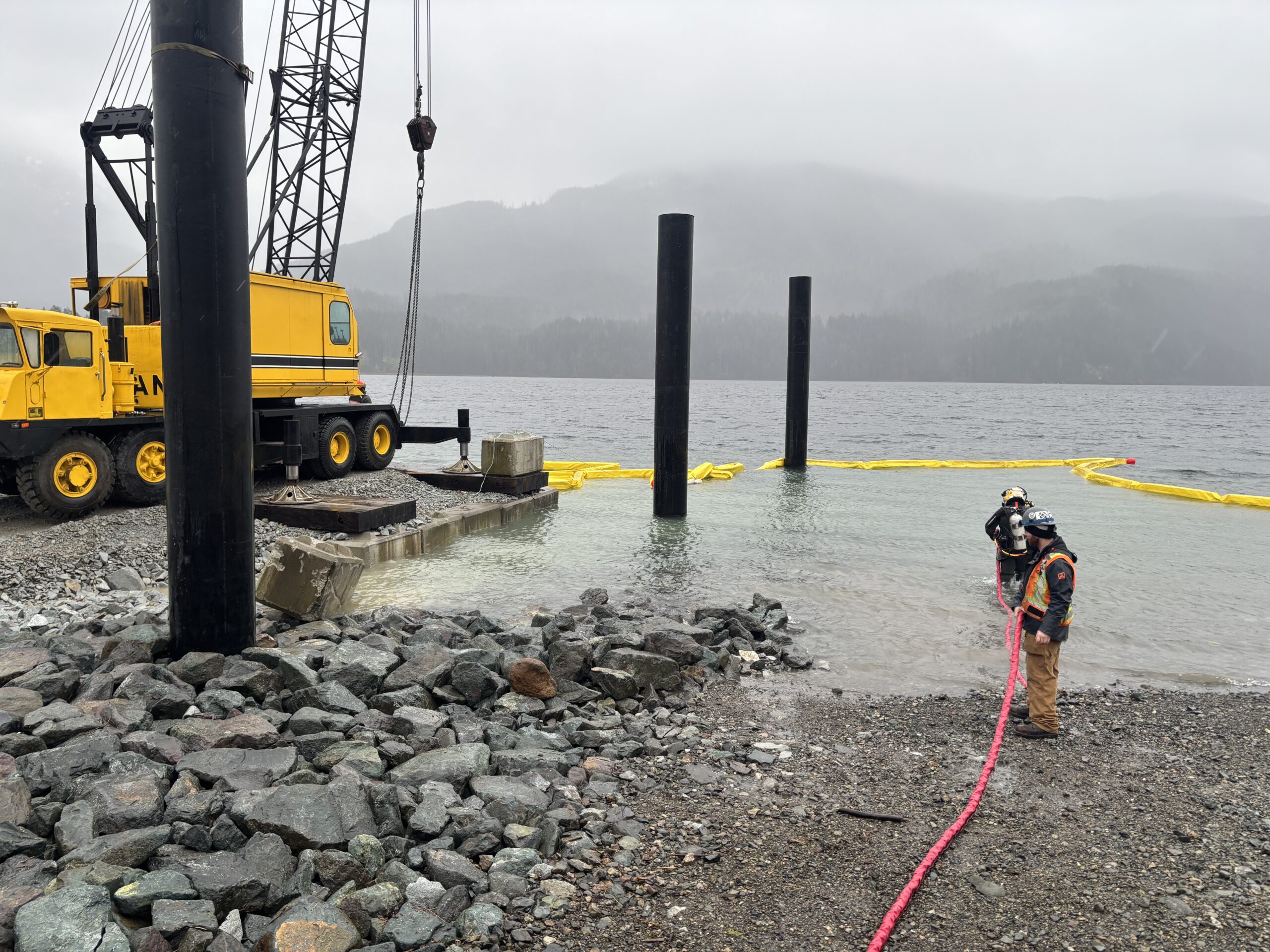
01Bridges, piles & caissons↗
02Dams, gates & hydro intakes↗
03Marine terminals & port structures↗
04Municipal outfalls & water infrastructure↗
05Pipelines, crossings & submerged pipework↗
06Tanks, reservoirs & process assets↗
07Energy, mining & industrial facilities↗
08Vessels, hulls & marine equipment↗
Qualified people · controlled system
Inspection confidence
starts before entry.
Personnel, procedures and equipment are selected for the method and project requirements. Ven-Tech supports scopes requiring CWB and CSWIP 3.1U / 3.2U inspection capability as applicable, within a commercial-diving system aligned to relevant Canadian requirements and site controls.
CWB inspection capabilityCSWIP 3.1U / 3.2U capabilityCSA diving frameworkWorkSafeBC Part 24BCCSA COR® CertifiedISNetworld Member ContractorAvetta ApprovedCognibox CertifiedAlcumus SafeContractorProject-specific quality control
Underwater Inspection and NDT FAQ
Technical questions.
Clear answers.
Every asset is different. These answers explain how Ven-Tech approaches method selection, field control and reporting.
What is underwater inspection and NDT?+
Underwater Inspection and NDT combines visual examination, measurements and suitable non-destructive testing methods to document the condition of submerged assets without unnecessarily damaging the component. A project may use commercial divers, ROVs, UT, MT, PT, sonar, photography or 3D data depending on the material, access and engineering question.
Which underwater NDT methods does Ven-Tech support?+
Ven-Tech supports close visual testing, ultrasonic thickness measurement, magnetic particle testing, liquid penetrant testing and integrated ROV, sonar, imaging and photogrammetry workflows. Final method selection is based on material, coating, surface condition, access, environment, acceptance criteria and the required decision.
Can underwater inspection and NDT be completed without dewatering?+
Often, yes. Divers and ROVs can examine many assets while submerged, which may reduce shutdown or dewatering requirements. The operating state, flow, contamination, stored energy, access and method limitations must still be reviewed before a responsible plan is confirmed.
When is an ROV used instead of a commercial diver?+
An ROV may be preferred for reconnaissance, repetitive coverage, restricted access, difficult depth, hazardous interfaces or when remote imaging and sonar can answer the question. Contact methods, cleaning, tactile confirmation or complex access may still require qualified divers. Hybrid deployment is common.
How are ultrasonic thickness readings quality-controlled?+
The project procedure defines the instrument, probe, reference blocks, material velocity, calibration frequency, surface preparation, measurement grid, repeat checks and recording requirements. Readings are reviewed for consistency and reported with locations, units, assumptions and limitations.
What does the final underwater NDT report include?+
The agreed package can include the plan, completed coverage, personnel and equipment records, indexed video and photographs, annotated findings, UT tables, measurement locations, sonar or 3D outputs, limitations, unexamined areas and recommended follow-up for owner or engineering review.
Does Ven-Tech provide engineering certification of the findings?+
Ven-Tech provides inspection evidence and technical reporting within the agreed scope. Where a stamped engineering opinion, fitness-for-service assessment or repair design is required, the findings can be organized for review by the owner’s engineer or a separately engaged professional engineer.
What information is needed for an underwater inspection and NDT quote?+
Send the asset type and location, drawings, material and coating if known, operating condition, water depth, access, known concerns, inspection history, shutdown constraints, acceptance criteria, schedule and required deliverables. Ven-Tech will identify remaining information and propose a suitable field approach.
Bring us the asset question
Inspect below the surface.
Decide with better evidence.
Send the drawings, material, operating condition, known concerns, access, schedule and required deliverables. Ven-Tech will help define a practical Underwater Inspection and NDT plan.