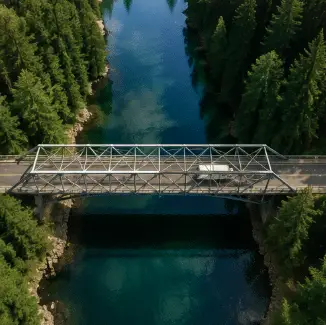
Acquire suitable bars, margins, rapids and shorelines where conventional vessel access may be limited.
GREEN-WAVELENGTH LIDAR · UAV · TOPOBATHYMETRY
Bathymetric LiDAR & UAV seafloor mapping.
One surface. Land to water.
Ven-Tech delivers Bathymetric LiDAR Services across Canada for suitable shallow water, shorelines, rivers, reservoirs, coastal terrain and remote infrastructure.
UAVRemote acquisition
RTKReferenced data
3DLand-water surfaces
Topography above. Bathymetry below.
Bridge the
shoreline data gap.
Bathymetric LiDAR Services connect suitable submerged terrain with banks, shorelines and dry land through one coordinated airborne workflow.
Topobathymetric LiDAR uses project-selected laser wavelengths and return classification to distinguish above-water terrain, the water surface and detectable bottom. A UAV can access shallow, remote or obstructed areas without requiring a survey vessel across the entire site.
Performance is environmental. Water clarity, colour, suspended material, waves, vegetation, bottom reflectance, depth, sun angle, altitude and acquisition geometry all affect whether a bottom return can be identified confidently. Ven-Tech assesses feasibility and does not promise one penetration depth or accuracy for every water body.
The project begins with intended use: hydraulic modelling, shoreline change, reservoir capacity, corridor design, habitat mapping and construction planning require different control, density, classification, checks and deliverables. Where LiDAR leaves gaps, the scope can add hydrographic sonar, USV, ROV, photogrammetry or ground survey.
Optical feasibility reviewLand-water continuityComplementary sensor planning
Create one referenced terrain context through dry land, water surface and detectable submerged elevations.
Map project-selected corridors and water bodies efficiently from a remotely piloted aircraft.
Identify confident returns, uncertain areas and data gaps so clients can plan the next method intelligently.
Bathymetric LiDAR Services capabilities
Map the transition.
Understand the terrain.
Ven-Tech configures Bathymetric LiDAR Services around clarity, terrain, airspace, control, minimum feature and the required decision—not around one fixed advertised performance value.
 01↗
01↗Continuous topobathymetry
Connect dry-land elevation, shoreline, intertidal terrain and suitable shallow-water depths within one referenced point-cloud workflow. Near-infrared and green-wavelength returns are separated and classified according to the project method.
Explore capability →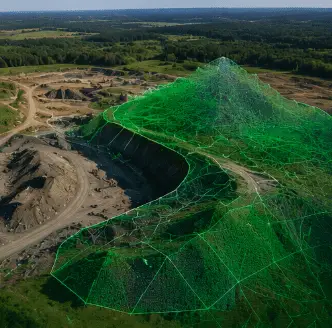 02↗
02↗Shallow-water bathymetry
Map suitable clear-water areas where vessel access, shoals, rapids, vegetation or sensitive habitat make conventional acquisition difficult. Achievable penetration is assessed from actual clarity and bottom conditions—not a fixed advertised depth.
Explore capability → 03↗
03↗Shoreline & intertidal mapping
Document beaches, banks, tidal margins, erosion, exposed structures and land-water transition zones without leaving a survey gap at the shoreline. Repeat datasets can support change analysis when references and conditions are controlled.
Explore capability →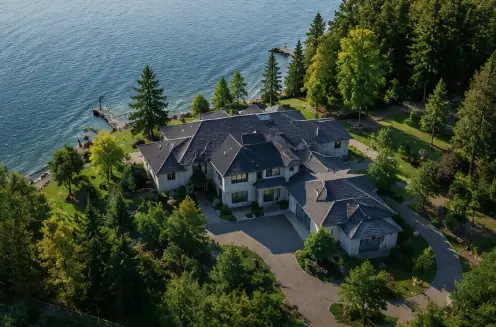 04↗
04↗Rivers, lakes & reservoirs
Capture project-selected channels, bars, shoals, banks, sediment patterns and reservoir margins for hydraulic, capacity, environmental and infrastructure programs. Turbidity, surface state and vegetation are reviewed before flight.
Explore capability →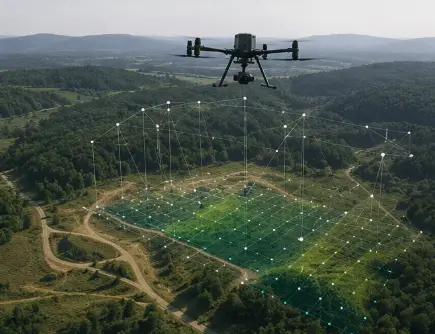 05↗
05↗Corridor & hydraulic support
Build terrain context for crossings, outfalls, intakes, flood studies, culverts, bridges and linear infrastructure. LiDAR can be combined with orthophotos, GNSS observations, hydrography and engineering control.
Explore capability →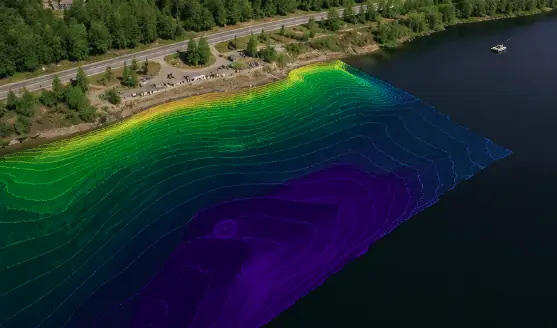 06↗
06↗Rapid site reconnaissance
Acquire wide-area elevation evidence before detailed sonar, ground survey, ROV inspection or construction mobilization. Gaps caused by deep or optically challenging water are clearly identified for complementary methods.
Explore capability →Optical feasibility
Clear water matters.
So does the bottom.
A powerful sensor cannot recover a bottom return that the water column or surface prevents from reaching the receiver with sufficient confidence. Planning around actual conditions protects schedule and deliverable quality.
- 01 Review clarity, colour and recent weather
- 02 Assess surface state, depth and sun angle
- 03 Consider vegetation and bottom reflectance
- 04 Define sonar or ground-survey gap closure
Aircraft, sensor & control
One integrated
measurement system.
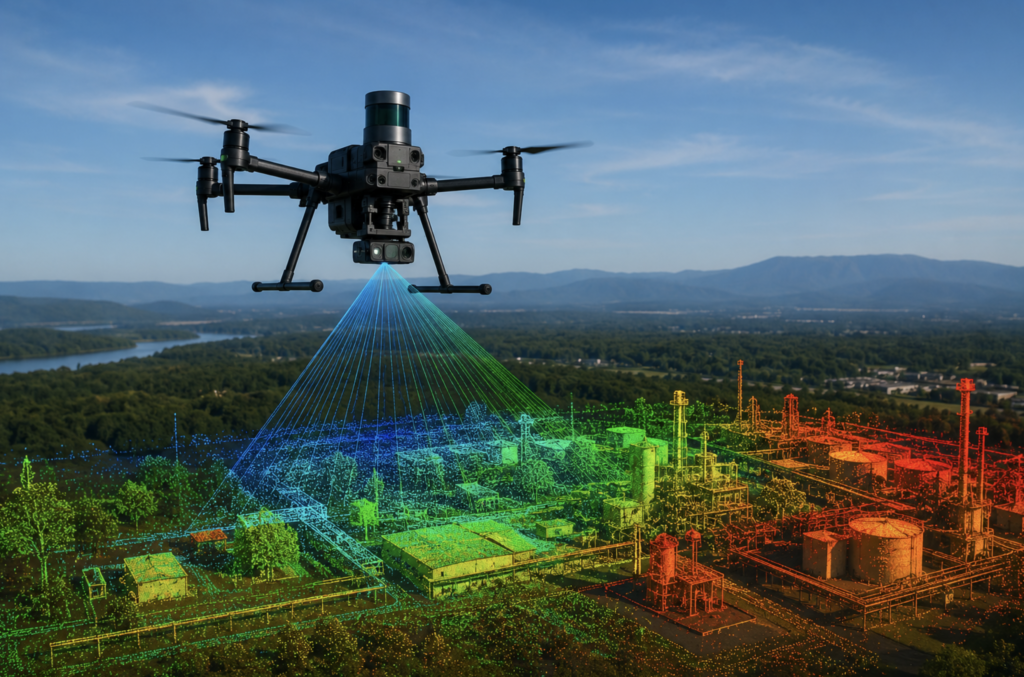
Bathymetric LiDAR Services combine the aircraft, payload, positioning, control, environment and processing method. Data quality cannot be assigned to the laser alone.
 01
01AIRBORNE / ACCESS
UAV flight platform
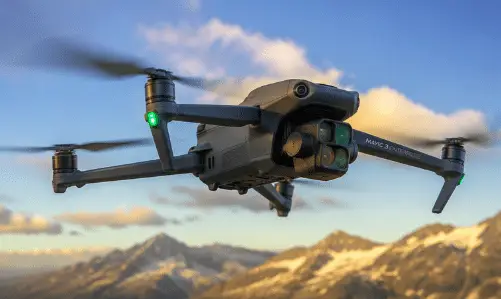
A project-suitable remotely piloted aircraft carries the selected payload across planned lines and terrain. Endurance, payload, airspace, weather, surface winds, launch area, visual-line-of-sight and contingency requirements are confirmed for each site.
 02
02GREEN / NEAR-INFRARED
Topobathymetric LiDAR payload
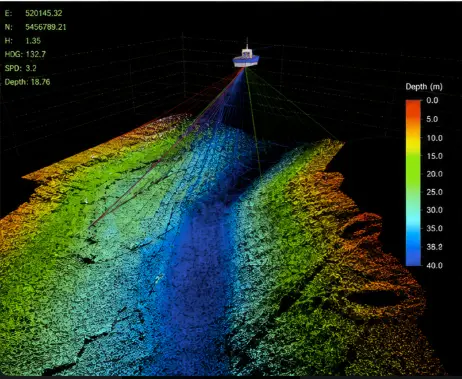
Green-wavelength laser returns can support water-surface and bottom detection in suitable conditions, while near-infrared observations strengthen above-water terrain and shoreline classification. Sensor settings and flight geometry follow the target and environment.
 03
03POSITION / ORIENTATION
GNSS, IMU & survey control
Position, orientation, timing, lever arms, control and check observations are managed as one system. RTK, PPK and project control methods are selected around reference requirements, access and intended accuracy.
 04
04CLASSIFY / VERIFY / DELIVER
Processing & data fusion
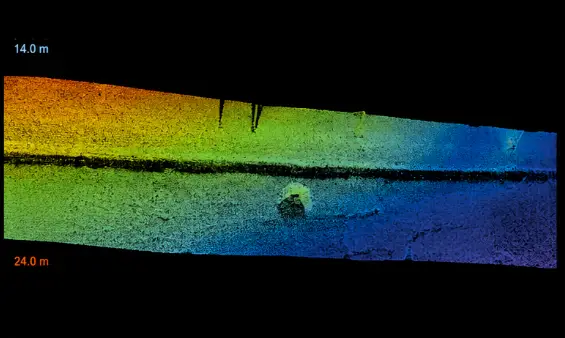
Trajectory, laser returns, water surface, refraction, classification, imagery, control and complementary survey data are reviewed together. Processing produces traceable land-water surfaces, point clouds, contours and reports.
Six-stage topobathymetric workflow
Assess first.
Fly with purpose.
The Bathymetric LiDAR Services workflow keeps feasibility, aviation planning, survey control, acquisition, classification and reporting connected from proposal through delivery.
Discuss your mapping scope ↗Start with the decision
Confirm the purpose, boundary, minimum feature, expected depths, shoreline requirement, coordinate and vertical reference, accuracy objective, intended use, schedule and deliverable formats.
Evaluate optical feasibility
Review water clarity, colour, surface state, bottom reflectance, vegetation, depth, recent weather, sun angle and representative site observations. Identify where sonar or ground verification may be required.
Design flight & control
Select platform, sensor settings, altitude, speed, line direction, overlap, GNSS method, control, checks and acquisition window around terrain, airspace, resolution and laser-safety requirements.
Prepare safe operations
Confirm the applicable Transport Canada category or authorization, NOTAM and airspace needs, site permissions, public controls, launch and recovery, communications, weather limits and emergency actions.
Check coverage in the field
Monitor trajectory, return strength, swath coverage, overlap, water-surface detection, bottom-return confidence, imagery and system health. Reacquire questionable areas while the team remains onsite.
Classify with traceability
Process trajectory and returns, apply project-selected refraction and reference controls, classify land, water surface and bottom, document gaps and issue the agreed models, files and technical report.
Bathymetric LiDAR deliverables
Point clouds become
usable terrain.
Bathymetric LiDAR Services deliverables are agreed before mobilization so flight geometry, control, classification, resolution and quality checks support the client’s engineering or environmental workflow.
Classified point cloud
Project-selected LAS, LAZ or XYZ data separating terrain, water surface, bathymetric bottom and other agreed classes.
Topobathymetric DTM
Continuous digital terrain model across land, shoreline and suitable submerged terrain with resolution and references stated.
Depth & elevation maps
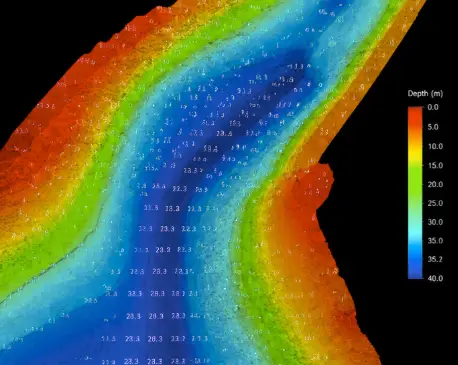
Colour relief, hillshade, depth bands, elevations, contours and selected annotations for clear project communication.
Orthomosaic imagery
Georeferenced colour imagery supporting visible site context, shoreline interpretation and point-cloud review.
Profiles & sections
Longitudinal profiles, cross-sections, banks, channel geometry, slopes, clearances and selected dimensions.
Volumes & change
Surface comparisons for sediment, erosion, deposition, reservoir capacity, stockpiles or construction progress when suitable repeat references exist.
CAD & GIS formats
Agreed raster, vector, surface and point formats prepared for engineering, hydraulic, environmental and asset workflows.
Technical report
Platform, sensor, control, conditions, acquisition, processing, checks, coverage, uncertainty, limitations and deliverable index.
About Ven-Tech Subsea
Advanced systems.
Accountable field teams.
The About Ven-Tech film introduces the survey, UAS, robotics, diving, reservoir and inspection teams supporting complex infrastructure work across Canada.
ABOUT VEN-TECH / 2025
One coordinated project team
See the people and operating disciplines connecting safe flight, controlled acquisition, field quality, complementary surveys and client-ready delivery.
Learn more about Ven-Tech ↗Performance, regulation & intended use
Define confidence.
Document the gaps.
Bathymetric LiDAR quality begins before the aircraft launches.
NOAA’s coastal topobathymetric LiDAR guidance explains that green laser energy is used for bathymetry and that maximum depth depends on water clarity and the instrument. Fisheries and Oceans Canada research similarly emphasizes water transparency when planning airborne LiDAR bathymetry.
Canadian RPAS requirements depend on aircraft weight, operating environment, airspace, proximity to people and flight profile. Ven-Tech reviews the current operating category, authorization needs, site permissions, survey references and intended use for the actual mission.
Optical conditions
Record clarity, surface state, weather, vegetation and bottom-return confidence relevant to the acquisition.
Position & orientation
Manage GNSS, trajectory, IMU, timing, lever arms, control, checks and the project reference system.
Classification
Separate terrain, water surface, bathymetric bottom, noise and agreed feature classes with reviewable logic.
Quality evidence
Report coverage, density, checks, uncertainty, confidence, exclusions and areas requiring another method.
RPAS HSE · LASER SAFETY · SURVEY CONTROL
Mission-ready.
Rule-ready.
Remote acquisition reduces some access exposure, but safe execution still requires airspace review, aircraft eligibility, pilot and operator requirements, laser hazard controls, launch and recovery planning, visual-line-of-sight management, public separation, weather limits, battery and communications controls, privacy, environmental protection and emergency provisions.
BCCSA COR® CertifiedISNetworld Member ContractorISNetworld ESG BadgeAvetta ApprovedCognibox CertifiedAlcumus SafeContractorTransport Canada RPAS planningRegistered aircraft as requiredQualified project personnelLaser-safety controlsRTK / PPK integrationLive field QA/QCComplementary sonar verificationATHENA™ operational framework
Bathymetric LiDAR Services applications
Shallow water.
Wide-area context.
Bathymetric LiDAR Services support owners, engineers and environmental teams responsible for land-water interfaces, remote corridors, changing shorelines and shallow submerged terrain.
01Coastal & shoreline change↗
02Rivers, lakes & reservoirs↗
03Floodplain & hydraulic modelling↗
04Bridges, crossings & corridors↗
05Dams, intakes & outfalls↗
06Environmental & habitat programs↗
07Mining, tailings & water management↗
08Remote community infrastructure↗
Bathymetric LiDAR Services FAQ
Plan the mission
with confidence.
These answers are a practical starting point. Ven-Tech confirms feasibility, operating category, platform, control, environmental limits, HSE planning and deliverables for the actual site.
What are Bathymetric LiDAR Services?+
Bathymetric LiDAR Services use airborne laser observations, positioning and processing to map suitable shallow-water bottom elevations together with shoreline and above-water terrain. Green-wavelength laser energy can support water-column and bottom returns, while near-infrared observations strengthen dry-land and water-surface classification.
How deep can UAV bathymetric LiDAR measure?+
There is no dependable universal depth. Penetration changes with water clarity, colour, suspended material, surface roughness, vegetation, bottom reflectance, laser power, flight geometry and processing. Ven-Tech evaluates conditions and reports where bottom detection is confident, uncertain or absent.
Is bathymetric LiDAR survey-grade?+
It can support engineering and survey workflows when the complete method, control, trajectory, calibration, environmental conditions, processing and quality checks meet the project requirement. Ven-Tech defines the intended accuracy and use before acquisition rather than claiming one value for every site.
What is the advantage of UAV topobathymetry?+
A UAV can capture land, shoreline and suitable shallow-water terrain efficiently from the air, reducing shoreline gaps and waterborne access in appropriate locations. It is especially useful for remote, shallow, obstructed or environmentally sensitive areas, subject to airspace and site conditions.
Can Bathymetric LiDAR Services work in muddy or dark water?+
Bottom detection may be limited or impossible when the water column prevents a confident return. Dark substrate, aquatic vegetation, foam, waves and sun glint can also affect results. Ven-Tech can recommend multibeam sonar, USV, ROV or direct survey methods for unresolved areas.
What data can Ven-Tech deliver?+
Depending on scope, deliverables may include classified point clouds, topobathymetric terrain models, water-surface and bottom surfaces, contours, depth maps, orthomosaics, profiles, sections, volumes, change maps, CAD or GIS files and a report describing quality and limitations.
Do UAV bathymetric surveys follow Canadian drone rules?+
Yes. The operating category depends on aircraft weight, airspace, proximity to people, flight visibility and mission design. Ven-Tech reviews the current Transport Canada requirements, applicable authorization or certificate needs, airspace coordination and site permissions before flight.
What information is needed for a proposal?+
Provide the site, project decision, survey boundary, expected water depths, recent clarity or turbidity information, bottom type if known, access, terrain, airspace concerns, required coordinate and vertical reference, accuracy objective, schedule and desired file formats.
Start with water clarity and intended use
Need continuous terrain
from land into water?
Send the project boundary, expected depths, recent clarity information, bottom type, access, airspace concerns, coordinate and vertical references, accuracy objective, schedule and deliverable formats. Ven-Tech will help define a practical Bathymetric LiDAR Services approach.