 01↗
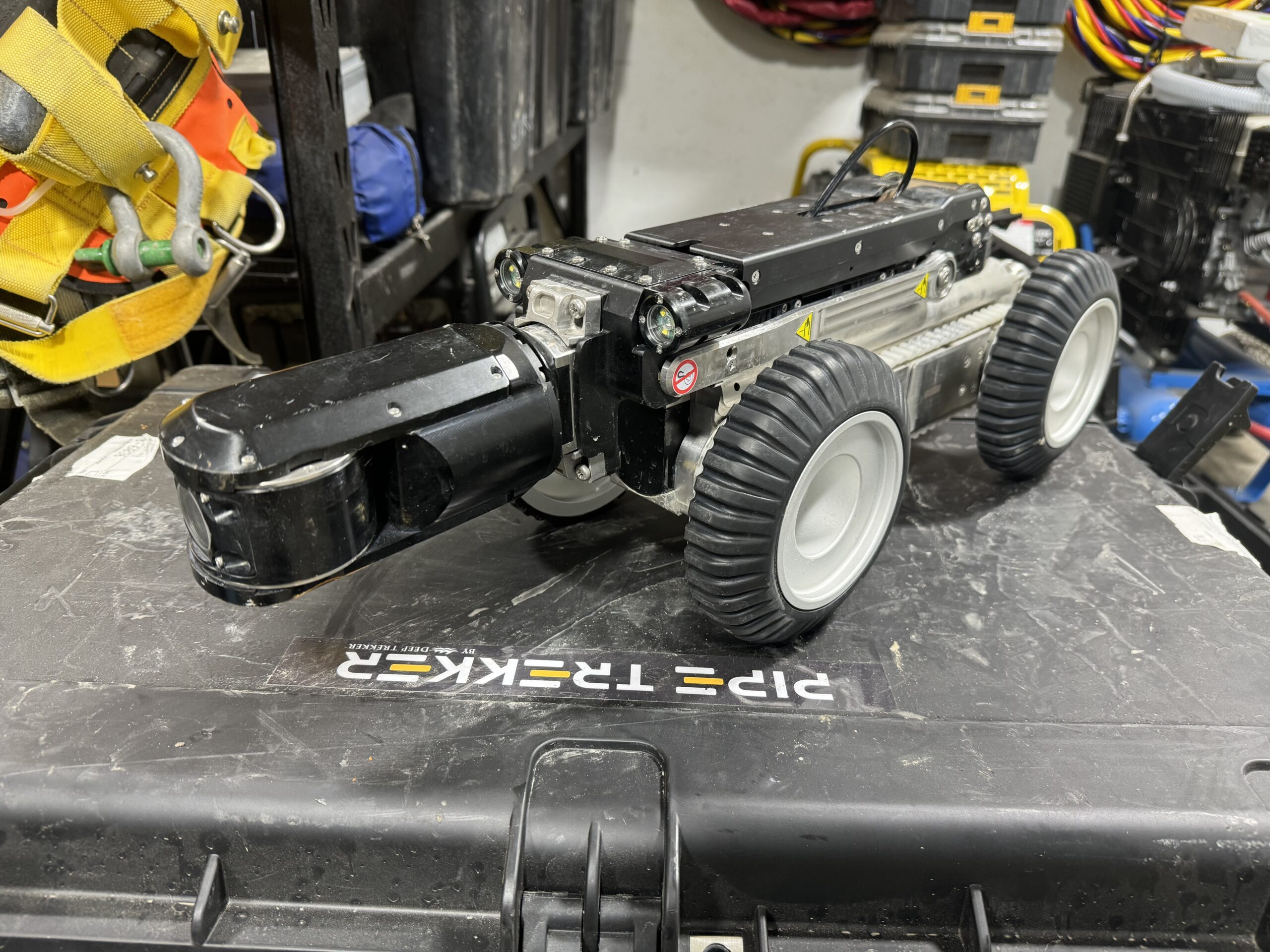
01↗CORE / 6–24 IN
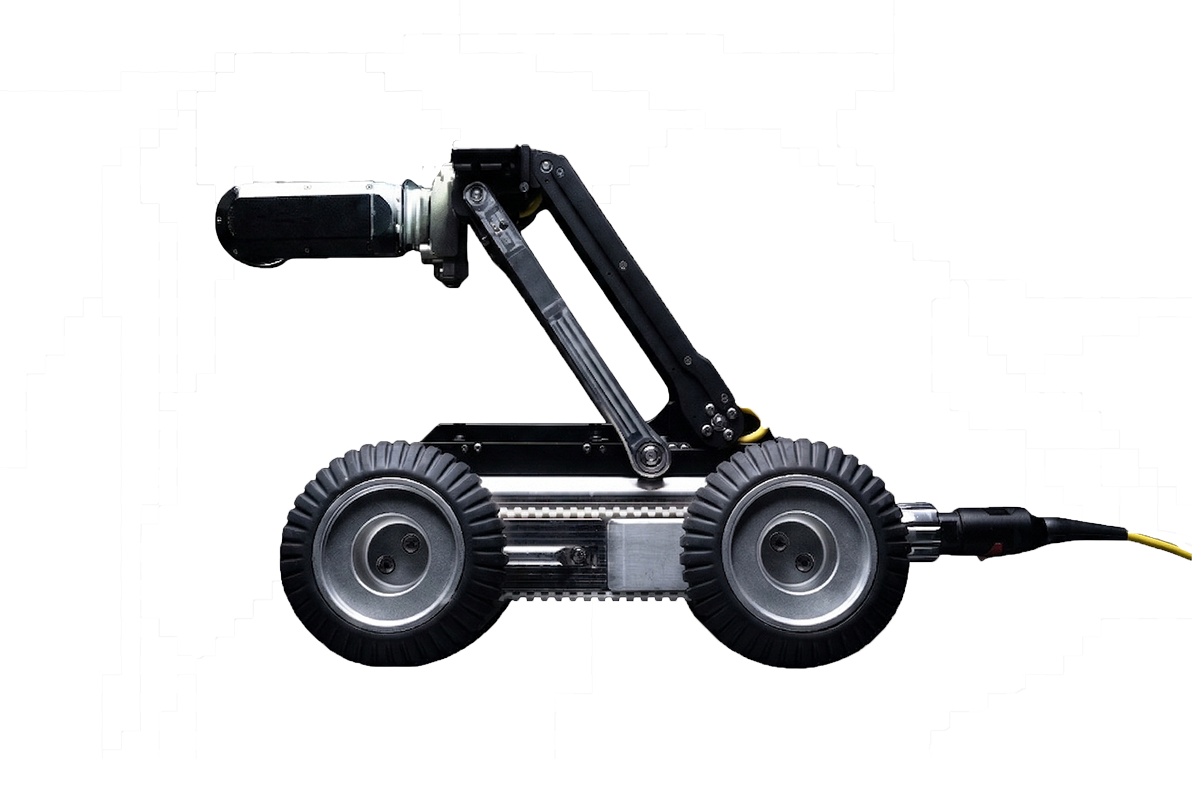
Deep Trekker A-150
Portable, steerable and fully submersible, with a pan-and-tilt HD camera. It centres in approximately 150–600 mm pipe and supports efficient municipal and industrial CCTV work.
Review platform source ↗
CCTV · RVI · NDT · LONG-RANGE ROBOTICS
Ven-Tech Pipe Inspection Equipment combines robotic crawlers, long-range flooded-pipe ROVs, magnetic platforms and measurement sensors for municipal, industrial, energy and marine infrastructure across Canada.
Purpose-selected platforms
Pipe Inspection Equipment performs best when it is selected around the asset—not forced into it.
Ven-Tech reviews pipe diameter, material, length, bends, slope, contents, access, deposits, water level, pressure or flow and the evidence the owner actually needs. We then configure the crawler, ROV, camera, tether, traction, lighting, cleaning tools and sensors around that mission.
Availability, model, configuration, operator requirements and suitability are confirmed during project planning. The result is one integrated inspection package aligned with the asset, field conditions and required engineering or maintenance decision.
Robotic crawler fleet
Core, specialist and rental-access Pipe Inspection Equipment is chosen for the actual line. External model links open the manufacturer or rental source used to verify each platform.
01↗Portable, steerable and fully submersible, with a pan-and-tilt HD camera. It centres in approximately 150–600 mm pipe and supports efficient municipal and industrial CCTV work.
Review platform source ↗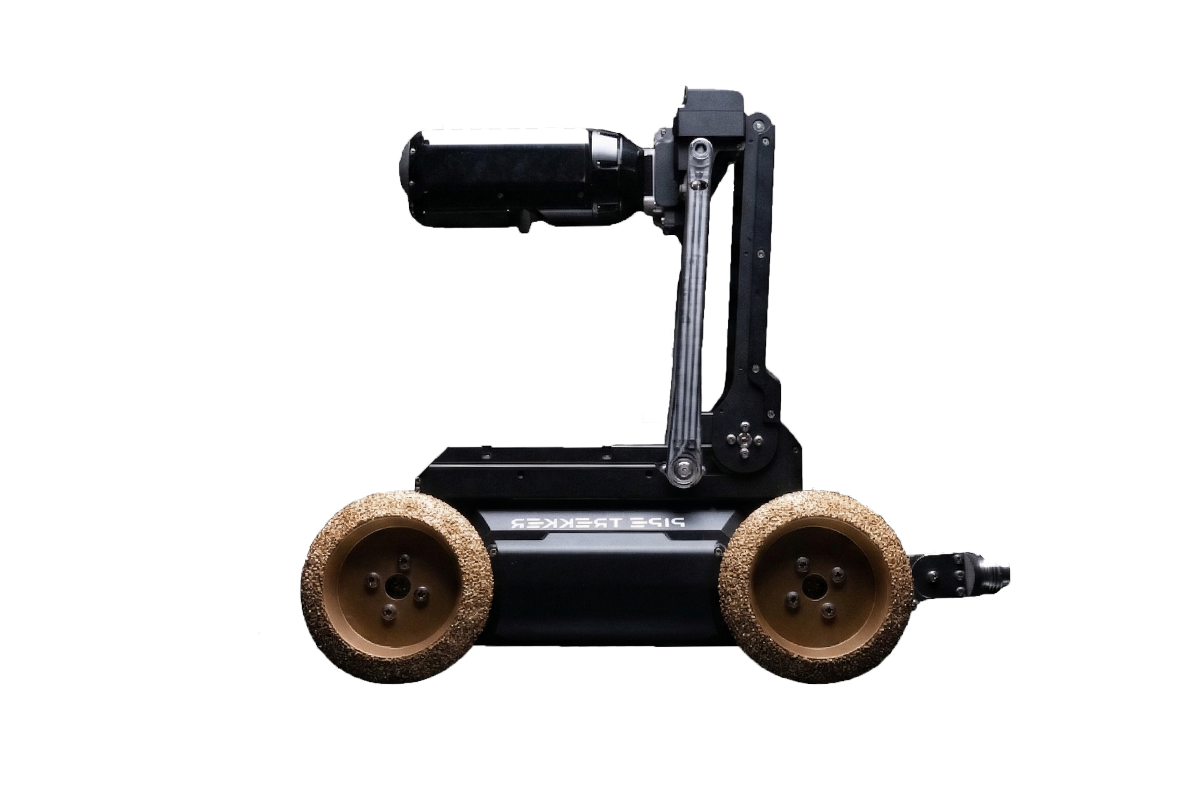 02↗
02↗A larger portable crawler for approximately 200–900 mm pipe. Its adjustable camera position and robust wheel configurations suit mainline, storm, process and water infrastructure.
Review platform source ↗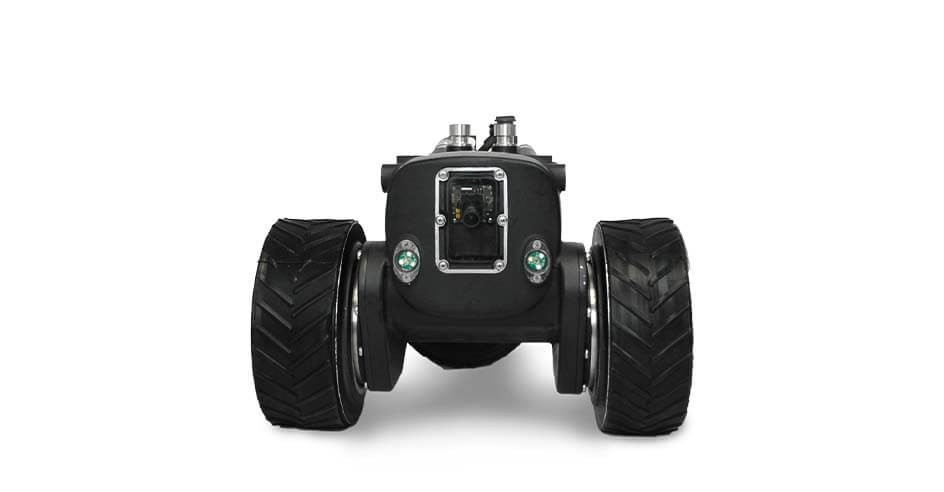 03↗
03↗A magnetic utility crawler for suitable ferrous pipe, tanks and steel structures. Available tooling can include ultrasonic thickness, pressure washing, imaging sonar and vacuum attachments.
Review platform source ↗ 04↗
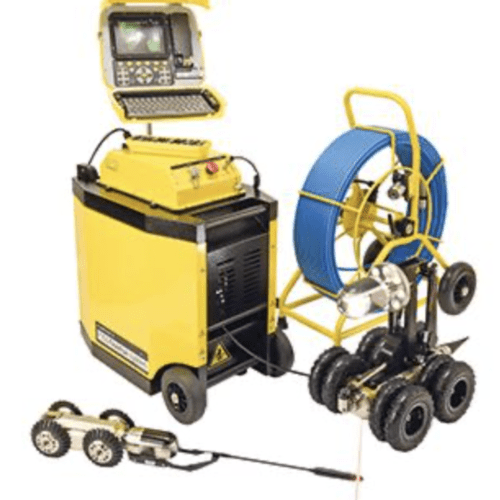
04↗A modular CCTV platform with pan-and-tilt or PTZ cameras, inclinometer, sonde and elevator options. Cable configurations reach up to approximately 250 m for suitable straight-run surveys.
Review platform source ↗ 05↗
05↗A configurable crawler for small and medium pipes, tanks, ships and boreholes. Inline, parallel and magnetic arrangements help match confined geometries and vertical or inverted ferrous surfaces.
Review platform source ↗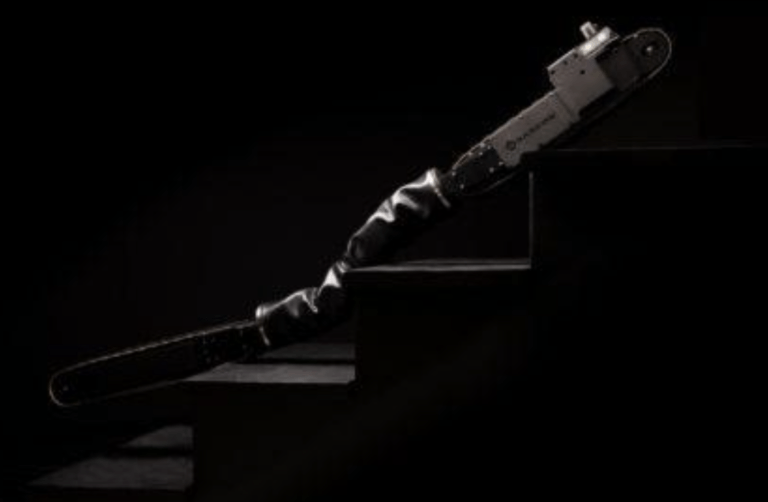 06↗
06↗A man-portable remote inspection platform for difficult terrain, hazardous interiors and larger accessible conduits. It supports remote video, voice and data where human exposure should be reduced.
Review platform source ↗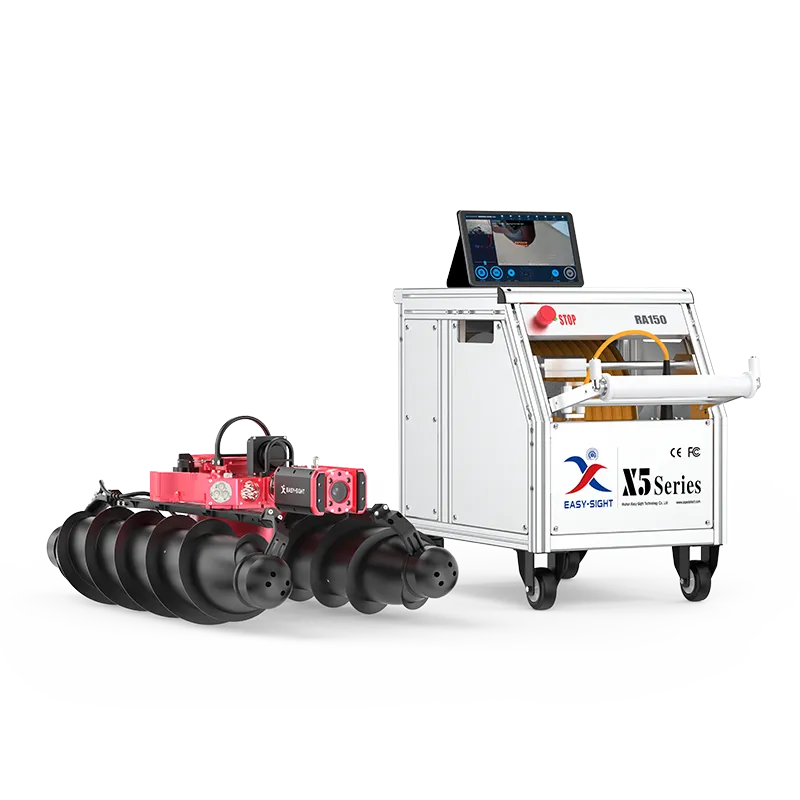 07↗
07↗A spiral-propulsion platform intended for large pipe with heavy silt or high water. Project options can include sonar, 2D laser and inertial measurement for difficult mainline conditions.
Review platform source ↗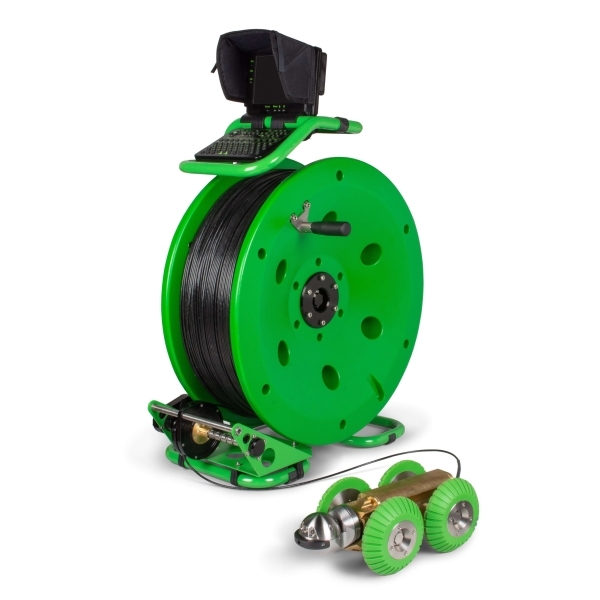 08↗
08↗A battery-operated, steerable crawler with a 300 m cable, reverse camera, inclinometer and sonde. Wheel kits and a powered camera riser extend its useful diameter range.
Review platform source ↗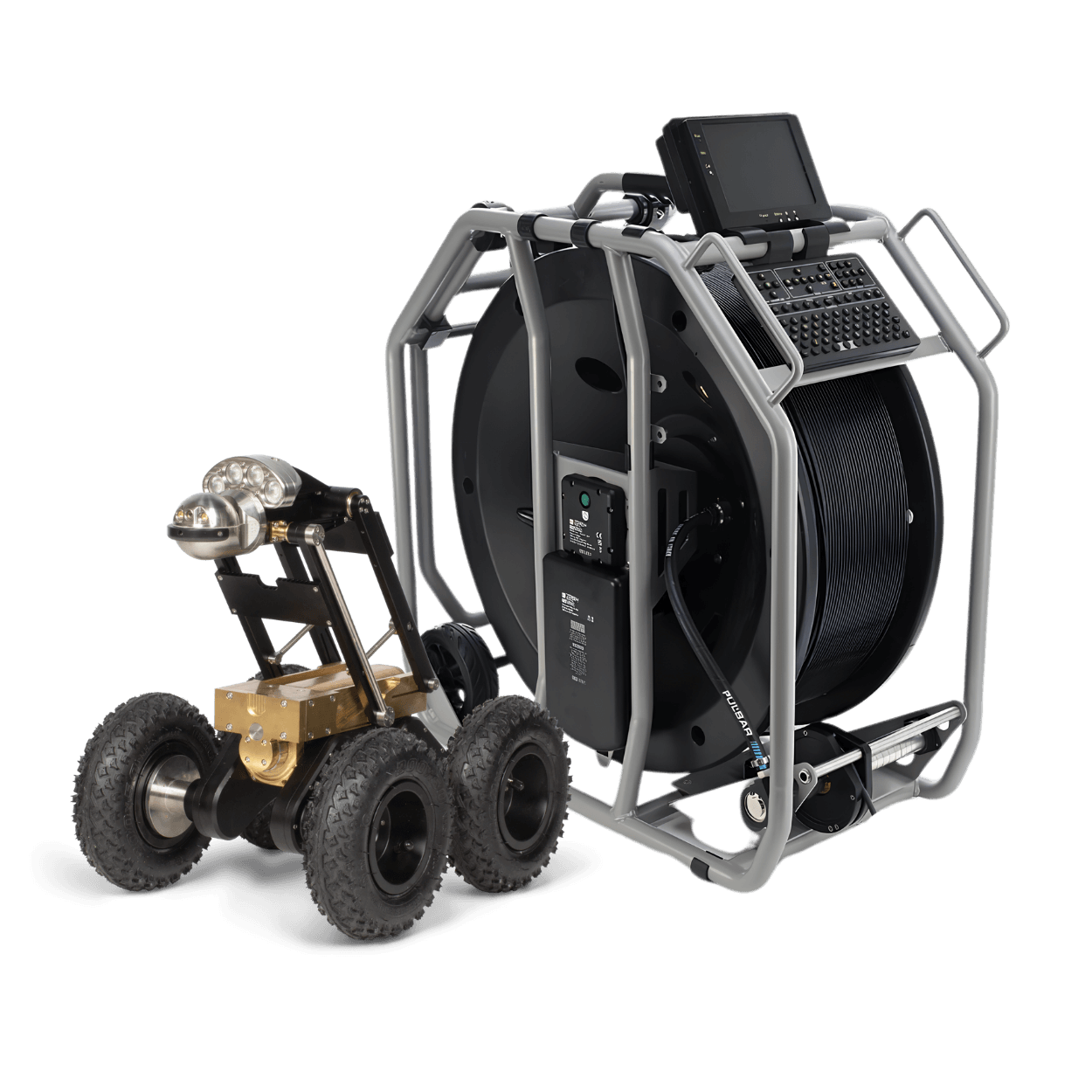 09↗
09↗A mainline configuration using larger wheels, elevated camera positioning and field reporting compatibility for sewer, storm, culvert and utility inspection programs.
Review platform source ↗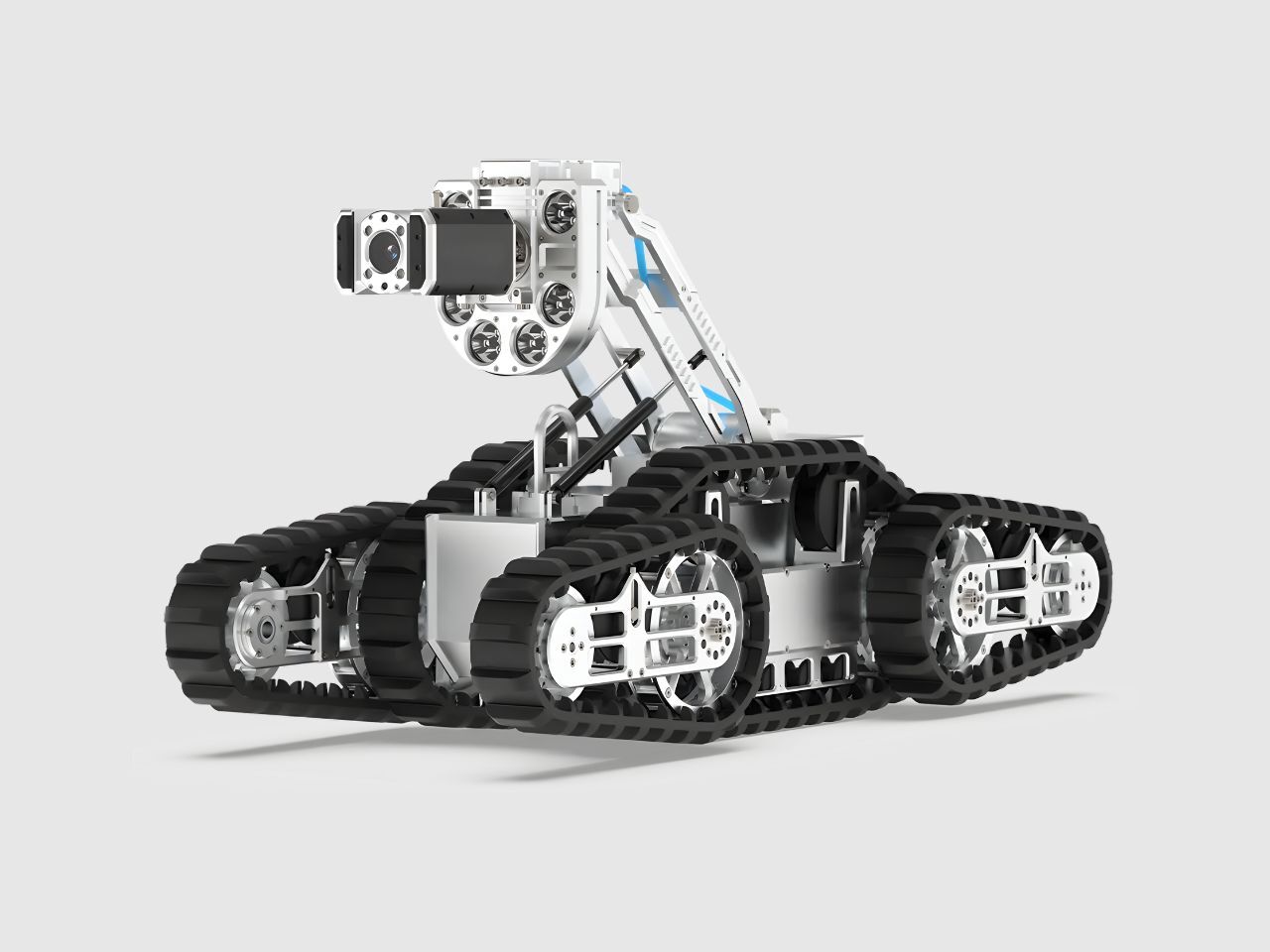 10↗
10↗A tracked all-terrain crawler for silt, standing water, slopes and trenches. Swing-arm control, PTZ viewing and optional 3D laser support challenging large-diameter assets.
Review platform source ↗ 11↗
11↗A magnetic ultrasonic crawler for suitable pipelines, vessels and tank shells. It captures thickness data with full A-scan and B-scan records for corrosion assessment.
Review platform source ↗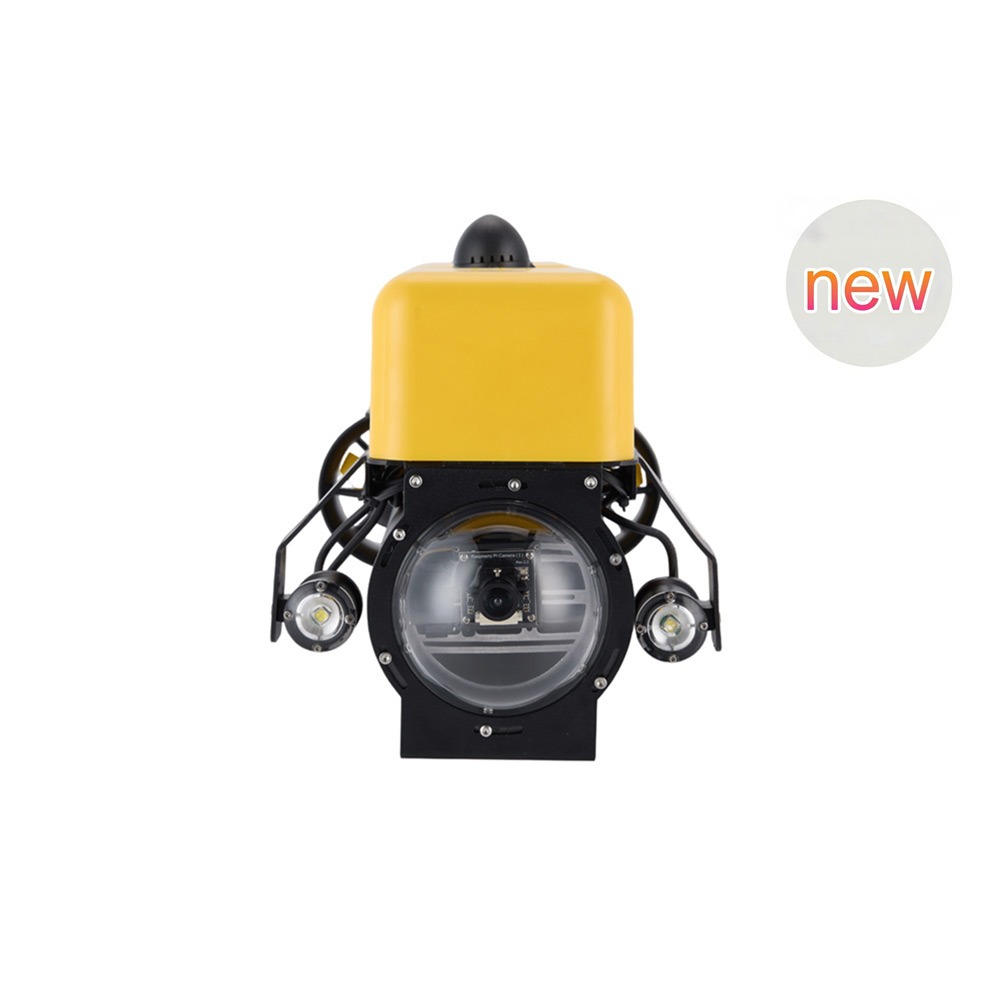 12↗
12↗An engineered battery-powered ROV configuration for selected flooded pipelines and tunnels. Depending on diameter, route, access and recovery planning, communications can extend from 1 km to 5 km.
Review platform source ↗Robotic crawler fleet
Each Pipe Inspection Equipment platform is chosen for the actual line, inspection objective, access conditions and required deliverables.
01Portable, steerable and fully submersible, with a pan-and-tilt HD camera. It centres in approximately 150–600 mm pipe and supports efficient municipal and industrial CCTV work.
02A larger portable crawler for approximately 200–900 mm pipe. Its adjustable camera position and robust wheel configurations suit mainline, storm, process and water infrastructure.
03A magnetic utility crawler for suitable ferrous pipe, tanks and steel structures. Available tooling can include ultrasonic thickness, pressure washing, imaging sonar and vacuum attachments.
 04
04A modular CCTV platform with pan-and-tilt or PTZ cameras, inclinometer, sonde and elevator options. Cable configurations reach up to approximately 250 m for suitable straight-run surveys.
05A configurable crawler for small and medium pipes, tanks, ships and boreholes. Inline, parallel and magnetic arrangements help match confined geometries and vertical or inverted ferrous surfaces.
06A man-portable remote inspection platform for difficult terrain, hazardous interiors and larger accessible conduits. It supports remote video, voice and data where human exposure should be reduced.
07A spiral-propulsion platform intended for large pipe with heavy silt or high water. Project options can include sonar, 2D laser and inertial measurement for difficult mainline conditions.
08A battery-operated, steerable crawler with a 300 m cable, reverse camera, inclinometer and sonde. Wheel kits and a powered camera riser extend its useful diameter range.
09A mainline configuration using larger wheels, elevated camera positioning and field reporting compatibility for sewer, storm, culvert and utility inspection programs.
10A tracked all-terrain crawler for silt, standing water, slopes and trenches. Swing-arm control, PTZ viewing and optional 3D laser support challenging large-diameter assets.
11A magnetic ultrasonic crawler for suitable pipelines, vessels and tank shells. It captures thickness data with full A-scan and B-scan records for corrosion assessment.
12An engineered battery-powered ROV configuration for selected flooded pipelines and tunnels. Depending on diameter, route, access and recovery planning, communications can extend from 1 km to 5 km.
Engineered long-range capability
For selected flooded pipelines and tunnels, long-range Pipe Inspection Equipment can extend communications from 1 km to 5 km.
This is a specialist Mini Pipe ROV configuration—not a blanket crawler rating. Ven-Tech screens diameter, geometry, bends, current, contents, access, communication path, navigation, sensor payload, battery endurance and vehicle recovery before defining a practical reach.
Sensors, tools & attachments
Not every payload fits every piece of Pipe Inspection Equipment. Ven-Tech confirms clearance, traction, contact, power, data, hose or tether loading and recovery before specifying tooling.
High-definition forward, pan-tilt-zoom and rear views with lighting configured for the pipe diameter, surface and expected defects.
Single-point UT, dry-coupled magnetic systems, encoded corrosion mapping and suitable A-, B- or C-scan data packages.
Diameter, deformation, ovality, joint displacement and measurable surface features captured with compatible laser hardware.
Point clouds, spatial measurements, digital twins and repeatable geometry for large pipe, culverts, chambers and connecting infrastructure.
Acoustic visualization for submerged or turbid pipes where conventional video cannot show the complete internal geometry.
Overlapping imagery processed into suitable 3D models, textured surfaces and measured records when visibility and access support the workflow.
Crawler-mounted or project-specific cleaning to expose a viewing area, prepare spot measurements or document the surface condition.
Compatible vacuum, suction or sediment-management tooling for selected tanks, pipes and submerged inspection environments.
Mechanical aids for light debris management, tether handling, object recovery and safe vehicle retrieval where the platform supports them.
Distance counters, inclinometers, sondes, inertial data and surface locators connect internal observations to the asset.
Atmospheric, gas, water-quality and environmental monitoring selected for the product, hazard and inspection objective.
Grabbers, tooling mounts and mission-specific sensors engineered only after payload, clearance, traction and recovery are confirmed.
Inspection deliverables
Pipe Inspection Equipment deliverables are agreed around the maintenance, rehabilitation, engineering, integrity or asset-management decision they must support.
HD/PTZ footage organized by asset, direction, distance and observation, with representative defect stills.
Standardized coding and structured municipal condition data when PACP is included in the project scope.
Cross-sections, ovality, deformation, joint and feature measurements tied to inspection position.
Registered point clouds, 3D geometry, selected CAD-ready outputs and measurable digital records.
Acoustic images, profiles or mosaics for flooded assets and low-visibility sections.
Thickness readings, encoded scans, corrosion maps and raw data where the selected instrument supports them.
Textured 3D models, inspection views and measurable surfaces for suitable visible conditions.
A concise table of observations, positions, media references, classifications and follow-up priorities.
Agreed drawings, coordinates, tables, media links and exports for engineering or asset-management systems.
Repeatable evidence for cleaning, rehabilitation, repair verification or recurring condition programs.
Methods, coverage, limitations, key findings and recommended next actions written for the project team.
Organized media, reports and data prepared for controlled review, retention and handover.
Mission-to-platform guide
This Pipe Inspection Equipment guide is a first screen only. Final selection follows drawings, access review, hazard assessment and deployment testing.
Compact CCTV, sonde, distance and inclinometer
PTZ CCTV, centred camera, laser and reporting
Tracked/spiral traction, sonar and laser options
Magnetic traction, visual, cleaning or UT
Engineered communications, sonar and recovery plan
Remote observation and application-specific payload
Mission-to-platform guide
This Pipe Inspection Equipment guide is a first screen only. Final selection follows drawings, access review, hazard assessment and deployment testing.
Compact CCTV, sonde, distance and inclinometer
PTZ CCTV, centred camera, laser and reporting
Tracked/spiral traction, sonar and laser options
Magnetic traction, visual, cleaning or UT
Engineered communications, sonar and recovery plan
Remote observation and application-specific payload
Controlled field execution
Remote Pipe Inspection Equipment can reduce exposure, but it never replaces isolation, atmospheric review, access control, energy management and a credible recovery plan.
Confirm purpose, diameter, length, material, route, bends, access, contents, operating state, drawings and required decision.
Address pressure, flow, stored energy, valves, contamination, atmosphere, traffic, access control and return-to-service boundaries.
Match traction, camera height, tether, sensor payload, lighting, cleaning tools, recording and recovery provisions to the pipe.
Complete dry-fit, communications, camera, sensor, distance, tether and retrieval checks before committing the platform.
Monitor coverage, position, media quality, data integrity and vehicle condition while the field team can still correct gaps.
Process, index and report the agreed video, measurements, point clouds, sonar, NDT data, findings and limitations.
Pipe Inspection Equipment FAQ
Send drawings, access photos and the required decision. Ven-Tech will screen the practical Pipe Inspection Equipment, tooling and deliverables.
Ven-Tech configures Pipe Inspection Equipment from compact Deep Trekker crawlers through magnetic, tracked and long-range ROV systems. Project-selected rental access can add Pearpoint, Inuktun, TROGLOTREK, TRACER, Eddyfi, Sarcos and other specialist RVI or NDT platforms, subject to availability and suitability.
For selected flooded pipelines or tunnels, Ven-Tech can engineer a long-range Mini Pipe ROV configuration with communications options from 1 km to 5 km. Five kilometres is not the standard range of every crawler; feasibility depends on diameter, bends, access, flow, contents, communications and a safe recovery strategy.
Some Pipe Inspection Equipment can work from approximately 4 inches or 100 mm in suitable straight pipe. Actual access depends on the opening, bends, reducers, deposits, water level, traction, camera configuration and retrieval clearance.
Yes, compatible platforms can be configured with ultrasonic thickness, laser profiling, 3D LiDAR, imaging or multibeam sonar and other sensors. Payload, clearance, surface contact, power, data link and inspection objective must be reviewed before a configuration is promised.
Selected Deep Trekker and specialist platforms can carry pressure-washing, vacuum, sediment-management or mechanical tooling. The process must account for waste, visibility, hose or tether loading, contamination, drainage, traction and vehicle recovery.
Deliverables can include indexed video, PACP-compatible records, defect images, laser profiles, LiDAR point clouds, sonar imagery, photogrammetric models, UT scans, thickness maps, CAD or GIS information and an engineering summary. The final package is defined before mobilization.
The page combines Ven-Tech-operated platforms with specialist Pipe Inspection Equipment available through qualified rental partners. Rental equipment is not represented as permanently owned or continuously available; the exact model, configuration, certification and mobilization are confirmed in the proposal.
Provide pipe purpose, material, diameter, length, bends, slope, access dimensions, operating contents, pressure or flow, previous reports, drawings, known hazards, desired sensors and deliverables. Access photos and route drawings help Ven-Tech screen the safest workable solution.
Pipe Inspection Equipment FAQ
Send drawings, access photos and the required decision. Ven-Tech will screen the practical Pipe Inspection Equipment, tooling and deliverables.
Ven-Tech configures Pipe Inspection Equipment from compact Deep Trekker crawlers through Pearpoint, Inuktun, TROGLOTREK, TRACER, Eddyfi, Sarcos, magnetic, tracked and long-range ROV systems. The final platform is selected around the pipe, access, inspection objective and required data.
For selected flooded pipelines or tunnels, Ven-Tech can engineer a long-range Mini Pipe ROV configuration with communications options from 1 km to 5 km. Five kilometres is not the standard range of every crawler; feasibility depends on diameter, bends, access, flow, contents, communications and a safe recovery strategy.
Some Pipe Inspection Equipment can work from approximately 4 inches or 100 mm in suitable straight pipe. Actual access depends on the opening, bends, reducers, deposits, water level, traction, camera configuration and retrieval clearance.
Yes, compatible platforms can be configured with ultrasonic thickness, laser profiling, 3D LiDAR, imaging or multibeam sonar and other sensors. Payload, clearance, surface contact, power, data link and inspection objective must be reviewed before a configuration is promised.
Selected Deep Trekker and specialist platforms can carry pressure-washing, vacuum, sediment-management or mechanical tooling. The process must account for waste, visibility, hose or tether loading, contamination, drainage, traction and vehicle recovery.
Deliverables can include indexed video, PACP-compatible records, defect images, laser profiles, LiDAR point clouds, sonar imagery, photogrammetric models, UT scans, thickness maps, CAD or GIS information and an engineering summary. The final package is defined before mobilization.
Platform availability and configuration depend on project timing, pipe geometry, transport, accessories, inspection objectives and field conditions. Ven-Tech confirms the exact Pipe Inspection Equipment, tooling, certifications and mobilization plan in the project proposal.
Provide pipe purpose, material, diameter, length, bends, slope, access dimensions, operating contents, pressure or flow, previous reports, drawings, known hazards, desired sensors and deliverables. Access photos and route drawings help Ven-Tech screen the safest workable solution.
Build the right inspection system
Share diameter, length, material, access, bends, operating condition, contents, known hazards, drawings and desired outputs. Ven-Tech will return a focused equipment and execution plan.