RTK GNSS & heading
Centimetre-class positioning may be configured where the correction service, satellite geometry, control and project method support it. Dual-antenna heading and inertial sensors improve line keeping and sensor orientation.
Hydrographic · sonar · environmental
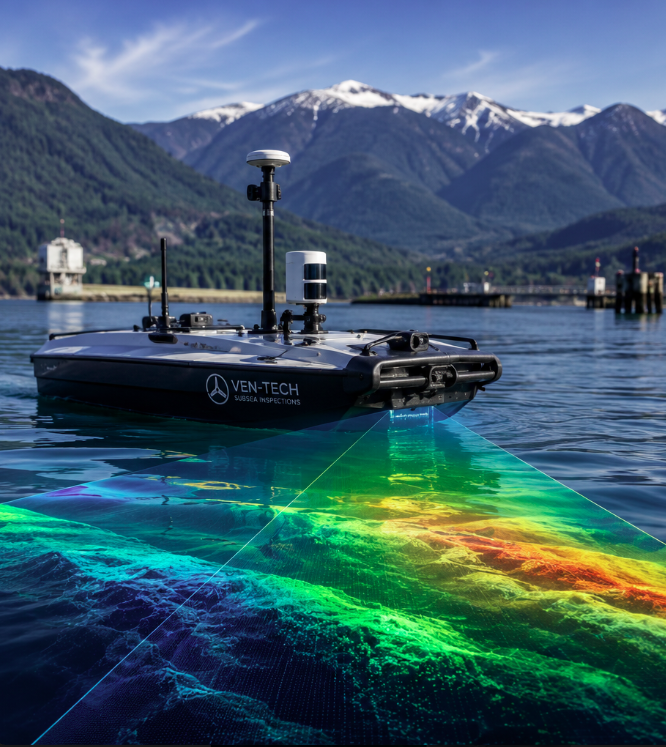
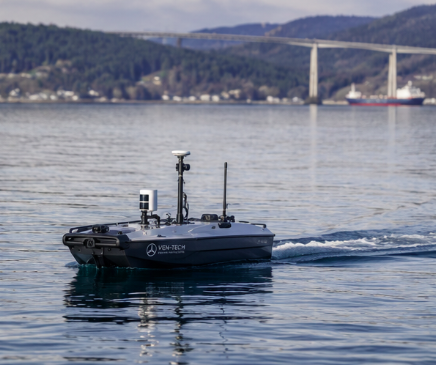
Ven-Tech USV Services use unmanned surface vessels, positioning, sonar and environmental sensors to collect decision-ready marine data across reservoirs, rivers, harbours and coastal work areas in Canada.
Unmanned surface vessel surveying
USV Services bring survey sensors closer to shallow, constrained or difficult water without putting a crew onboard the platform.
Ven-Tech designs each mission around the question the client needs answered—not around a single vehicle. Site access, water depth, current, traffic, communications, endurance, payload, required accuracy and deliverables determine whether an unmanned surface vessel is the right primary platform or one part of a combined survey.
A compact USV may reduce mobilization, fuel use and personnel exposure while maintaining repeatable lines and dense data coverage. Responsible deployment still requires competent supervision, project-specific operating limits, reliable manual intervention, launch and recovery planning, and traceable quality control.
USV Services capabilities
Every USV Services payload, operating method and deliverable is configured around the waterway and project decision.
 01↗
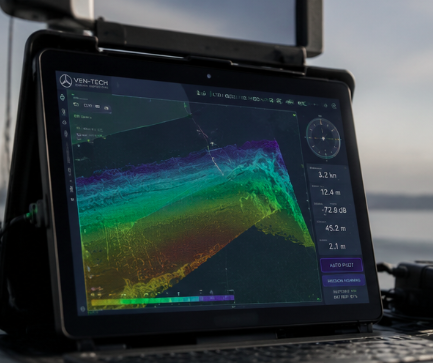
01↗Acquire dense depth soundings for lakes, reservoirs, rivers, harbours and nearshore work areas using project-selected single-beam or multibeam sonar, RTK positioning and sound-velocity control.
 02↗
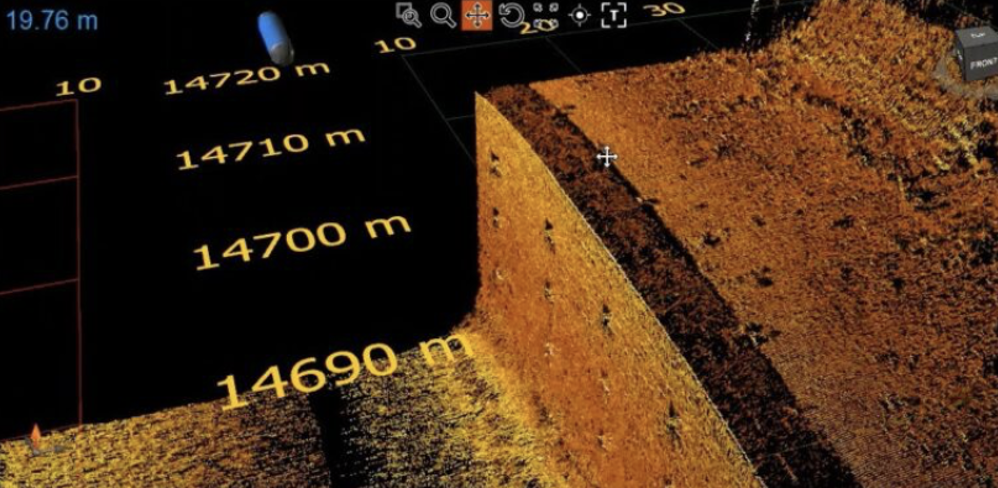
02↗Integrate side-scan sonar, sub-bottom profiling or magnetometer payloads to support seabed characterization, route planning, target detection, dredging investigations and engineering studies.
 03↗
03↗Collect repeatable water-column and surface observations for baseline programs, habitat work, plume tracking and operational monitoring using purpose-selected water-quality and oceanographic sensors.
 04↗
04↗Support pre-work baselines, dredge progress, post-dredge verification, clearance review, berth and channel surveys, quantities and construction documentation with a compact field footprint.
 05↗
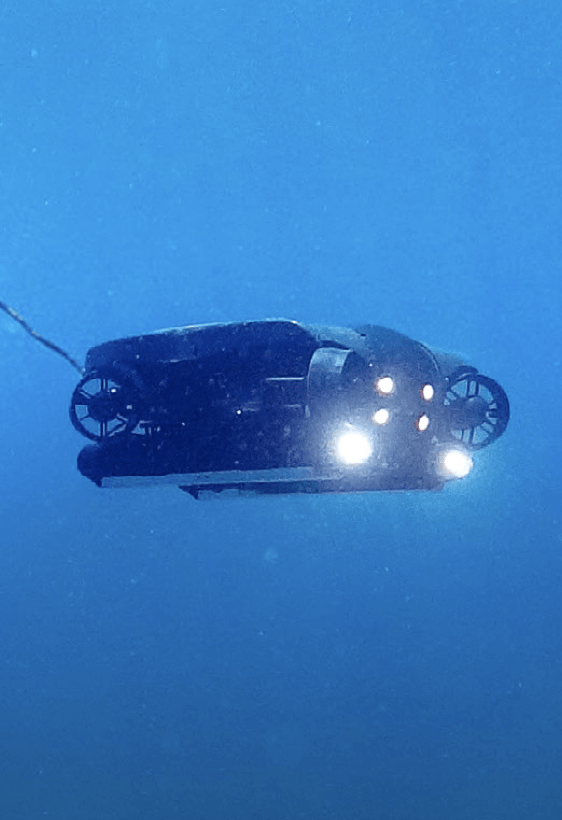
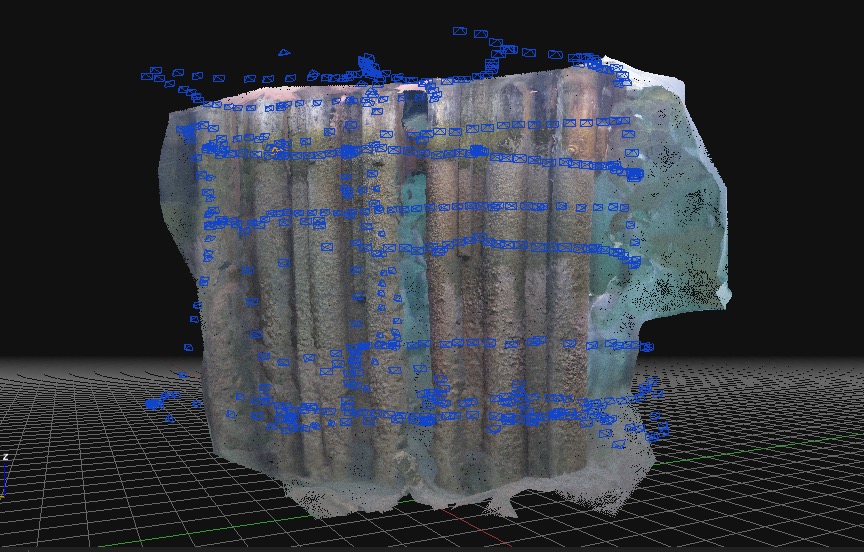
05↗Survey suitable routes, outfalls, intakes, bridge piers and submerged assets with sonar, imagery and positioning before targeted ROV, diving or engineering investigation.
 06↗
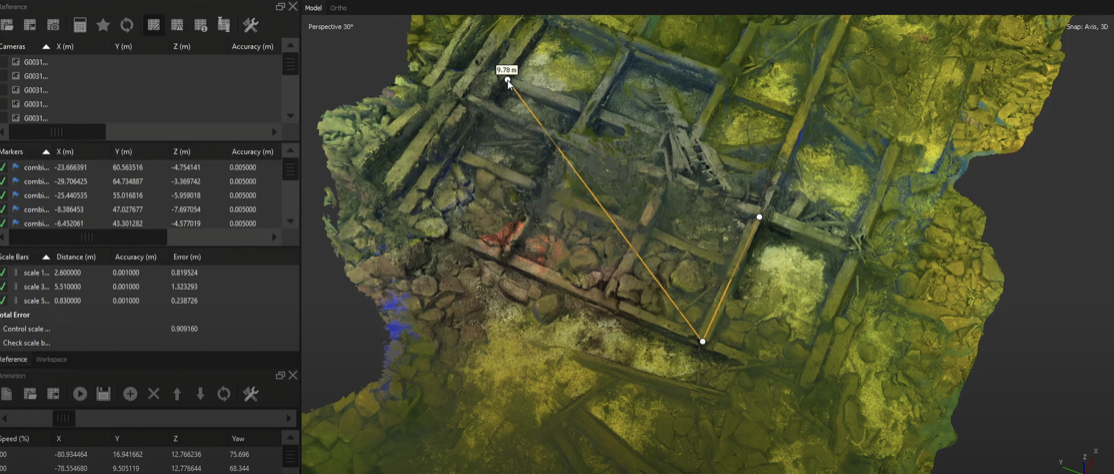
06↗Turn positioned observations into bathymetric surfaces, contours, 3D models, target mosaics and repeatable datasets that reveal change between construction, maintenance or monitoring campaigns.
Purpose-configured surface robotics
Professional USV Services depend on a platform that can position the payload, maintain a controlled line, preserve sensor geometry and return complete data from the work area.
Navigation & sensor payloads
For USV Services, final equipment selection follows the survey specification, environment, mounting geometry, platform capability and processing workflow.
Centimetre-class positioning may be configured where the correction service, satellite geometry, control and project method support it. Dual-antenna heading and inertial sensors improve line keeping and sensor orientation.
Sounding systems are selected around required coverage, water depth, platform compatibility, bottom conditions, accuracy specification and the final surface or charting deliverable.
Acoustic imagery supports target detection, debris screening, bottom-feature interpretation and asset investigation when water clarity limits optical methods.
Project-selected payloads can investigate sediment layers, buried objects, utilities and magnetic targets when the mission design and site conditions are suitable.
Temperature, conductivity, dissolved oxygen, turbidity, pH and other parameters can be integrated for defined monitoring objectives and sampling intervals.
Navigation, line progress, sensor status and incoming data can be reviewed from shore or a support vessel so the crew can correct coverage before leaving the worksite.
 FIELD ACQUISITION / CANADA
Environmental & water programs
Consistent positioning and repeatable mission lines can strengthen baseline and long-term monitoring programs.
USV Services can support water-quality observations, habitat programs, plume or effluent monitoring, reservoir studies and oceanographic data collection where the platform and sensor package are suitable. Parameters, sample frequency, calibration, reference checks and data acceptance criteria are agreed before deployment.
USV Services do not replace environmental judgment. Ven-Tech works to the client’s study design and coordinates with environmental specialists, engineers and regulators where interpretation, permitting or compliance conclusions fall outside the survey acquisition scope.
USV survey deliverables
USV Services deliverables are defined before mobilization so acquisition density, references and processing support the intended engineering or operational use.
Reviewed depth observations with navigation, motion and project-specific corrections applied and documented.
Gridded depth models, shaded relief, colour ramps and contours prepared at an appropriate resolution for the acquisition density.
Georeferenced acoustic imagery and interpreted target records for seabed, debris, infrastructure or route-screening work.
Cross-sections, longitudinal profiles, clearances and engineering-ready figures prepared to the agreed coordinate and vertical reference.
Dredge, stockpile, sediment or reservoir volume calculations and surface-to-surface comparisons with stated assumptions.
Coordinates, dimensions, confidence, imagery and observations organized for follow-up by engineers, ROV crews, divers or maintenance teams.
Agreed point, line, surface and raster formats that connect the field survey to client mapping, design or asset-management workflows.
Scope, equipment, references, methods, quality checks, limitations, results and deliverable index consolidated into a traceable record.
Mission workflow
Uncrewed does not mean unattended. USV Services need field leadership, defined command-and-control, weather and water limits, navigational awareness, communications, exclusion controls and a practical recovery method.
Review Ven-Tech HSE ↗Confirm the engineering, operational, environmental or maintenance question; required standard; coverage; accuracy; coordinate reference; schedule and final file formats.
Assess launch and recovery, depth, tide, current, traffic, obstructions, communications, shoreline access, permissions, environmental constraints and recovery options.
Select the platform, sensor payload, line plan, overlap, speed, control, sound-velocity method, data checks and support arrangement around actual conditions.
Complete the project hazard assessment, pre-use inspections, weather and water limits, exclusion areas, communications, emergency response and go/no-go review.
Monitor navigation, line keeping, sensor health, coverage, density and anomalies in real time. Re-run questionable lines while the team is still mobilized.
Apply the agreed corrections and quality checks, retain limitations, prepare the required products and organize the package so the client can act on it.
Quality-controlled marine data
Where applicable, the USV Services scope can be aligned with client specifications and relevant hydrographic guidance. Survey control, calibrations, checks, line spacing, coverage, uncertainty, processing and limitations remain visible in the project record.
REFERENCE RESOURCES
Review authoritative Canadian and international hydrographic guidance during project scoping where it applies to the intended survey use.
Canadian Hydrographic Service↗IHO standards & specifications↗Sectors we support
Ven-Tech supports teams responsible for navigation, construction, water supply, energy, environmental performance and submerged infrastructure.
USV Services FAQ
These answers provide a practical starting point. Platform, sensors, operating controls, accuracy and deliverables are confirmed for the actual waterway.
USV Services support hydrographic and bathymetric surveys, sonar imaging, geophysical investigation, environmental monitoring, dredging and construction surveys, route screening and repeatable mapping. The correct use depends on the required data, waterway, access, traffic, conditions and applicable permissions.
An unmanned surface vessel is a remotely controlled or mission-programmed surface platform that carries navigation, communications and survey sensors without personnel onboard. A qualified field team still plans, supervises, monitors and can intervene in the operation.
Sometimes, but not automatically. A USV can reduce field footprint and work in selected shallow, restricted or hazardous areas. Larger waterways, traffic, sea state, payload, endurance, launch access or regulations may require a crewed vessel or a combined approach.
Accuracy depends on the sensor, calibration, positioning, correction service, control, motion, sound velocity, water conditions, bottom characteristics, line plan and processing. Ven-Tech confirms a practical method against the project specification rather than promising one accuracy for every site.
Yes, when the selected platform, power, mounting and mission conditions support the payload. Single-beam, multibeam, side-scan, sub-bottom, magnetometer and environmental sensors may be configured separately or as coordinated survey passes.
Planning considers traffic density, right-of-way, notices or permissions, visibility, communications, monitoring, navigation lights or markings, operating limits, exclusion areas and the ability to stop, take manual control or recover the platform. Controls are defined for the actual waterway and authority.
Yes. A USV can map broad areas, identify targets and provide spatial context. An ROV, UAS or commercial diving team can then collect close-range imagery, measurements or intervention evidence at selected locations.
Provide the project location, purpose, area or route, depth range, drawings, coordinate system, accuracy or standard, known traffic and hazards, access and launch details, desired sensors, schedule and required deliverables. Existing charts, survey control and previous data are especially useful.
Start with the survey objective
Send the location, purpose, area or route, depth range, access, schedule, required standard and desired outputs. Ven-Tech will help define a practical surface-survey approach.