Define whether the asset will be in service, isolated, drained, partially flooded or fully dewatered. Pressure, flow, water level and return-to-service constraints govern the inspection route.
HYDROELECTRIC WATER CONVEYANCE · CANADA
Penstock Inspection Services.
See the route. Measure the risk.
Penstock Inspection Services using UAS, ROVs, pipe crawlers, sonar, visual imaging and ultrasonic thickness data to document critical pressure conduits with less exposure and a clearer engineering record.
UASDewatered access
ROVFlooded access
CRAWLERControlled travel
One asset · three remote routes
Inspect the penstock.
Protect the outage.
No single robot answers every penstock question. The useful system is the one matched to the asset state, geometry, evidence requirement and recovery plan.
Ven-Tech combines remote access, direct measurement and disciplined field controls to inspect exposed and enclosed pressure-water infrastructure. UAS can rapidly cover suitable dewatered large-diameter reaches. ROVs can collect submerged video and acoustic evidence where flooded access is feasible. Crawlers provide stable internal travel and compatible sensor contact. Targeted NDT closes the evidence gap where remote imagery identifies a priority location.
Penstock Inspection Services begin with drawings, operating history, previous findings and the owner's engineering question. The final package links each observation and measurement to an agreed location system, states what was not covered and preserves the original media and data needed for review.
Platform-neutral planningIndexed evidenceRecovery built inLimitations stated
Compare UAS, ROV, crawler and targeted human access against diameter, length, slope, bends, atmosphere, current, tether path, surface condition and recovery requirements.
Set stationing, flow direction, clock position, component IDs and drawing references before data collection so imagery, UT, sonar and observations can be correlated.
Prove retrieval, communications, tether management, battery or power endurance, alternate access and stop-work limits before any platform enters the penstock.
Penstock Inspection Services capability
From remote access.
To direct evidence.
Every mode is configured around operating condition, access, geometry, surface, position control, data quality and a credible recovery route.
 01↗
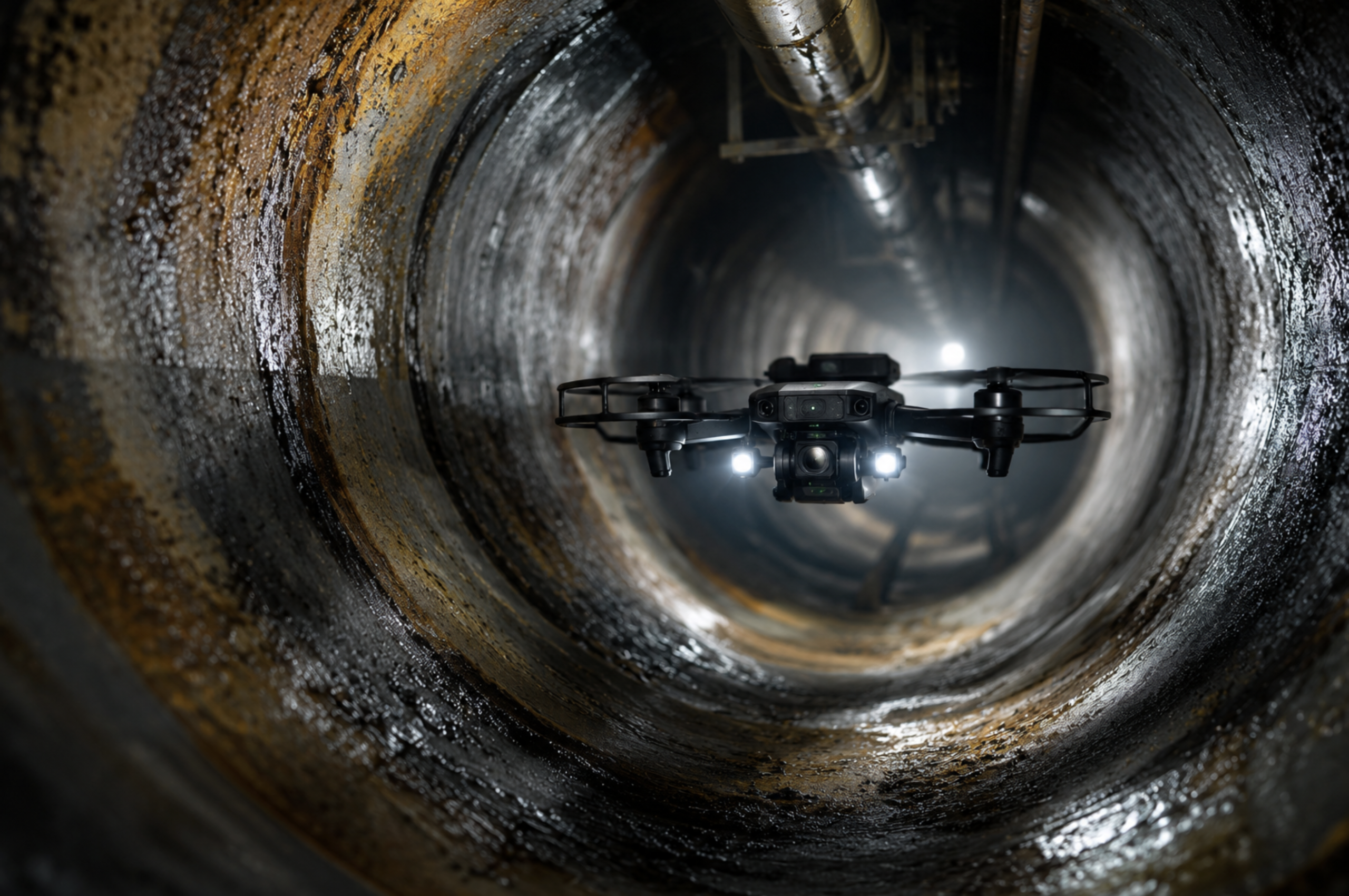
01↗UAS inspection in dewatered sections
Deploy a protected or project-selected UAS where diameter, airflow, visibility, geometry, communications and recovery provisions support controlled flight. Capture continuous visual evidence across crown, springlines, invert, seams, coatings, transitions and difficult elevated details without placing personnel throughout the route.
 02↗
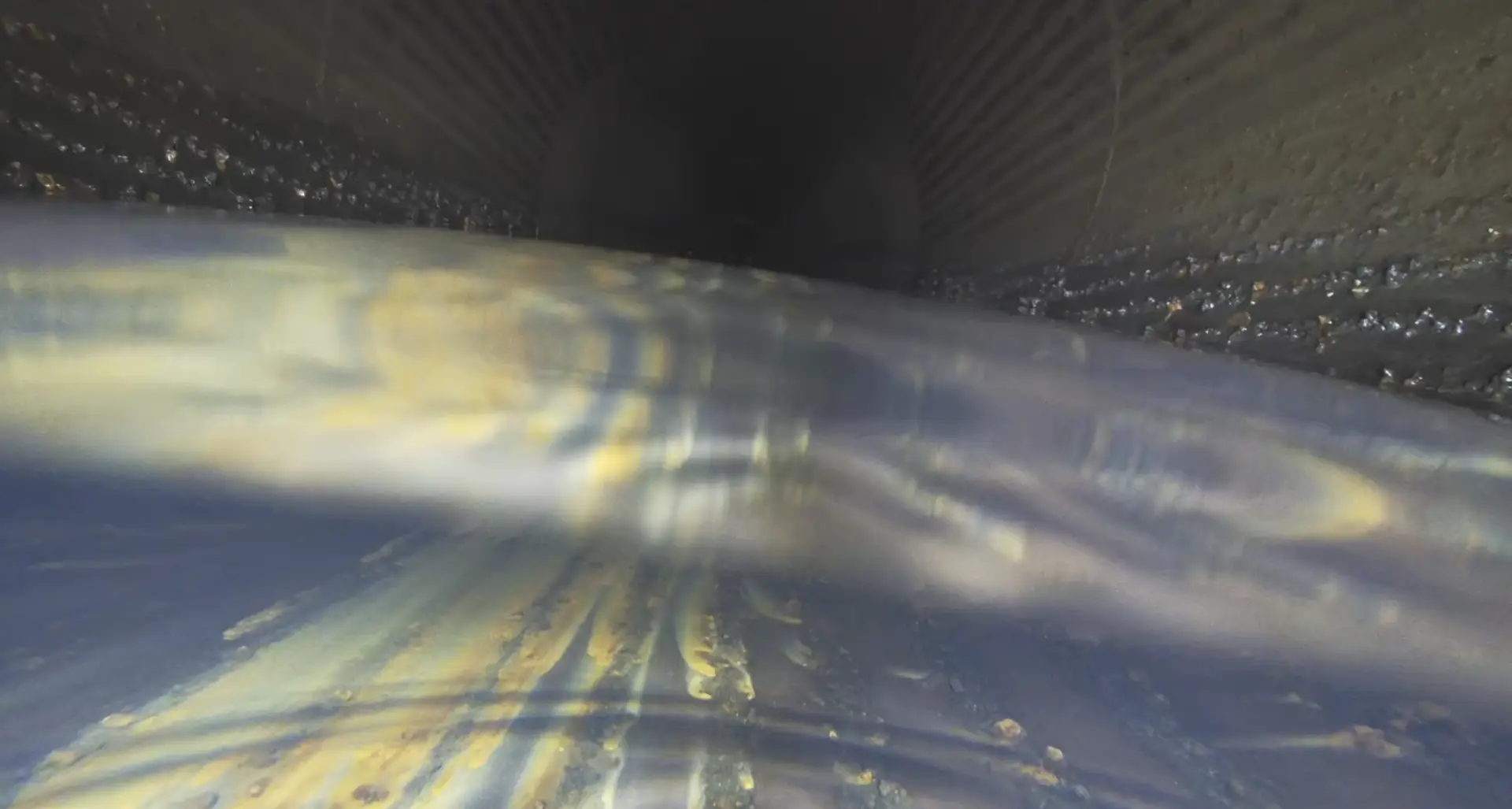
02↗ROV inspection in flooded sections
Use an ROV where the penstock or connected intake remains flooded and the owner-approved operating state permits robotic access. Video, lighting, sonar and navigation references can document submerged conditions while the team manages current, tether, entanglement, communications, launch and recovery limits.
 03↗
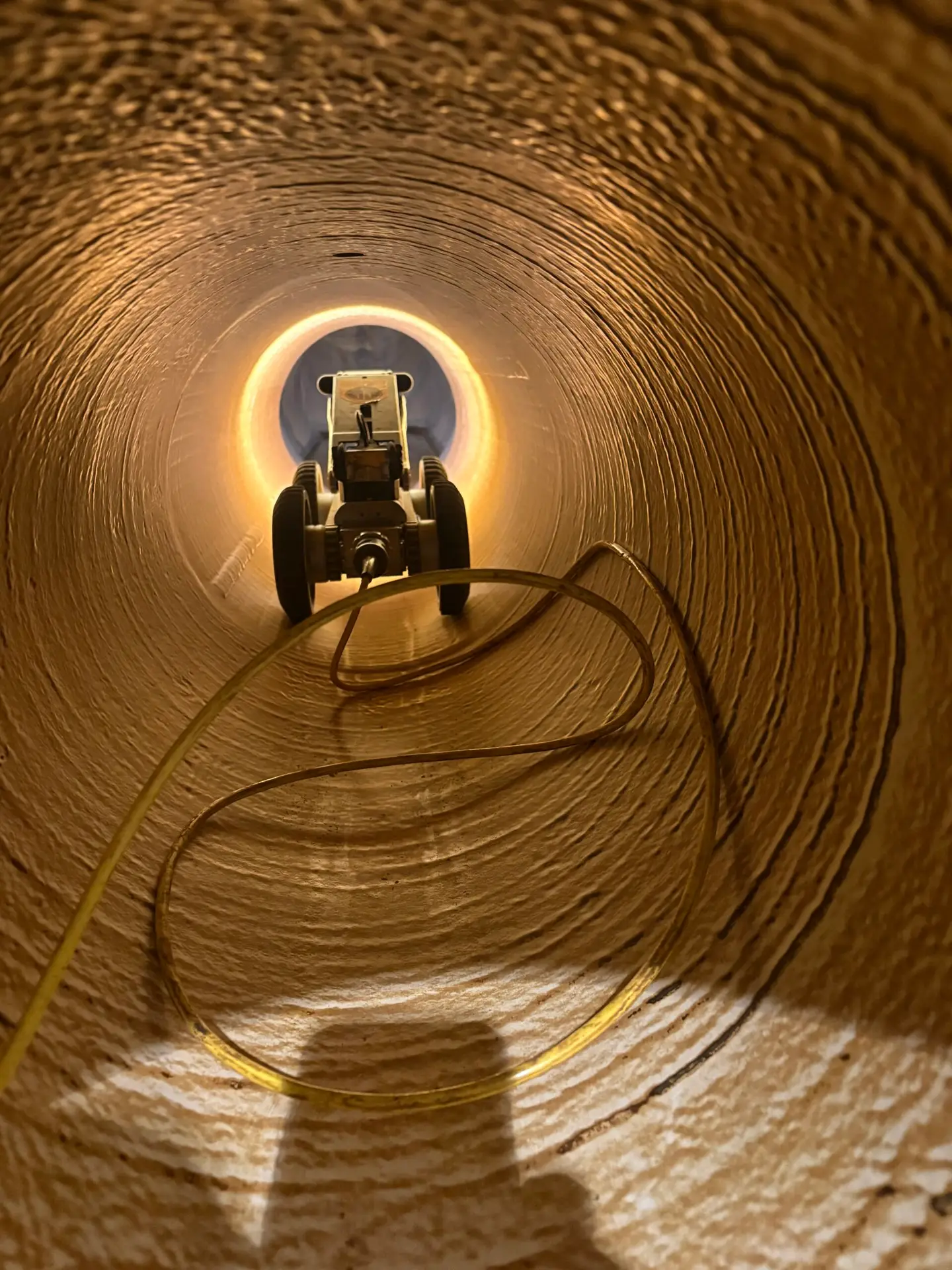
03↗Pipe crawler inspection
Configure wheeled, tracked or magnetic crawlers for dewatered internal travel where traction, diameter, slope, transitions, deposits, tether load and retrieval have been proved. Crawlers provide stable close-range imagery and a repeatable platform for compatible measurement payloads.
 04↗
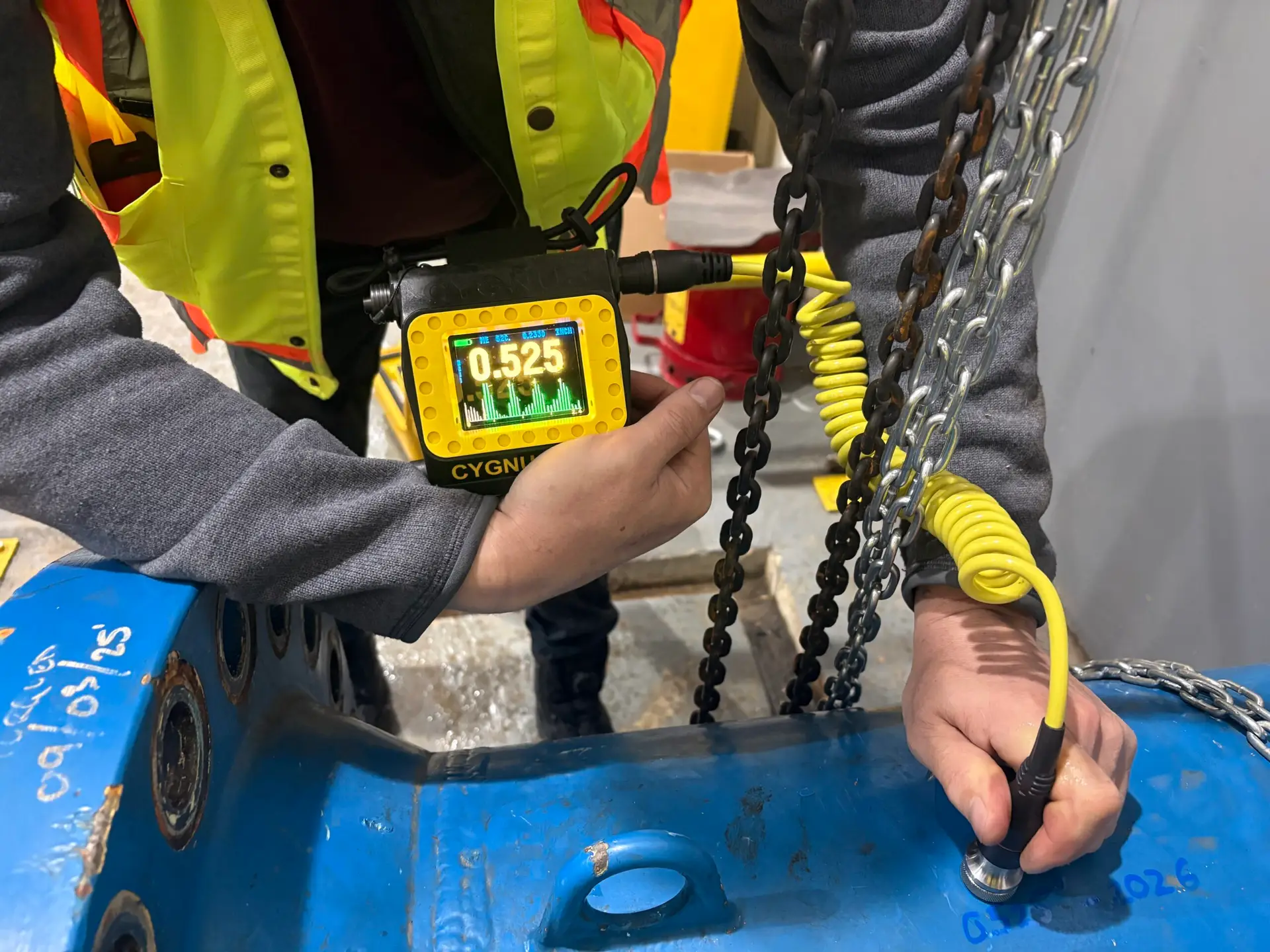
04↗Ultrasonic thickness data collection
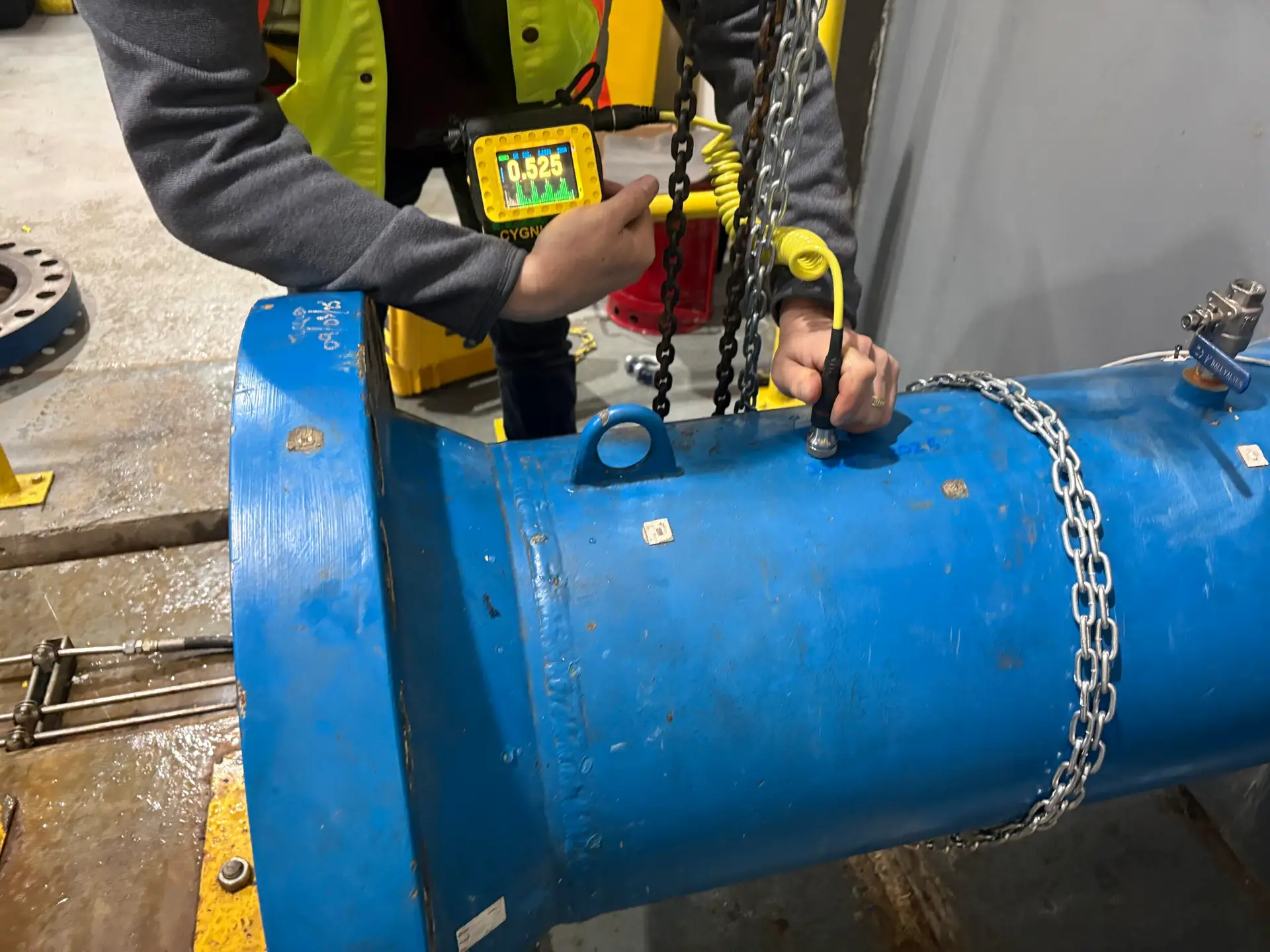
Collect project-defined UT readings at accessible locations using calibrated equipment, suitable probes and documented surface preparation. Grid, spot or targeted readings can support the owner's qualified engineer or corrosion specialist; interpretation and fitness-for-service decisions remain with the designated technical authority.
 05↗
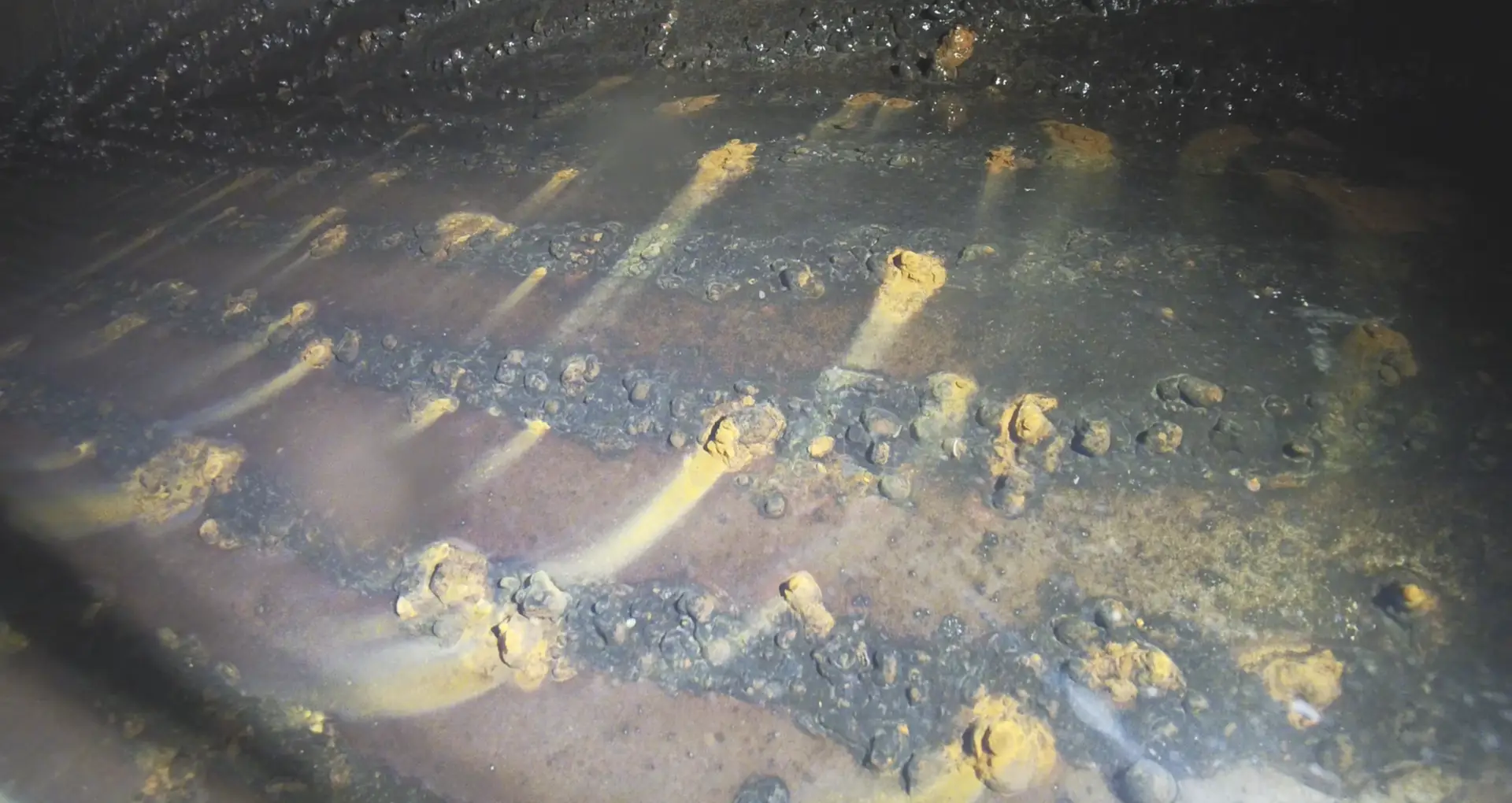
05↗Lining, coating and corrosion evidence
Document blistering, delamination, erosion, abrasion, deposits, exposed steel, corrosion products, pitting indicators, leakage staining and previous repairs. Findings are indexed to stationing, clock position, component or another owner-approved asset reference.
 06↗
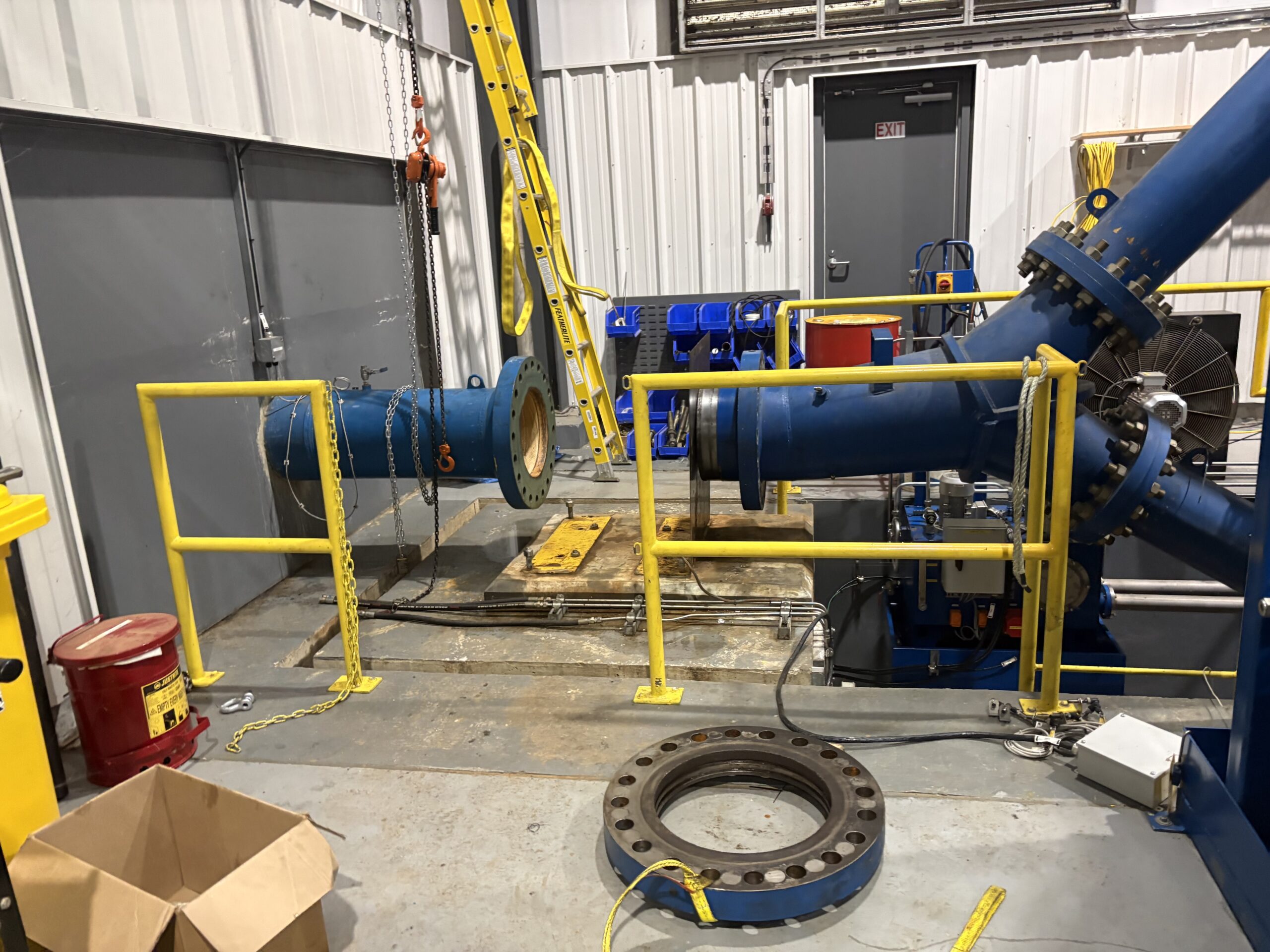
06↗Hydromechanical interfaces
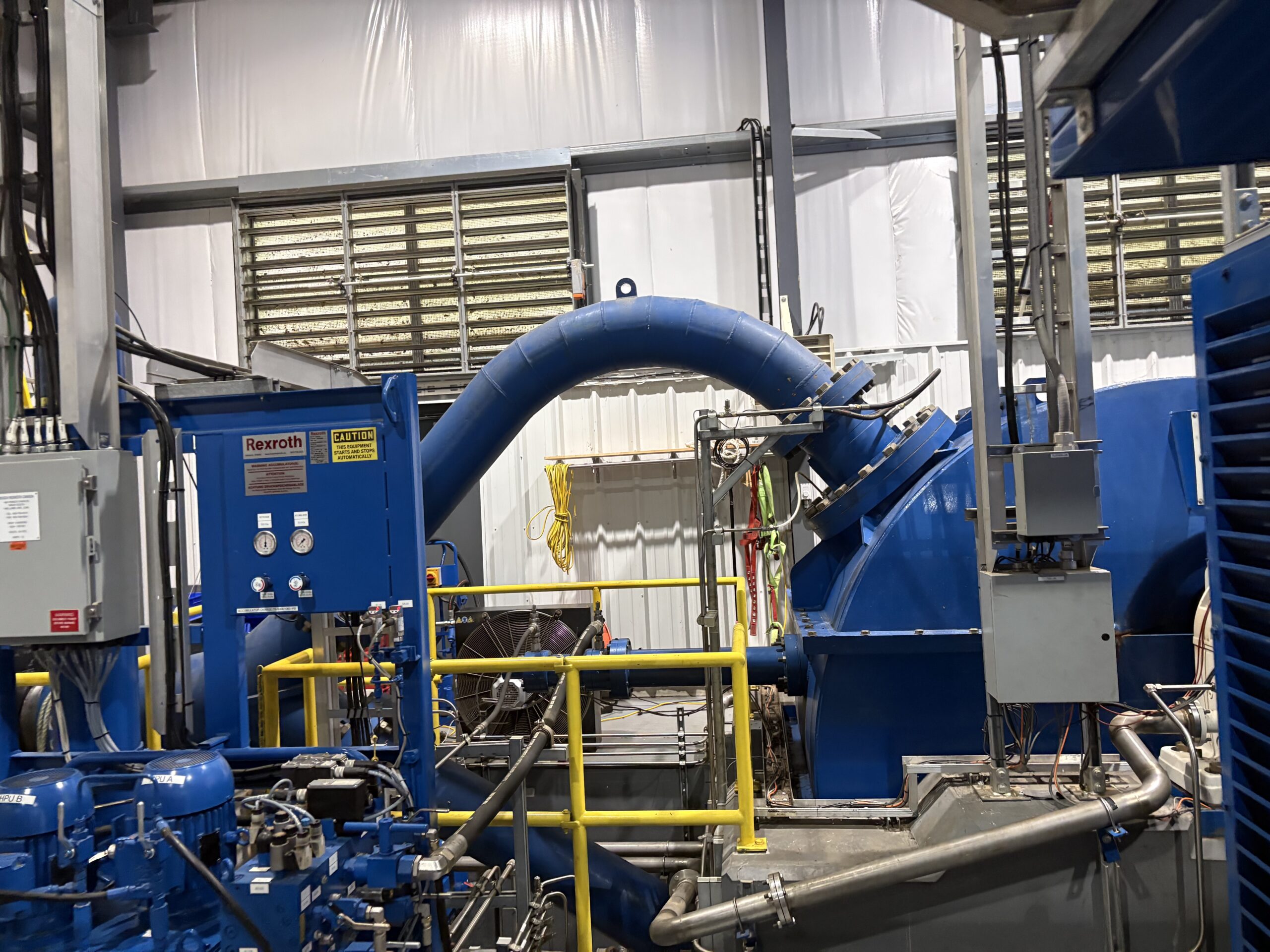
Inspect accessible transitions, bifurcations, branches, flanges, manways, valves, gates, expansion joints, anchors, saddles, supports and equipment interfaces. The work package distinguishes observation from measurement and records areas that require direct follow-up.
Platform selection follows the asset
Drain it. Flood it.
Inspect it responsibly.
The operating state changes the hazards, the platform, the sensors and the quality of evidence that can be obtained.
For Penstock Inspection Services, a dewatered route may support UAS, crawler and targeted direct NDT. A flooded route may favour ROV video and imaging sonar. Exterior reaches, supports and access corridors may add conventional visual inspection or UAS mapping. Ven-Tech reviews the complete route—not just the easiest launch point—before recommending a system.
- 01Match the method to pressure, flow, water and atmosphere
- 02Reference evidence to stationing and clock position
- 03Verify sensors and data quality before production
- 04Protect recovery and return-to-service requirements
8-step inspection method
Penstock Inspection Services:
planned through closeout.
Eight connected controls keep the inspection question, isolation, platform, data, escalation and engineering record aligned.
Set the decision question
Confirm why the penstock is being inspected, what condition questions must be answered, the outage window, the required coverage and the owner's acceptance and escalation criteria.
Build the asset baseline
Review drawings, diameter and profile, material and lining, weld maps, previous reports, repairs, supports, valves, access points, operating history, known hazards and available stationing.
Control water and energy
Establish owner-approved shutdown, drainage, lockout, blanking or double-block-and-bleed, residual pressure and flow controls, hazardous-energy verification and release authority.
Test the platform and route
Function-test cameras, lights, sonar or sensors; verify communications and reference systems; complete dry runs or route trials; and confirm launch, travel, turnaround and recovery limits.
Acquire indexed evidence
Follow the agreed coverage plan while the field team monitors image quality, position, tether, endurance, environmental conditions and coverage gaps in real time.
Escalate priority findings
Reacquire unclear areas, add close-range video, UT, sonar, dimensional checks or direct NDT where authorized, and preserve the distinction between observations and engineering conclusions.
Close the field record
Account for platforms, tools and temporary equipment, confirm no foreign material remains, review coverage and limitations, and support the owner's controlled return-to-service process.
Build the decision package
Issue organized media, station-linked observations, measurement records, data files, limitations, priority items and recommended follow-up in the agreed owner and engineering format.
Platforms, sensors and NDT
See more than video.
Deliver more than files.
Penstock Inspection Services select each sensor package to answer a defined question. Compatibility, calibration, reference control and qualified interpretation determine whether the result is useful.
UAS visual and photographic survey
High-resolution video and stills for large dewatered conduits, steep sections, crowns and elevated details where the aircraft, lighting, airflow, command link and recovery concept have been validated.
ROV video and imaging sonar
Submerged visual and acoustic evidence for flooded sections, intakes and transitions. Sonar can support navigation and shape recognition where turbidity or lighting limits conventional imagery.
Crawler CCTV and close-range imagery
Stable internal travel for dewatered pipelines and suitable steel surfaces, with forward, rear or auxiliary cameras configured around the required coverage and tether route.
Ultrasonic thickness measurement
Project-specific spot, grid or targeted readings with calibration, surface condition, probe details, locations and limitations documented for qualified technical review.
Laser profile and dimensional checks
Compatible profile, range or measurement systems can support deformation, ovality, clearance and localized geometry questions when the platform and reference control provide defensible data.
LiDAR and photogrammetric mapping
For suitable dewatered conditions, overlapping imagery or LiDAR can produce point clouds, textured models and spatial context for defect location, geometry review and repeat-condition comparison.
Coating and lining condition mapping
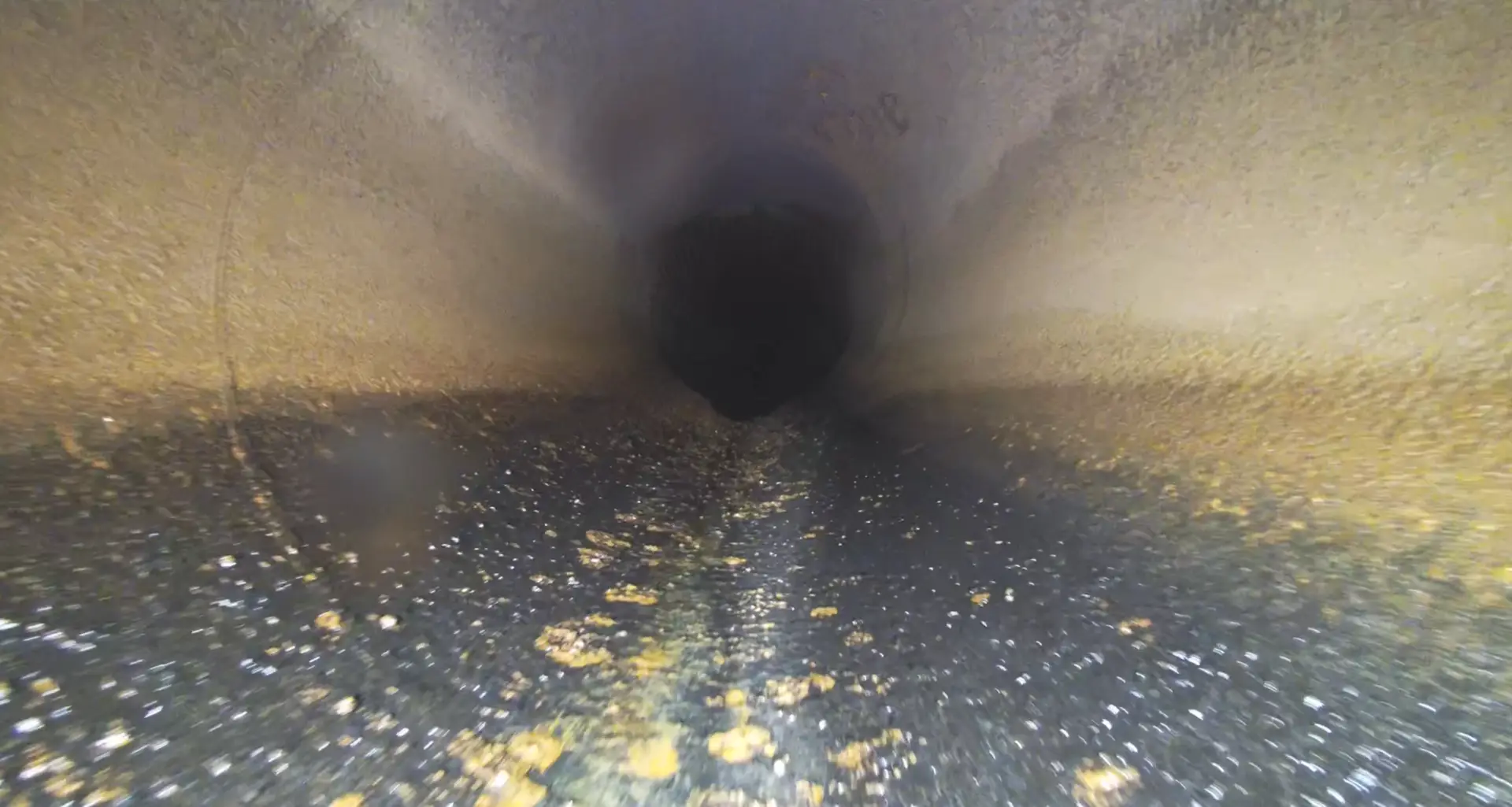
Organized observations of delamination, erosion, abrasion, cracking, blistering, deposits, exposed substrate and previous repairs, indexed to the common asset reference.
Targeted NDT support
Where direct access and the approved work plan allow, qualified personnel can add UT, weld inspection or other specified NDT at priority locations identified by the remote survey.
Measurement quality is part of the method
Observe the condition.
Verify the evidence.
Remote visual inspection is an efficient screening and documentation tool, but it does not by itself establish remaining wall thickness, crack depth or structural capacity. Priority observations can be escalated to compatible UT, sonar, dimensional measurement or qualified direct NDT.
For Penstock Inspection Services, Ven-Tech records the equipment, calibration or function checks, surface and environmental conditions, asset reference, raw observations, limitations and any deviations. Engineering acceptance and fitness-for-service decisions remain with the owner's designated professional.
Station and clock-position referenceUT calibration and reading recordOriginal media and processed filesCoverage gaps stated clearly
Penstock Inspection Services deliverables
Evidence the field can collect.
Records the engineer can use.
Deliverables are configured for maintenance, outage, dam-safety and engineering workflows—not as a generic folder of unreferenced media.
Inspection plan and coverage map
Operating state, access points, platform selection, asset reference, inspection zones, sensors, hold points, data-quality checks, recovery controls and owner interfaces.
Indexed 4K or HD media
Organized video and still imagery named by penstock, station, clock position, component or finding, with timestamps and an agreed file structure.
Condition and defect register
Finding type, location, observed condition, media reference, apparent dimensions where measured, priority category, uncertainty and recommended follow-up.
UT measurement package
Equipment and probe information, calibration checks, surface preparation, reading locations, raw or recorded values, grids, exceptions and stated measurement limitations.
Sonar and acoustic files
Raw and processed sonar outputs, screenshots, settings, navigation or position references and interpretation notes where flooded inspection includes acoustic imaging.
3D and spatial products
Point cloud, mesh, textured model, profile, drawing mark-up, CAD or GIS-compatible outputs when the selected method and site control support the required accuracy.
Coverage and limitations statement
Inspected, partially inspected and inaccessible areas; visibility, deposits, water, geometry, signal, surface or recovery constraints; and any assumptions affecting use of the data.
Engineering-ready closeout
Executive summary, method, results, priority findings, media links, measurement tables, next-step recommendations and files structured for owner and engineer review.
Real Ven-Tech field evidence
Prepared in the plant.
Proved inside the asset.
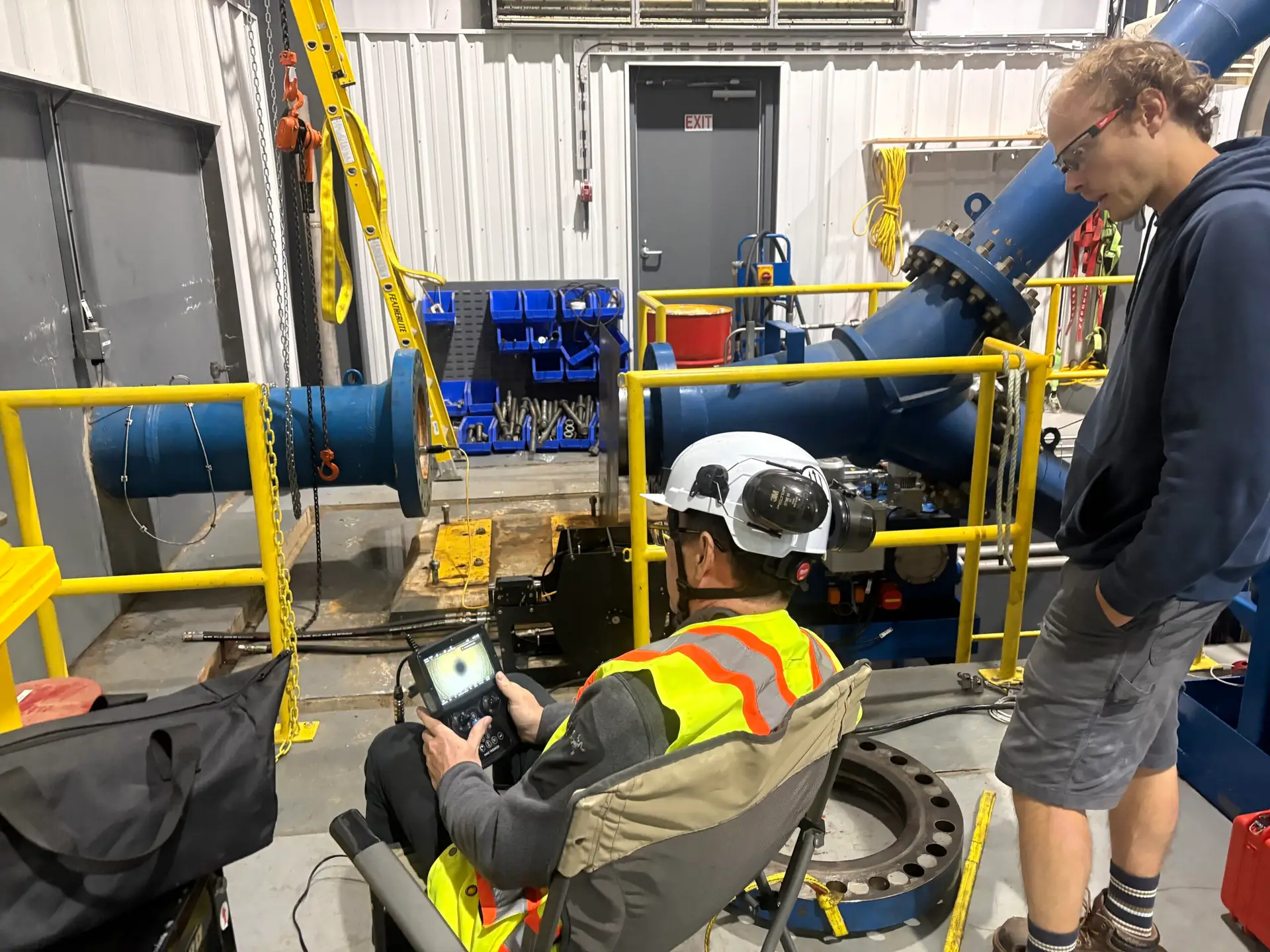
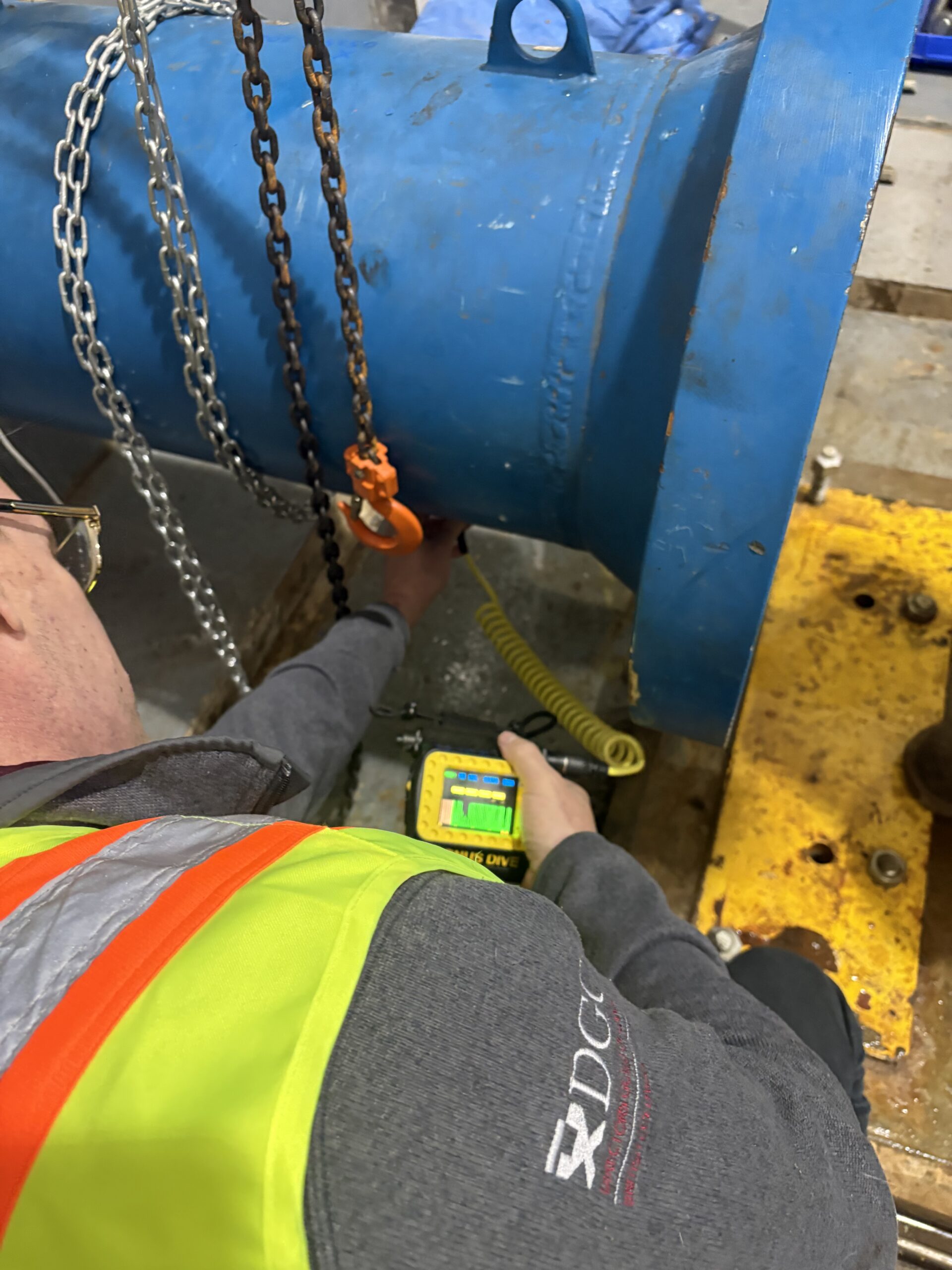
Actual Ven-Tech imagery connects route planning, remote operation, direct measurement and internal condition evidence across one professional record.
Candidate assets and interfaces
Pressure water.
Critical infrastructure.
Penstock Inspection Services can support hydroelectric, municipal and industrial water-conveyance assets. Final feasibility depends on operating state, isolation, access, geometry, material, surface condition and the required evidence.
Important
Remote inspection can reduce personnel exposure, but it does not replace owner isolation, confined-space controls, emergency planning or professional engineering judgment.
01Steel penstocks and pressure conduits↗
02Concrete-lined or tunnelled water conveyance↗
03Intakes, transitions and surge interfaces↗
04Bifurcations, branches and manifolds↗
05Valves, gates, expansion joints and manways↗
06Anchors, saddles, supports and exposed reaches↗
07Turbine approach piping and hydromechanical interfaces↗
08Hydroelectric, municipal and industrial water systems↗
About Ven-Tech
Meet the people.
Understand the capability.
This company overview introduces the field team, operating discipline and integrated diving, robotics, UAS, pipe and survey systems behind Ven-Tech's inspection work.
About Ven-Tech Subsea Inspections
Meet the people and systems behind Ven-Tech's Canadian inspection, robotics, commercial diving, UAS, pipe and survey capability.
HSE, dam safety and technical authority
Reduce exposure.
Keep every control.
The HSE basis for Penstock Inspection Services recognizes that UAS, ROV and crawler access can reduce the need to place people throughout a penstock, but the asset remains a high-consequence pressure-water system. The project plan addresses owner authority, shutdown and return to service, pressure and flow, dewatering, lockout and isolation, atmosphere, confined-space classification, rescue, steep or remote access, working at heights, electrical and mechanical energy, tether management, water hazards, environmental protection and emergency response.
Where a worker may enter, the applicable confined-space program, hazard assessment, entry procedures, standby and rescue provisions remain mandatory. Where a drone operates outdoors or in Canadian airspace, the applicable Transport Canada operating category and permissions are confirmed. Dam-owner and qualified-engineer requirements govern inspection scope, condition evaluation and corrective action.
BCCSA COR® CertifiedISNetworld Member ContractorISNetworld ESG BadgeAvetta ApprovedCognibox CertifiedAlcumus SafeContractorIsolation and lockoutConfined-space planningRemote and water rescueTraceable QA/QC
Penstock Inspection Services FAQ
Technical questions.
Responsible answers.
These answers explain how Ven-Tech selects UAS, ROV, crawler and measurement methods for pressure-water infrastructure.
What are Penstock Inspection Services?+
Penstock Inspection Services are planned condition-assessment activities for hydroelectric and other pressure water-conveyance assets. Ven-Tech can combine UAS, ROV, crawler, visual, sonar, UT and spatial methods according to whether the asset is operating, flooded, drained or fully dewatered. The inspection produces an organized condition record for the owner and qualified engineer.
Can a drone inspect inside a penstock?+
A drone can inspect suitable dewatered penstocks when diameter, geometry, airflow, dust or moisture, lighting, communications, endurance and recovery can be controlled. The aircraft and containment configuration are selected for the environment. External approach flights are planned under the applicable Transport Canada rules; an enclosed internal mission is also governed by owner and site controls.
Can an ROV inspect a penstock without fully dewatering it?+
Potentially. An ROV may support a flooded inspection when the owner-approved operating state, access, water level, current, pressure boundaries, tether route, visibility and recovery provisions are compatible. The plan must define what remains operating, how the vehicle is contained and retrieved and what data can be reliably collected.
When is a pipe crawler the best inspection platform?+
A crawler is often useful in a dewatered conduit when stable surface contact, controlled travel and close-range imagery are needed. Diameter, slope, curvature, deposits, welds, transitions, traction, tether load and retrieval must be tested. Magnetic crawlers may suit ferromagnetic steel, while other wheeled or tracked configurations suit different surfaces.
What penstock defects can be documented?+
The inspection can document visible corrosion products, pitting indicators, coating or lining breakdown, deposits, abrasion, erosion, cavitation indicators, leakage staining, deformation, cracking indicators, weld and seam condition, previous repairs, fasteners, supports, anchors, expansion joints and hydromechanical interfaces. Visual evidence alone does not establish structural capacity.
Can you provide ultrasonic thickness measurements?+
Yes, where direct or robotic sensor contact is technically suitable and included in the work package. UT data collection requires appropriate surface condition, calibration, probe selection, coupling, reference locations and qualified interpretation. Ven-Tech records the field data and limitations; the owner's designated engineer or corrosion authority determines acceptance and fitness for service.
What is included in the final penstock inspection report?+
The report can include the inspection plan, asset reference, coverage map, indexed video and photographs, condition register, UT tables, sonar files, 3D outputs, drawing mark-ups, priority observations, limitations and recommended follow-up. Deliverables are configured around the owner's maintenance, engineering and dam-safety workflow.
What information is needed to scope the work?+
Provide the facility location, drawings, diameter and length, profile and slope, material and lining, access points, operating and outage state, pressure and flow information, previous reports, known defects, desired coverage, required sensors, owner safety requirements, schedule, data format and the engineering decision the inspection must support.
Bring us the asset and the inspection question
Define the route.
Build the evidence.
Send the penstock drawings, diameter, length, profile, material, lining, access, operating state, pressure and flow, outage window, previous findings, desired sensors, owner requirements and required deliverables. Ven-Tech will review the Penstock Inspection Services scope and define the next responsible step.