VEN-TECH SUBSEA | RESERVOIR MAINTENANCE GUIDE
Potable Water Reservoir Cleaning and Inspection Without Draining
Potable water reservoir cleaning can often be completed while a reservoir remains filled, subject to the asset’s condition, access, isolation requirements and the water operator’s approval. Divers and robotic systems provide options for inspecting submerged surfaces and removing accumulated sediment.
Since 2014, Ven-Tech Subsea has supported municipalities, utilities and industrial clients with underwater inspection and maintenance capabilities. We help owners plan a suitable cleaning method, protect water quality and obtain a clear record of the work.
In this guide
- Define the inspection and cleaning objectives
- Confirm whether the reservoir can remain filled
- Choose divers, robotics or a combined method
- Plan hygiene and water-quality controls
- Prepare access, isolation and emergency arrangements
- Specify cleaning evidence and inspection reporting
- Prepare the information needed for a quotation
Why Inspect and Clean a Potable Water Reservoir?
Stored drinking water infrastructure needs maintenance both above and below the waterline. Sediment can obscure floor surfaces and make it difficult to examine coatings, joints, fittings and other submerged components.
Potable water reservoir cleaning removes accessible deposits within the agreed scope and can improve the visibility of surfaces for inspection. The work also provides an opportunity to document conditions that may require closer assessment or future maintenance.
Sediment alone does not establish whether an asset is fit for service. Likewise, removing sediment does not prove that the reservoir is structurally sound or that water meets drinking-water requirements. Inspection findings, engineering review and water-quality testing serve different purposes.
Explore Ven-Tech’s reservoir inspection and cleaning services for project-specific support.
1. Define Your Potable Water Reservoir Cleaning Objectives
Start by identifying the outcome you need. A sediment removal programme is different from a detailed coating survey, leak investigation or repair project. Clearly defined objectives help establish suitable equipment, inspection coverage and reporting requirements.
- Condition inspection: document accessible surfaces and submerged components.
- Sediment removal: clean agreed floor areas using a suitable collection method.
- Maintenance planning: identify observations requiring further investigation.
- Post-cleaning inspection: record surfaces exposed by sediment removal.
A useful potable water reservoir cleaning scope identifies the areas included, any excluded surfaces and how inaccessible locations will be reported. Agree on how additional deposits, unexpected obstructions or repair needs will be addressed.
2. Confirm Whether the Reservoir Can Remain Filled
Keeping a reservoir filled may avoid a full drain-and-refill cycle. However, the suitability of underwater work depends on the asset, the task and the required controls. Remaining filled and remaining operational are separate decisions.
Before potable water reservoir cleaning begins, the contractor and water operator should review connected pumps, inlet and outlet arrangements, water levels, access and the proposed work area. Necessary isolation must be established for the selected method.
Some tasks still require draining. Examples may include repairs needing a dry substrate, coating application or examination of surfaces that cannot be adequately assessed underwater. The inspection objective should guide the decision.
Important distinction: A water-filled reservoir is not automatically safe for diving or robotic deployment. The work method, operating conditions and required isolation must be reviewed before entry or launch.
3. Select Divers, Robotics or a Combined Approach
Potable water reservoir cleaning can use commercial divers, robotic equipment or a combination of methods. Floor geometry, access openings, internal structures and the type of deposits all influence the selection.
Divers can provide direct access around fittings, columns and other components where hands-on work is appropriate. Suitable robotic systems can inspect or clean accessible areas without placing a person inside the reservoir.
A camera inspection ROV and a cleaning robot perform different functions. Confirm the proposed equipment and what it can actually reach, inspect or remove. No single platform should be assumed suitable for every reservoir.
Ven-Tech’s diver reservoir services and ROV inspection services can support a coordinated maintenance programme where appropriate.
4. Establish Hygiene and Water-Quality Controls
Protecting drinking water is central to potable water reservoir cleaning. Planning should address equipment cleanliness, disinfection, handling, contamination prevention and the water operator’s requirements.
AWWA C652-25, Disinfection of Water-Storage Facilities, is relevant to disinfection planning. It addresses disinfection procedures associated with underwater inspection and cleaning, but it is not a complete technical cleaning method or a structural inspection standard.
Refer to the American Water Works Association’s standards list for the standard’s title and edition. Our AWWA C652 potable water services page explains how disinfection planning fits within a project scope.
The agreed plan should also identify who is responsible for water-quality monitoring, sampling, testing and operational decisions. Cleaning observations cannot replace laboratory results or the operator’s acceptance requirements.
5. Prepare Access, Isolation and Emergency Arrangements
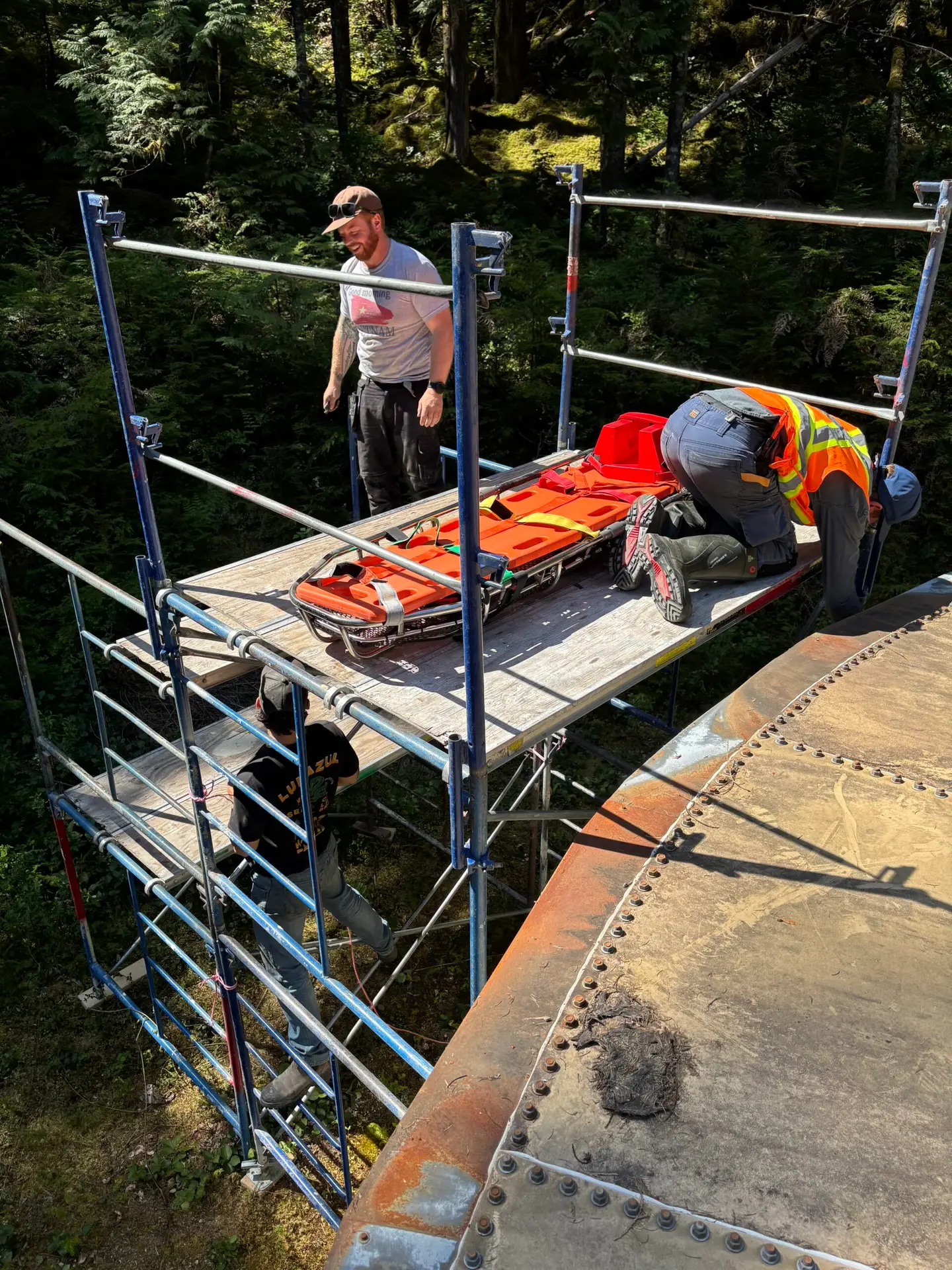
Access planning for potable water reservoir cleaning begins before the team arrives. Hatch dimensions, roof access, equipment lifting and personnel recovery arrangements can determine which methods are practical.
- Confirm entry-opening dimensions and internal clearances.
- Review roof, platform and access-system suitability with the responsible parties.
- Identify connected equipment, flow paths and required isolation.
- Assess fall hazards and applicable confined-space requirements.
- Establish communications, supervision and emergency arrangements.
- Plan launch, recovery and handling of hoses, tethers and equipment.
The applicable requirements depend on the jurisdiction and work method. In British Columbia, WorkSafeBC’s diving regulations apply to occupational diving operations. Other hazards and jurisdictions require their own review.
6. Specify Inspection Evidence and Reporting
A potable water reservoir cleaning report should explain what was completed and what could be examined afterward. Agree on the evidence required before mobilization so the field team can capture the right records.
Depending on the scope, deliverables may include before-and-after photographs, indexed video, cleaning coverage, observed deposit distribution and a written summary of accessible asset conditions.
Where sediment remains over a surface, the report should state that the underlying condition could not be fully examined. A reservoir should not receive an unsupported pass or fail simply because some areas were visible.
Following potable water reservoir cleaning, newly exposed areas may reveal observations requiring additional inspection or engineering assessment. Distinguish these findings from confirmed defects and identify limitations clearly.
7. Prepare the Information Needed for Pricing
Accurate information helps price potable water reservoir cleaning against a defined scope. Provide drawings and photographs where available, and identify details that remain uncertain.
- Site location, access instructions and project contact.
- Reservoir diameter, height, shape and construction material.
- Expected water depth and permitted water-level changes.
- Hatch dimensions, roof access and internal obstructions.
- Previous inspection reports and known sediment conditions.
- Water-operator procedures and available isolation arrangements.
- Power, water supply and proposed cleaning discharge arrangements.
- Required reporting, target dates and operating restrictions.
Confirm where removed sediment and cleaning water may be discharged, and whether containment, testing or disposal arrangements are required. Those responsibilities should be clear in the quotation.
What Affects the Cost and Duration?
The budget for potable water reservoir cleaning depends on floor area, deposit conditions, access, equipment selection and reporting requirements. Internal columns, baffles and difficult-to-reach areas can affect productivity.
Travel, accommodation, equipment transport, orientation and site preparation also influence the overall programme. Compare quotations against the same cleaning coverage, assumptions and deliverables rather than day rates alone.
Ven-Tech reviews these factors before proposing a schedule. Unexpected conditions should be documented and any additional work agreed with the client before proceeding.
Why Work with Ven-Tech Subsea?
Ven-Tech combines commercial diving and robotic inspection capabilities with project-specific planning and documented field results. Our credentials include DCBC-certified diving personnel, BCCSA COR certification and $5 million in commercial general liability insurance.
We support potable water reservoir cleaning projects across Canada, with scope, availability and mobilization confirmed for each location. The proposed approach is matched to the asset, operating constraints and evidence the owner needs.
Frequently Asked Questions
Can the reservoir remain in service during the work?
Sometimes, subject to the water operator’s approval and the required controls. Keeping the reservoir filled does not necessarily mean every connected component can remain operational. Site conditions determine the acceptable arrangement.
Does sediment mean the reservoir has failed?
No. Sediment is an observation requiring assessment in context. It may obstruct inspection, but it does not by itself establish structural failure or unacceptable water quality.
Does cleaning include repairs?
Only where repairs are specifically included. Cleaning and inspection may identify follow-up work, which should be assessed and separately authorized against suitable specifications.
How often should we clean the reservoir?
The maintenance interval should reflect the owner’s programme, inspection history, deposit accumulation, water-quality information and applicable requirements. A single fixed interval is not appropriate for every asset.
Plan Your Reservoir Inspection and Cleaning
Discuss potable water reservoir cleaning with Ven-Tech Subsea. Send your asset drawings, access photographs and maintenance objectives so we can review a suitable diver or robotic approach.
Request a Reservoir Project Quote
Commercial Diving: 604-230-3022
Robotics and Surveys: 250-572-4889
Email: info@ven-techsubsea.ca