
Identify the constructor or prime contractor, hyperbaric safety authority, project physician, chamber supervisor, TBM operator, OEM, rescue lead and work-package owner.
PRESSURIZED TBM INTERVENTION · CANADA
Hyperbaric Tunneling Support.
Protect the intervention. Restore the advance.
Hyperbaric Tunneling Support for planned inspection, maintenance and repair at the front of pressurized tunnel boring machines—integrating chamber operations, medical authority, mechanical capability and defensible work records.
PRESSUREControlled exposure
MACHINETask-specific repair
RECOVERYPlanned throughout
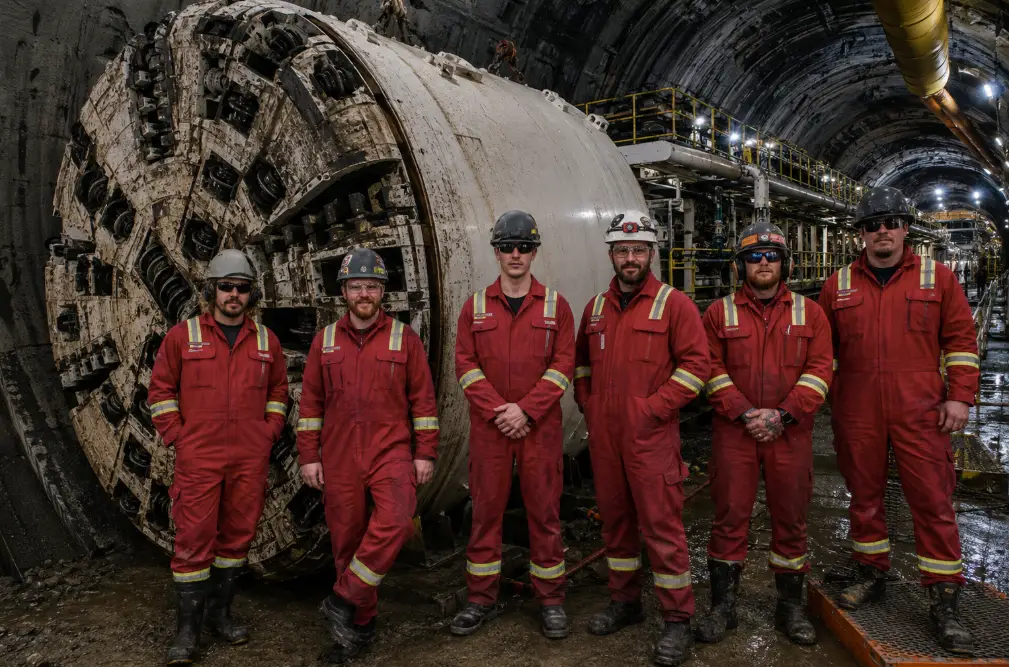
Critical access at the excavation face
The TBM can stop.
The control system cannot.
A hyperbaric intervention is a pressure-exposure operation, a machine-maintenance scope and a critical-path tunnelling event at the same time.
Ven-Tech structures Hyperbaric Tunneling Support around the whole intervention—not only the work at the cutterhead. The plan connects jurisdictional requirements, the prime contractor, project physician, hyperbaric safety direction, chamber operators, TBM and OEM controls, task-qualified personnel, surface communications, rescue capability and the evidence required to release the machine.
Commercial-diving experience can provide a valuable pressure-work foundation, but it is not a stand-alone qualification for compressed-air tunnelling. Personnel, exposure procedures, chamber systems and mechanical tasks are verified for the specific jurisdiction, machine, pressure range and work package. No generic website schedule replaces project medical or regulatory authority.
Pressure strategy approvedTBM energy isolatedRecovery credible throughout
Set the anticipated pressure range, breathing medium, exposure limits, compression and decompression basis, medical controls and escalation thresholds through the qualified project authority.
Control rotation, hydraulic, electrical, pneumatic, stored mechanical and process energy, plus face-support and ground-control interfaces before the intervention lock opens.
Verify chamber availability, redundant communications, life support, emergency power, rescue staffing, medical response and transfer arrangements for the complete exposure period.
Integrated hyperbaric intervention
Hyperbaric Tunneling Support.
From readiness to release.
Four connected capabilities align the pressure system, front-face work, technical team and TBM restart decision.
 01↗
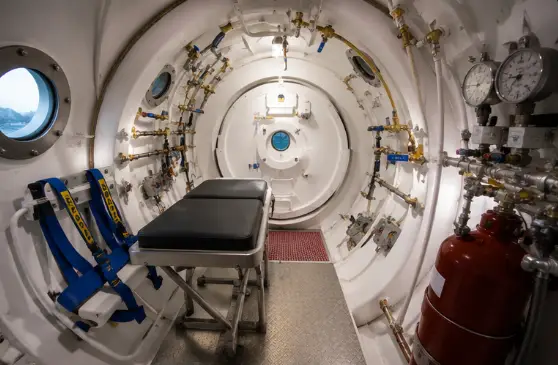
01↗Intervention engineering and readiness
Build the intervention basis before the TBM is stopped: objective, face pressure, access route, lock sequence, personnel roles, chamber status, tool list, communications, decompression authority, rescue arrangements, hold points and acceptance evidence.
 02↗
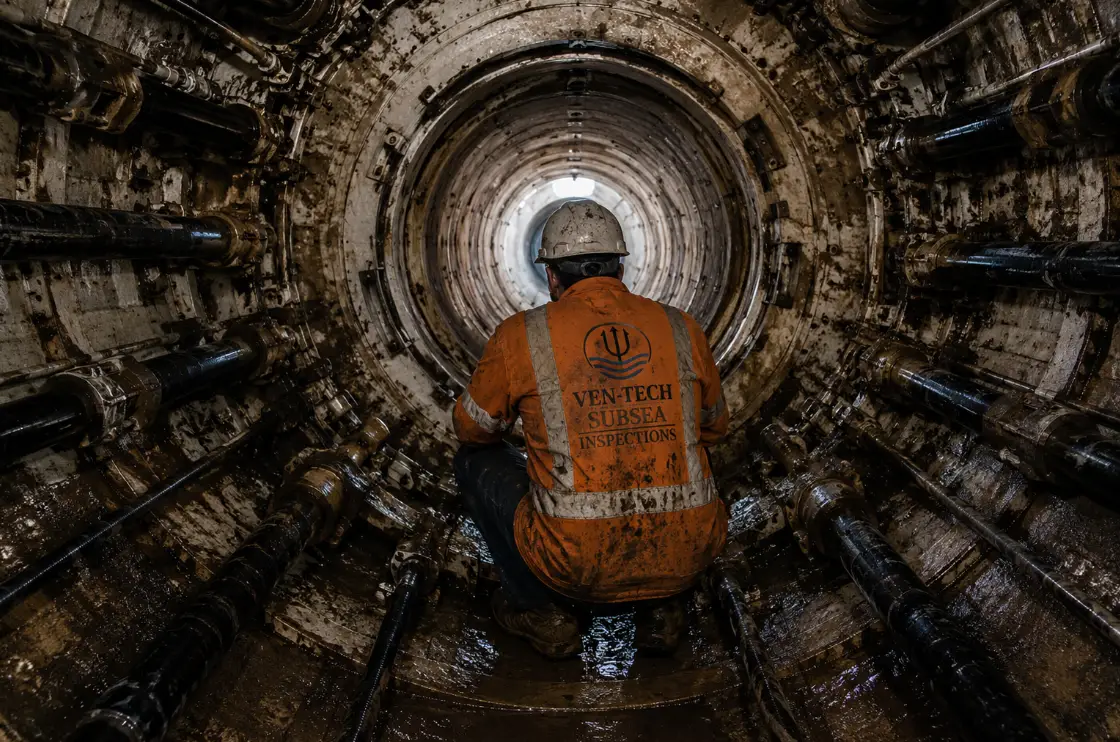
02↗Cutterhead and excavation-chamber inspection
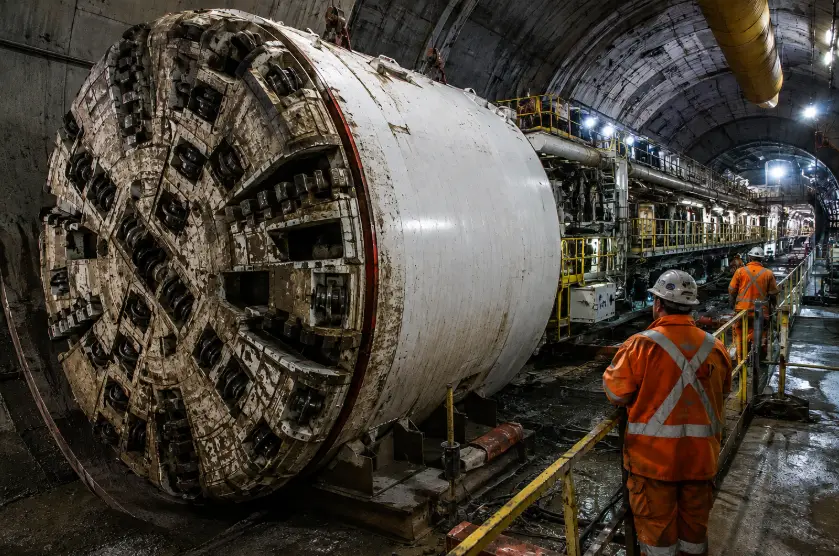
Enter the controlled pressure environment to document the cutterhead, tools, openings, seals, bulkhead interfaces, visible wear, obstruction, ground ingress and other agreed targets. Indexed imagery supports maintenance and restart decisions.
 03↗
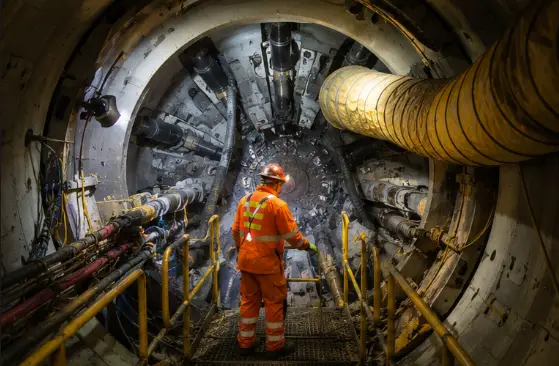
03↗Mechanical maintenance and repair
Project-approved specialists can support cutter changes, fastener work, obstruction removal, cleaning, hose or line work, seal inspection, component replacement, measurement and limited repair within the defined TBM and pressure constraints.
 04↗
04↗Shift integration and operational assurance
Coordinate the hyperbaric team with the tunnelling superintendent, TBM operator, OEM, prime contractor, physician, safety authority and surface support so isolation, compression, work, decompression and release remain one controlled sequence.
The intervention is the production constraint
Face pressure maintained.
Critical work controlled.
Effective Hyperbaric Tunneling Support is fast because it is ready—not because it is rushed. Preparation removes uncertainty before exposure begins and keeps time at pressure focused on the approved task.
People, chamber, tools, parts and rescue systems are checked before the machine enters the intervention window.
TBM and face interfaces are placed in the approved state with responsibilities and hold points understood.
Surface, lock, intervention and machine teams share live status, time, task progress and stop-work authority.
Work, tools, evidence and outstanding defects are reconciled before the designated authority approves restart.
8 proven intervention controls
Hyperbaric Tunneling Support:
plan the entire pressure cycle.
Eight connected controls move the project from an identified TBM need to a documented, authorized machine release.
State the intervention objective
Confirm the defect, obstruction, inspection question or maintenance task, the decision required from the intervention and the evidence needed before the TBM can return to service.
Build the intervention basis
Review face pressure, geology and conditioning, TBM arrangement, chamber and lock configuration, access, expected duration, tools, loads, materials, contaminants and foreseeable changes.
Resolve approvals and responsibilities
Confirm jurisdictional notices, permissions or variances, project physician and hyperbaric safety authority, worker medical fitness, competence records, OEM requirements and prime-contractor interfaces.
Stage people, chamber and equipment
Inspect and function-test the lock and chamber, breathing and life-support systems, emergency power, communications, lighting, tools, consumables, fire controls, rescue equipment and documentation.
Control the TBM and face interfaces
Verify the approved mechanical, hydraulic, electrical and pneumatic isolation; machine status; exclusion zones; face-support assumptions; tool security; and the conditions required for safe access.
Compress, enter and execute
Follow the approved pressure and access sequence, maintain continuous surface coordination, complete the defined inspection or repair, control tools and parts and stop when conditions leave the approved envelope.
Complete the controlled return
Follow the project-approved decompression procedure under the designated authority, document exposure and condition, complete post-exposure checks and preserve readiness for medical escalation.
Verify work and return the machine
Reconcile tools and components, review imagery and work records, verify acceptance criteria, close outstanding items and obtain the required authorization before machine restart.
Front-of-machine inspection and repair
Reach the cutterhead.
Work only to the approved scope.
Interventions are configured around the actual TBM, ground conditions, pressure, access, component and technical acceptance criteria.
Cutter and tool inspection
Document wear, damage, rotation, mounting condition, access and replacement priority for project-identified cutting tools and cutterhead components.
Tool change and fastening
Support project-approved cutter, tooth, scraper or component changes using the specified tooling, torque, retention, parts control and independent verification.
Obstruction investigation
Inspect and characterize boulders, steel, timber, abandoned infrastructure or other obstructions so the project team can approve a controlled removal or bypass method.
Cleaning and access preparation
Remove or control spoil and conditioned material only as required to expose the work area, preserve face stability and maintain the approved intervention environment.
Seal and interface inspection
Inspect accessible bulkhead, seal, brush, articulation, bearing, penetration, hatch and line interfaces for visible condition, leakage indicators or maintenance targets.
Hose, line and fitting work
Inspect or replace approved grease, foam, slurry, hydraulic, sensor or utility components where isolation, compatibility, cleanliness, pressure and OEM requirements permit.
Measurement and NDT support
Collect project-specified dimensions, photographs, video, surface observations or compatible NDT data with locations and limitations for qualified engineering review.
Contingency and rescue standby
Maintain trained chamber, surface, rescue and medical interfaces for planned entries, unplanned changes and time-critical recovery within the approved emergency plan.
People and systems
A pressure-qualified team.
A task-qualified work party.
A Hyperbaric Tunneling Support team requires more than workers who can tolerate pressure. Each project verifies medical, chamber, machine, mechanical and emergency competence.
Hyperbaric safety direction
A designated competent authority controls the intervention plan, exposure basis, pressure envelope, deviations, records and stop-work criteria under the applicable jurisdiction and project system.
Project physician and medical program
Medical fitness, exposure restrictions, decompression basis, health monitoring, treatment readiness and emergency consultation are established by the qualified project medical authority—not improvised in the field.
Chamber and lock operations
Competent operators manage access, compression, atmosphere, communications, locks, records, emergency systems and decompression through the approved procedure and tested equipment.
TBM mechanical capability
Intervention personnel are selected for both hyperbaric competence and the actual task. Diving experience alone does not replace TBM, mechanical, welding, electrical, NDT or OEM-specific qualifications.
Surface control and communications
The surface team connects chamber status, TBM isolation, face conditions, task progress, exposure time, hold points, rescue readiness and the decision to continue, modify or abort.
Emergency and recompression readiness
The project plan addresses fire, loss of pressure or atmosphere control, power or communications failure, injury, entrapment, decompression illness, emergency decompression and medical transfer.
Hyperbaric Tunneling Support deliverables
Work completed at pressure.
Evidence ready at surface.
The Hyperbaric Tunneling Support closeout package connects the approved intervention basis, exposure record, machine work and release decision.
Intervention basis and responsibility matrix
Purpose, pressure and machine assumptions, access arrangement, roles, approvals, interfaces, limits, hold points, decision authority and required acceptance evidence.
Procedure and task work pack
Controlled sequence for preparation, chamber entry, isolation, access, tools, parts, task steps, communications, contingencies, decompression and release.
Competence and medical verification
Project-required worker qualifications, task authorizations, medical fitness, chamber-operator competence, physician coverage and training or briefing records.
Equipment and chamber readiness record
Inspection and function-test results for chambers, locks, life support, gas or air systems, communications, emergency power, lighting, tools, rescue equipment and critical spares.
Exposure and chamber logs
Personnel, pressure and time records, compression and decompression stages, atmosphere or system checks, communications, events, deviations and required medical follow-up.
Indexed inspection media
Organized photographs and video referenced to cutterhead sector, component, tool position, chamber or route, with clear file naming and observed-condition notes.
Maintenance and parts record
Tools and components taken in and out, parts changed, fastener or torque information where specified, materials used, work completed, unresolved defects and independent checks.
Intervention closeout report
Scope, method, exposure summary, results, imagery, accepted work, limitations, outstanding actions, recommendations and evidence supporting the authorized TBM restart decision.
About Ven-Tech
Meet the people.
Understand the operating discipline.
This company overview introduces the team and integrated inspection, construction, robotics and difficult-access capability behind Ven-Tech’s field work.
About Ven-Tech Subsea Inspections
Meet the people, systems and field discipline behind our Canadian inspection and intervention capability.
Compressed-air HSE and technical authority
Pressure changes everything.
So the controls remain connected.
Hyperbaric Tunneling Support is governed by the applicable provincial or territorial law, accepted standards, project requirements and the designated medical and hyperbaric authorities. Requirements differ by location and pressure regime. Notices, permissions, variances, decompression basis, medical coverage and equipment acceptance are resolved before work—not assumed from another project.
In British Columbia, WorkSafeBC guidance addresses non-immersion compressed-air work and hyperbaric intervention during tunnelling, including CSA Z275.3 and project-specific decompression-table selection by the hyperbaric safety director in consultation with the attending hyperbaric physician and workers. Ontario’s construction regulation has its own compressed-air notice, permission, physician, medical-fitness, lock and decompression requirements. The project team confirms the governing system for every location.
Jurisdictional notice, permission and variance reviewProject physician and hyperbaric medical coverageMedical fitness for compressed-air workQualified hyperbaric safety directionChamber and air-lock inspection and operationApproved decompression and exposure recordsTBM OEM and prime-contractor interfaceMechanical, hydraulic and electrical isolationBreathing atmosphere and life-support monitoringFire prevention and material controlRedundant communications and emergency powerRescue, recompression and medical-transfer planning
Hyperbaric Tunneling Support FAQ
Technical questions.
Responsible answers.
These answers explain the capability without replacing jurisdictional approval, project medical authority or an engineered intervention procedure.
What is Hyperbaric Tunneling Support?+
Hyperbaric Tunneling Support is the planned use of qualified personnel, pressure-control systems, medical oversight, chamber operations and task-specific technical capability to inspect, maintain or repair accessible areas at the front of a pressurized tunnel boring machine. It is used when atmospheric access would not maintain the required face-support conditions.
Why are hyperbaric interventions needed on a TBM?+
Earth-pressure-balance and slurry TBMs may use pressurized conditions to support the excavation face. When cutters, tools, seals, lines or other front-end components require inspection or maintenance, workers may need a controlled compressed-air or breathing-gas intervention rather than ordinary atmospheric access. The selected method depends on pressure, geology, TBM design and jurisdictional requirements.
Are commercial-diving qualifications sufficient for TBM intervention?+
Not by themselves. Commercial-diving experience can be relevant because it includes pressure exposure and disciplined life-support procedures, but every intervention also requires the applicable compressed-air medical fitness, chamber and lock competence, task-specific mechanical or technical qualifications, TBM and OEM knowledge, project orientation and jurisdictional authorization.
What work can be completed at the cutterhead?+
A project-specific intervention may include cutterhead and tool inspection, cutter or scraper changes, cleaning needed for access, obstruction investigation, selected mechanical repairs, hose or fitting work, seal and penetration inspection, measurement, photography, video and compatible NDT. Feasibility is confirmed against pressure, access, ground conditions, tool control and the approved work pack.
Who approves compression and decompression procedures?+
The qualified hyperbaric safety and medical authorities designated by the project establish or approve the exposure and decompression basis under the applicable law, accepted standards and project requirements. Ven-Tech does not present generic website tables as a substitute for a project physician, regulator or approved site procedure.
What happens if conditions change during an intervention?+
The approved plan defines monitoring, communications, hold points, abort criteria and who can authorize a change. Unexpected pressure behaviour, face condition, atmosphere, equipment status, worker condition, obstruction or task expansion triggers a pause or withdrawal unless the change is assessed and formally approved within the project’s management-of-change process.
What records are delivered after Hyperbaric Tunneling Support?+
Deliverables can include the intervention basis, work pack, readiness checks, competence and medical verification, chamber and exposure logs, indexed imagery, maintenance and parts records, deviations, acceptance evidence, limitations and a closeout report linked to the TBM release decision.
What information is needed to plan a hyperbaric intervention?+
Provide the TBM make and configuration, project location and authority, anticipated pressure range, geology and face-conditioning information, chamber and lock arrangement, target component or defect, access route, drawings and OEM requirements, previous inspection, desired work, available equipment, schedule, project physician and hyperbaric authority interfaces, rescue plan and required deliverables.
Bring us the TBM, pressure basis and intervention need
Plan before the stop.
Return with confidence.
Send the TBM configuration, project location, anticipated pressure range, geology and face-conditioning information, chamber arrangement, component or defect, access drawings, OEM requirements, desired work, schedule, medical and hyperbaric interfaces, rescue plan and required evidence. Ven-Tech will review the Hyperbaric Tunneling Support scope and define the next responsible step.