 01↗
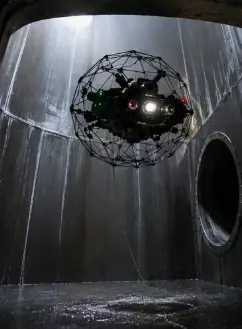
01↗Tank & vessel interiors
Document internal walls, roofs, floors, coatings, welds, supports and appurtenances in suitable storage tanks, reservoirs, process vessels and containment structures.
Confined space inspections
Confined Space Inspections for tanks, pipes, culverts, tunnels, vessels and complex industrial interiors—using drones, crawlers and remotely operated systems to reduce unnecessary entry and deliver clearer evidence.
A safer first look
The hardest part of an internal inspection is often reaching the asset safely before useful evidence can even be collected.
Ven-Tech combines remote visual inspection, industrial worksite discipline and purpose-selected technology to investigate spaces that are difficult, hazardous or disruptive to enter. Our Confined Space Inspections can support maintenance planning, engineering reviews and asset-condition decisions while reducing reliance on scaffolding, rope access and personnel entry for the initial assessment.
When a project needs aerial access, ground mobility or underwater capability, our advanced UAS services and robotic inspection services can be combined into one practical inspection plan.
Confined space inspection services
Every space is different. We select the access method, sensor package and reporting workflow around the asset, hazards and decision your team needs to make.
01↗Document internal walls, roofs, floors, coatings, welds, supports and appurtenances in suitable storage tanks, reservoirs, process vessels and containment structures.
 02↗
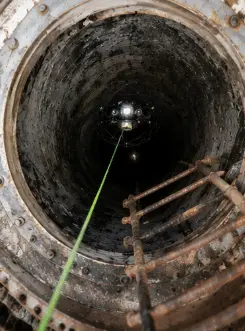
02↗Capture continuous visual records inside accessible pipelines, wastewater systems and conduits to identify deposits, damage, obstructions and areas requiring investigation.
 03↗
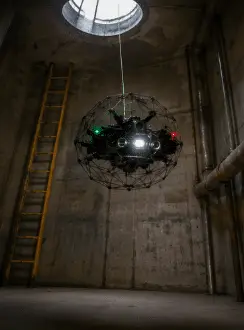
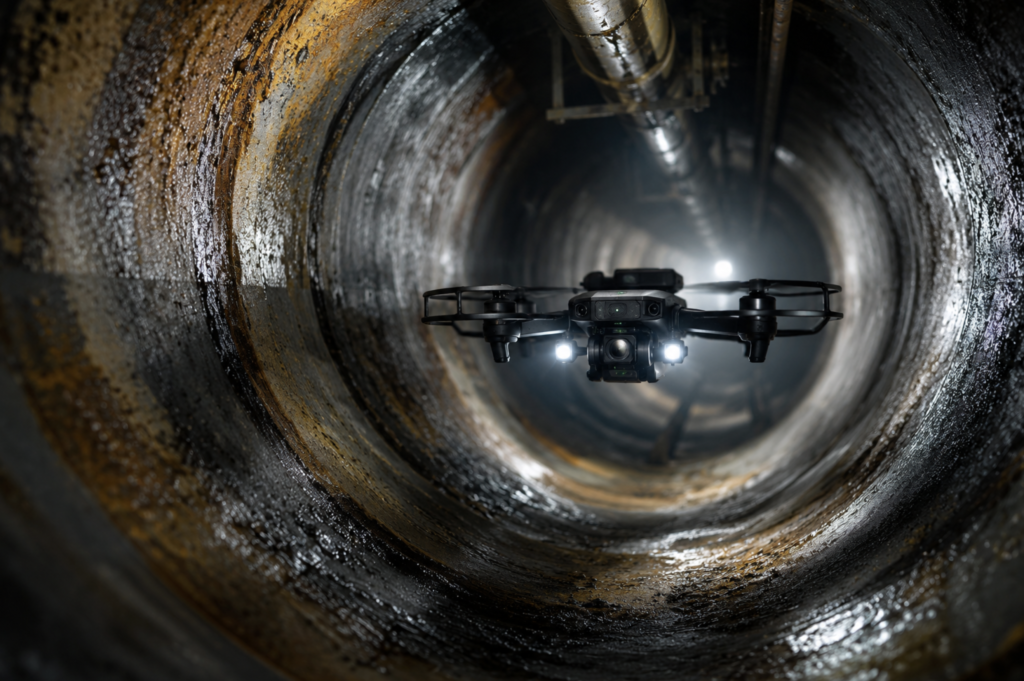
03↗Inspect long, dark or access-restricted passages for cracking, deformation, infiltration, debris, corrosion and general condition without relying on a walk-through as the first step.
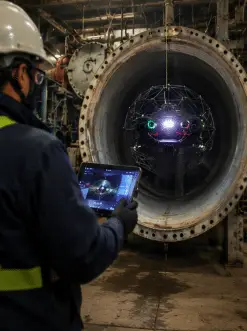 04↗
04↗Reach structural voids, service spaces, shafts, plenums and other difficult interiors using a purpose-selected aerial or ground robotic inspection platform.
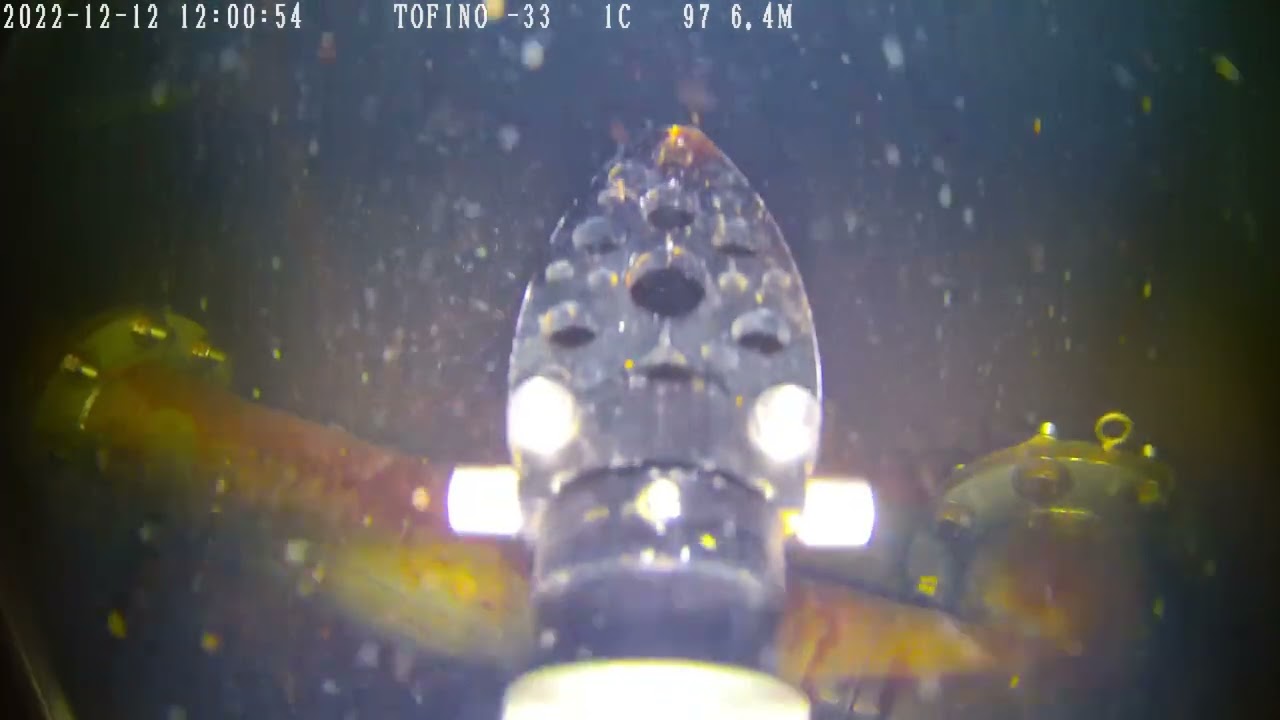 05↗
05↗Use remotely operated underwater systems for suitable flooded chambers, reservoirs, intakes, wet wells and marine-connected spaces where visibility and access permit.
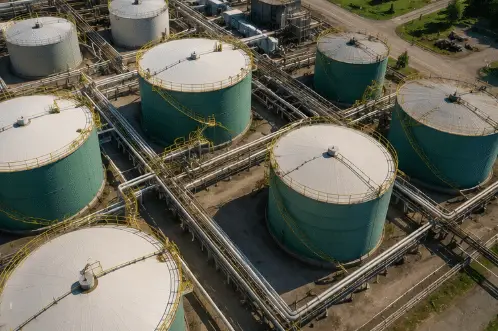 06↗
06↗Support condition assessment inside process areas, utility spaces, ventilation systems and complex facilities with targeted imagery and organized inspection records.
Remote inspection intelligence
A successful remote inspection is more than sending a camera through an opening. Ven-Tech connects access planning, lighting, navigation, image quality, field verification and reporting so the captured evidence is useful to maintenance and engineering teams.
Why remote inspection
For a suitable asset, robotic Confined Space Inspections can improve visibility and documentation before a person is placed inside the space.
Use remote technology to collect initial condition evidence while reducing personnel exposure where the environment and scope allow.
Reduce dependence on scaffolding, rope systems and complex internal access for many visual-inspection tasks.
Move through suitable tanks, tunnels, pipes and voids with an inspection route designed around complete visual coverage.
Provide repeatable imagery, observations and reports that help teams prioritize cleaning, repair or hands-on investigation.
Safety & confined-space controls
Remote equipment can reduce exposure, but it does not cancel the legal or site-specific duties attached to a confined space. Each project is planned around the owner’s program, the identified hazards and the applicable requirements.
The asset, atmosphere, residues, geometry, access points, isolation status and inspection objective are reviewed before a platform is selected.
Remote methods are evaluated as a way to reduce unnecessary personnel exposure while respecting the client’s confined-space program and site rules.
Indoor UAS, crawlers, pole systems or ROVs are matched to the environment, required reach, surface condition and deliverable.
Lockout, process isolation, access management, ventilation, atmospheric testing and permits remain project-specific requirements where applicable.
Defined roles, communications, equipment checks, operating limits and stop-work criteria support a disciplined inspection at the worksite.
Coverage, observations, limitations, media and project records are organized so the client can understand what was inspected and what comes next.
Inspection workflow
A disciplined process connects the inspection question, site hazards, equipment selection, field quality checks and the final report.
Confirm the asset, access, environment, known hazards, areas of interest and required deliverable.
Choose the appropriate remote platform, sensor, lighting, route, site controls and operating limits.
Complete the inspection while checking coverage, image quality, equipment condition and field observations.
Organize the media, annotate relevant findings, document limitations and issue the agreed project record.
Operational assurance
Ven-Tech’s Confined Space Inspections are supported by the same contractor management, documentation and health-and-safety framework used across our municipal, industrial, marine and infrastructure operations.
Industries we support
Built for asset owners, engineers, municipalities and contractors that need reliable information from spaces with difficult access or elevated entry risk.
Common questions
Send us the asset, access point, operating condition and inspection objective. We’ll help determine whether a remote method is suitable.
For suitable assets, remote inspection technology can reduce or eliminate the need for personnel to enter during the initial visual assessment. It does not remove the need to classify the space, review hazards or follow the owner’s confined-space program. Some findings may still require hands-on verification or a planned entry by qualified personnel.
Potential applications include tanks, reservoirs, pressure or process vessels, pipelines, sewers, culverts, tunnels, shafts, structural voids, wet wells, intakes, crawlspaces and other access-restricted industrial areas. Suitability depends on geometry, atmosphere, access, communications, lighting and the required inspection result.
Depending on the project, deliverables may include high-resolution video and still imagery, annotated observations, defect registers, route or asset references, thermal imagery where suitable, 3D or photogrammetric models, narrated video and a concise inspection report with limitations and recommended next steps.
Yes, purpose-built indoor inspection systems can operate where satellite positioning is unavailable. The selected method may use onboard stabilization, collision tolerance, lighting, visual navigation and project-specific referencing. Ven-Tech reviews the space and required positional context before recommending a method.
These environments require a specific hazard assessment and confirmation that every part of the proposed equipment and procedure is suitable for the classified area. Ven-Tech will not assume that standard inspection equipment is approved for an explosive atmosphere; the operating environment must be verified before mobilization.
Send the site location, asset type and dimensions, access-opening size, known atmosphere or residue, drawings, current operating condition, inspection objective and preferred deliverable. Photos from the access point and previous reports are also useful for planning.
Start with the space
Tell us the asset dimensions, access-opening size, operating condition and information you need. Ven-Tech will provide a practical first assessment for your Confined Space Inspections project.